

Newsroom
Cyprus has called in foreign reinforcements to save one of its most familiar summer sights.
There were no soldiers, no heavy equipment, and certainly no motorcade.
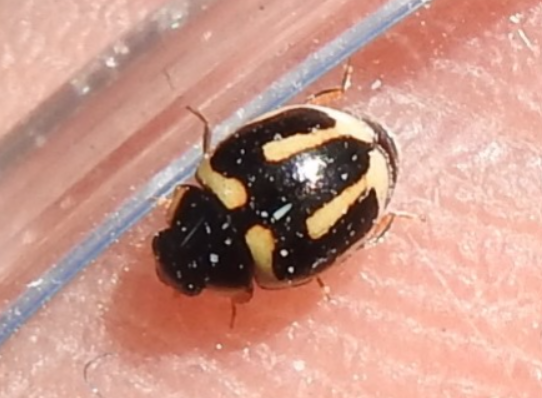
Instead, about 200 very small, very hungry lady beetles arrived from Israel with one job: save the papoutsosyka.
And apparently, they're already getting to work.
The target is Dactylopius opuntiae, an invasive insect that attacks prickly pear cactus and has been spreading across Cyprus since it was first detected on the island in 2016.
For anyone who has grown up seeing papoutsosykies along village roads, in fields or in a grandparent's garden, the damage is hard to miss. The pest covers the green cactus pads in a white, cotton-like substance, slowly weakening the plant until it dries out and can eventually die.
The Cyprus Department of Agriculture, which notes that the prickly pear is commonly known here as papoutsosykkia, has been monitoring the pest and its spread for years.
Estimates now suggest the pest has damaged as much as 20% to 30% of Cyprus' commercial prickly pear plantations, while wild plants have also been badly affected.
Enter the beetles
Cyprus turned to Israel because it had faced the same problem and found an unusually simple solution.
Scientists there discovered that a predatory lady beetle called Hyperaspis trifurcata rather enjoys eating the pest that is killing the cactus.
In other words, instead of reaching first for chemicals, they let one bug deal with the other.
Cypriot plant protection authorities contacted Israel's Agriculture Ministry and the Volcani agricultural research institute for help.
Professor Zvi Mendel, who helped tackle the pest when it appeared in Israel in 2013, and researcher Dr. Shahar Samra collected roughly 200 of the beetles. They were checked in a laboratory to make sure they weren't carrying unwanted hitchhikers and then flown to Cyprus.
Mendel personally released them in selected affected areas, according to Israeli reports. Ynet
Then came the important part: would these tiny newcomers actually settle down in Cyprus?
Five weeks later, Mendel returned to check.
They had.
The beetles had established themselves and were already beginning to attack the invasive pest. The hope now is that they reproduce and create their own population, providing Cyprus with a natural, long-term defence.
There's another nice twist to the story. Cyprus reportedly offered to pay for the Israeli team's work, but the scientists declined, saying they wanted to help free of charge.
So, as Cyprus settles into another August of cold watermelon, village festivals and carefully peeling papoutsosyka without getting a hand full of tiny thorns, somewhere out there a group of 200 imported beetles is doing its bit to keep that particular summer tradition alive.
Small bugs. Rather important job.


