Panayiotis Rougalas
Over the years, plenty of carmakers have moved into vehicle production from other industries. Peugeot began with coffee mills, Lamborghini made tractors, Mitsubishi built ships and Skoda started out making bicycles. Toyota and Suzuki once produced looms, while Honda put its engineering experience to use in a different way: it made engine parts, then used that expertise to build motorcycles and, later, cars.
One of the latest companies to turn its know-how into vehicles is China’s BYD. It began as a battery maker and has grown into a car brand that not only supplies batteries for its own electric and hybrid vehicles, but also provides them to other automakers.
China’s LinkTour, part of Fortune Global 500 company Shandong Weiqiao Pioneering Group, has close ties to aluminium production. Shandong Weiqiao Pioneering Group is the parent company of China Hongqiao Group, one of the world’s largest aluminium producers.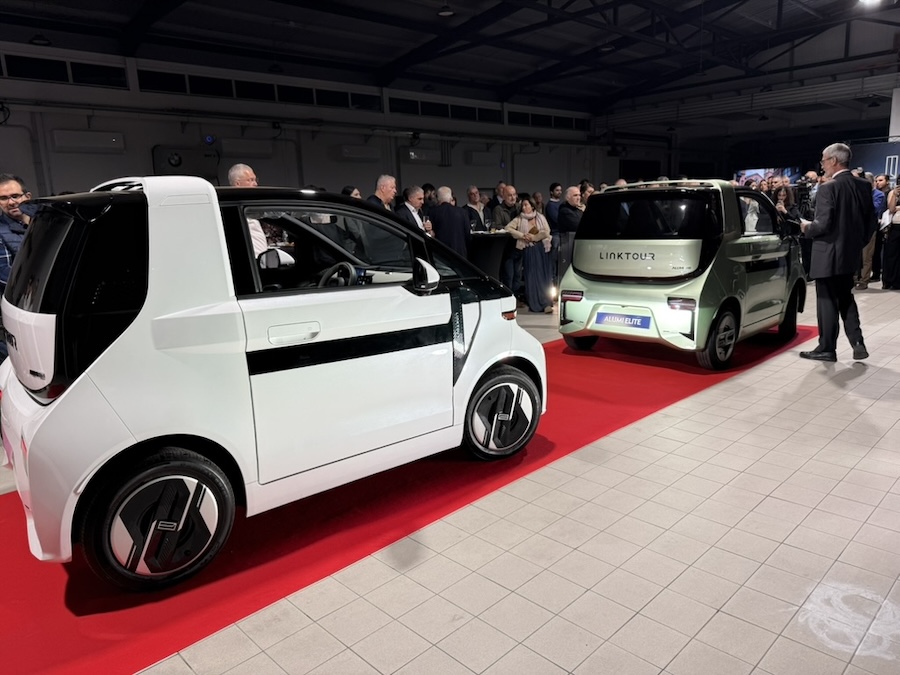
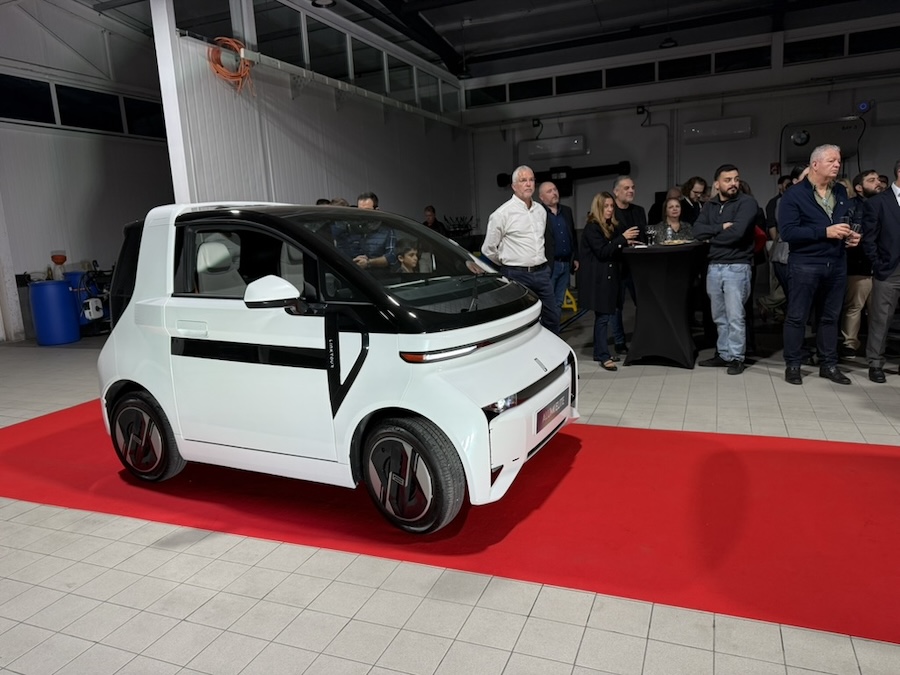
That connection is reflected in the frame of the Alumi electric vehicle, which is made from aluminium — an unusual choice for a model in this category. The car has entered the Cyprus market through Ch. R. Prime Vehicles Ltd., LinkTour’s authorised distributor in Cyprus.
Does the aluminium frame matter? It may. The vehicle’s battery is integrated into the frame, a design that increases the body’s rigidity. The technology is known as “cell-to-body.” It was discussed at LinkTour’s first official presentation in Cyprus, held on Wednesday, Nov. 25, at the C. Christodoulou Group facilities in Nicosia. Kathimerini attended.
The LinkTour Alumi is a compact electric car designed for city use. Its small size makes it easy to manoeuvre and park. It measures 2,685 millimetres long, 1,500 mm wide and 1,555 mm high, with a wheelbase of 1,800 mm and a 320-litre boot. All Alumi models are rear-wheel drive.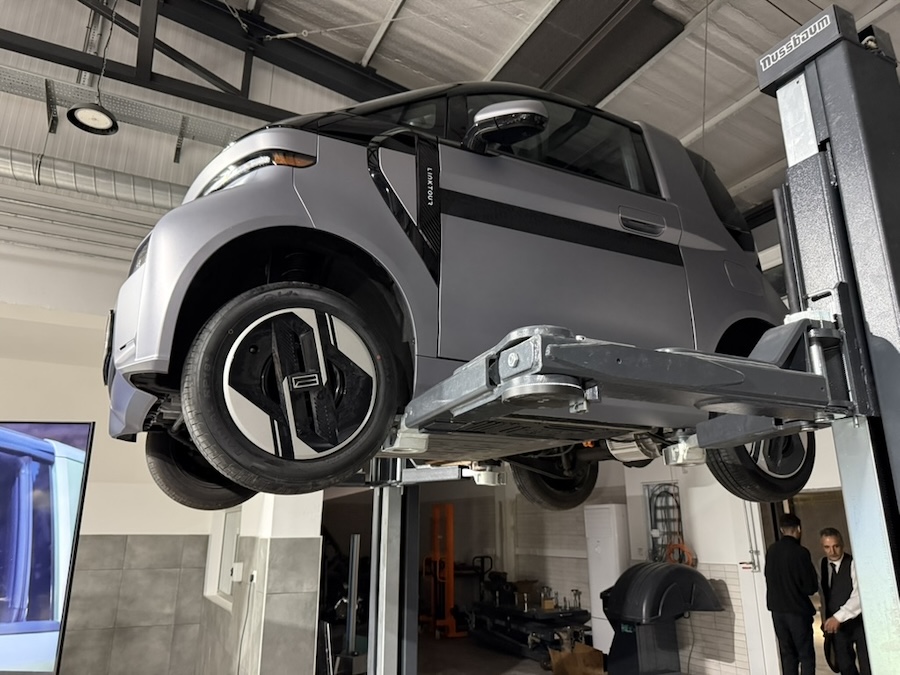
There are three versions, with two electric motor options. The entry-level models are the Alumi Series L6e and Alumi Pro Series L6e. The top-of-the-range version is the Alumi Elite L7e.
The Alumi L6e and Alumi Pro L6e share an electric motor with an output of 6 kilowatts and a peak output of 12 kW. They use a 7.2-kilowatt-hour lithium iron phosphate, or LFP, battery and have a top speed of 45 kilometres per hour. They can be charged from empty to full in four hours using a household socket. Their range in the WMTC urban driving cycle is up to 120 kilometres.
The Alumi Elite L7e comes with a larger battery and a more powerful motor. Its motor delivers 10 kW, with a peak output of 23 kW, and the car can reach a top speed of 90 kilometres per hour. Its LFP battery has a capacity of 12.96 kWh, giving it a range of up to 180 kilometres on the WMTC cycle. A full charge takes four and a half hours.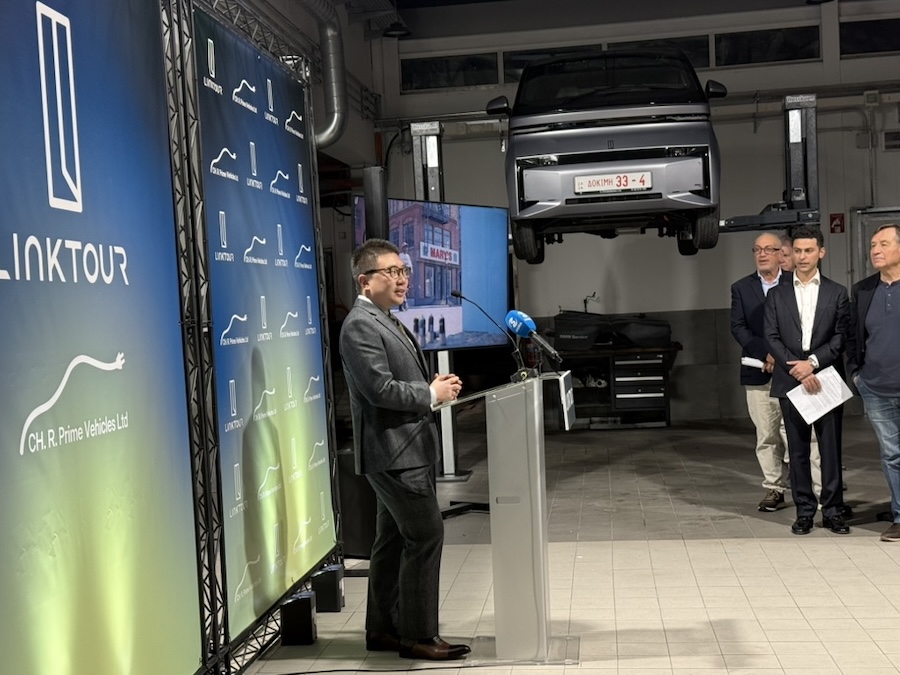
According to the company, the name Alumi combines three words: *Alluminio*, Italian for aluminium, referring to the vehicle’s aluminium body technology; *Lume*, or light, suggesting the future of mobility; and *Amico*, meaning friend or companion, reflecting the car’s role in urban travel.
The car comes with a range of modern features, including wireless Android Auto and Apple CarPlay displayed on a screen measuring more than 10 inches. Its equipment is designed to meet the needs of everyday driving. Alongside its compact size, two features that stand out are the panoramic roof and frameless doors.
The Alumi is available in four colours: white, green, grey and black. Prices in Cyprus range from €9,950 to €15,950. All colours other than standard white cost an additional €395.
C. Christodoulou Group will provide maintenance, technical support and customer services for LinkTour Alumi owners in Cyprus.