

Newsroom
OpenAI is introducing a dedicated version of ChatGPT for teenagers as parents and teachers face growing questions about how students use artificial intelligence for schoolwork and personal support.
The new experience is designed to help students work through problems themselves instead of completing assignments for them. OpenAI says about nine in 10 teenagers who use ChatGPT worldwide turn to it for learning, productivity or developing skills, according to Ann O'Leary, the company's vice president of global policy.
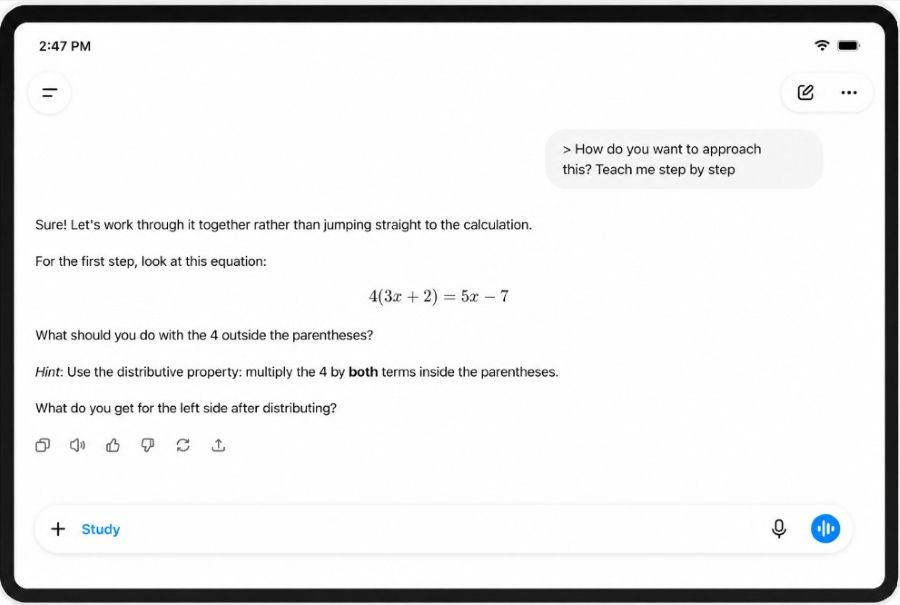
A central feature is the platform's existing study mode. Students can use ChatGPT to develop a thesis, for example, but the system is designed not to write the essay for them. For math, it can guide a student through the steps needed to solve an equation rather than simply supplying the result.
Students who attempt to bypass that approach can receive reminders encouraging them to do the work themselves. The system can also generate quizzes to test whether a student understands the material.
Automatic protections for teenagers
One of the biggest changes for parents is that the new safeguards will not depend entirely on families setting them up themselves.
OpenAI says it will use an age-prediction system that examines roughly 2,000 signals, including patterns in conversations and the times when an account is used. Users believed to be between 13 and 17 will automatically be placed in the under-18 experience.
That can happen even if a teenager previously entered a false date of birth when creating an account. The system is also intended to identify teenagers who use ChatGPT without logging in. Adults who are incorrectly classified can appeal and verify their age.
Parents can still connect their own ChatGPT account to their teenager's account and manage parental controls, including periods when the service cannot be used. Some protections will now be applied automatically.
Stricter rules around sensitive subjects
The new teen experience comes as young people increasingly use chatbots for emotional support as well as schoolwork and information.
OpenAI says ChatGPT for teenagers will have stronger default protections when conversations involve subjects such as self-harm, eating disorders or violence.
The model will also be designed to avoid romantic interactions with teenagers and to discourage emotional dependence on the chatbot. Its behavior guidelines are intended to prevent it from suggesting that it has emotions, consciousness or a personal relationship with the user.
Teenagers will also receive a prompt roughly every 90 minutes encouraging them to take a break. The system will remind them that they are interacting with artificial intelligence.
The approach reflects a growing shift in how technology companies handle younger users. Rather than requiring parents to discover and activate protective settings each time a child creates an account, platforms are increasingly applying restrictions automatically.
Instagram introduced more restrictive default settings for teen accounts in 2024, while TikTok has also adopted automatic protections for younger users.
For parents who find it difficult to keep track of every online service their children use, OpenAI's approach could reduce some of that burden. The key question will be how reliably its age-detection system can identify teenagers and how effectively the new safeguards work in everyday use.


