


Apostolos Tomaras
Two distinguished professors, with expertise in international law, the Aegean and the Eastern Mediterranean, interpret Turkey’s decision to declare marine parks and explain Ankara’s wider objectives.
Angelos Syrigos and Constantinos Filis both believe the two marine parks are only the beginning and that Turkey could announce others, potentially extending as far as the area around Cyprus.
''The dilemma is clear: Either Greece becomes a satellite of Turkey or the cables will not be laid.''
For Syrigos, the issue that finally triggered Turkey’s latest response was the proposed electricity interconnection linking Cyprus to Europe through Greece. Filis also places particular emphasis on the Great Sea Interconnector, or GSI, and says it would not be unrealistic for Turkey to declare marine parks near Cyprus.
Filis also addresses whether an agreement delimiting the exclusive economic zones of Cyprus and Greece could serve as a counterweight to Turkey’s actions.
Angelos Syrigos - Professor of International Law and Foreign Policy at Panteion University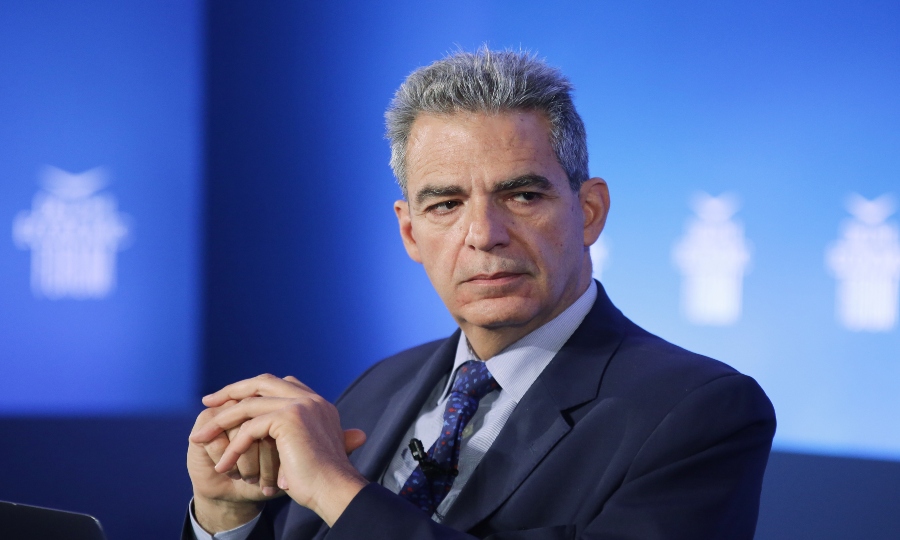
Q: Why has Turkey chosen this particular moment to declare marine parks in the northern Aegean and Eastern Mediterranean?
The answer is confidence and irritation.
Turkey has become increasingly confident recently. Three wars are taking place in its immediate neighborhood, and it shares a border with one of them—the war in Iran.
In the eyes of the West and NATO, Turkey’s geographical position has once again acquired particular importance. In addition, the American president appears to hold his Turkish counterpart in high regard.
At least three European countries—Italy, Spain, and Germany—also want Turkey to participate in the European Union’s rearmament program. Their argument is that Turkey has a very powerful defense industry, which, although it may not be at the cutting edge of technology, can produce equipment faster and more cheaply than Western countries.
At the same time, Turkey is deeply irritated by Greece and Cyprus because of their defense cooperation with Israel.
Many in Ankara believe that once the war in Iran ends, Israel’s next target will be Turkey. It does not matter whether the idea that Israel would attack a NATO country is irrational. What matters is that many Turks believe it and feel surrounded by Israeli defense systems.
The issue that finally prompted Turkey’s response, however, was the renewed discussion over the electricity cable.
Q: Was the French company’s involvement in the GSI so important?
I know the Great Sea Interconnector is creating tensions within the Republic of Cyprus. Concerns have been raised about the cost to consumers and its wider effect on electricity prices.
However, the issue goes beyond purely bilateral Greek-Turkish disputes. It is strategic.
It is directly connected to the new area of competition among the major powers: the creation of economic and geopolitical corridors carrying goods, electricity cables, telecommunications links, and clean hydrogen pipelines.
Because of its geographical position, Greece has a significant advantage in networks connecting the Middle East and Africa.
Turkey does not want to share with another country the role of energy hub that it has sought and developed through hydrocarbons since 2003.
It is trying to prevent cables from being laid because it wants to stop Greece from participating in these economic and geopolitical corridors.
Alternatively, it offers to allow the cables to be laid on the condition that permission is first requested from Ankara. Doing that would amount to accepting that those areas of the continental shelf belong to Turkey.
The dilemma is clear: Either Greece becomes a satellite of Turkey or the cables will not be laid.
The involvement of the French company means the cable project will soon begin moving again.
Q: Does that mean the cable could become the next issue on which the parties involved test one another’s limits?
The cable issue depends on when seabed surveys begin again.
Another emerging issue will be the expected adoption of Turkey’s “Blue Homeland” law in the autumn. These two matters will raise tensions over the coming months.
There is also speculation about a new conference aimed at resolving the Cyprus problem, although we do not yet have anything more specific.
Q: Does Turkey’s move on marine parks affect only Greece, or does it also concern Cyprus?
The marine parks are being declared within the framework of the “Blue Homeland” doctrine. This is an ideology that serves Turkey’s extreme claims exclusively against Greece and Cyprus.
Therefore, while the marine parks may not formally affect areas within Cyprus’ exclusive economic zone, the Turkish leadership continues to operate according to a policy of confrontation with Hellenism wherever it exists.
In the case of Kastellorizo in particular, Turkey is trying to convey the message that the island is completely cut off from mainland Greece—that it is an island on the “wrong side” of the median line.
It should be remembered that the maritime zones of Greece and Cyprus meet because of the Kastellorizo island group.
Q: Could the Mecca agreement and Egypt’s possible participation alter the region’s geopolitical landscape?
Egypt did not sign the agreement, although it took part in the relevant consultations. The reasons are unknown.
It may want to maintain a balance in its relations with Israel, the United Arab Emirates, and Greece. Historically, Egypt has also avoided multilateral arrangements, as it did during the Cold War.
It could, of course, change its mind in the future.
Constantinos Filis - Professor of International Relations at the American University of Greece and director of the Institute of International Affairs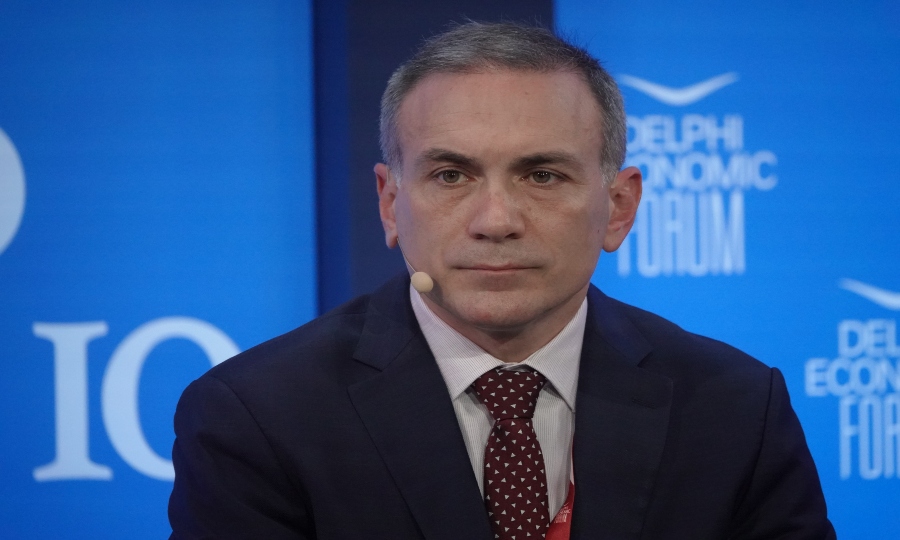
Q: What is Turkey seeking to achieve by declaring marine parks in the northern Aegean and Eastern Mediterranean at this particular time?
First, it wants to underline and remind everyone of its “Blue Homeland” position in the Aegean and Eastern Mediterranean.
That position has specific characteristics. Turkey does not recognize an exclusive economic zone or continental shelf for any island—not even Crete, the fifth-largest island in the Mediterranean. It recognizes only territorial waters extending up to 6 nautical miles.
In practice, Turkey wants to demonstrate, first diplomatically and then on the ground, that no activity involving the laying or surveying of cables and pipelines, or fishing, can take place around islands in the eastern Aegean or around Kastellorizo in the Eastern Mediterranean without its involvement.
Turkey claims jurisdiction over maritime areas lying beyond the 25th meridian. Essentially, it wants to divide the Aegean so that it has the exclusive say over any activity taking place there.
Second, the decision is a response to actions taken by Greece concerning maritime spatial planning and marine parks.
Third, it is linked to the presence of the American company Chevron and spatial planning for tourism.
Fourth, it reflects Turkey’s increased confidence because of developments in the Middle East.
Fifth, Turkey is irritated by the relationship between Greece, Cyprus, and Israel, which it wants to break apart. I would also place the GSI electricity cable within that context.
Q: Could the trilateral cooperation between Cyprus, Greece, and Israel be affected on the ground?
That remains to be seen. I cannot answer that at this stage. I would like to believe it will not be affected, but we will find out when the new round of seabed surveys begins.
This time, the surveys for the electricity cable will be carried out with a French vessel. We will see whether it is supported by the French navy.
However, the most likely scenario appears to be some form of prior understanding between France and Turkey. That does not mean the French company would ask Turkey for permission to conduct surveys in international waters.
Q: If the cable project begins moving again, could it become the first test of the parties involved?
The Republic of Cyprus must clarify its position.
Although Cyprus welcomed the involvement of France’s Meridiam in the GSI, we can still see second thoughts and hesitation. These relate to the project’s viability study, whether the European Investment Bank will give it the green light, and the geopolitical risks involved.
At present, I am not certain that the entire Cyprus government is fully committed to the project.
There are also business interests that have fought against the GSI, even though the project’s main purpose is to end Cyprus’ energy isolation and reduce electricity prices.
However, I can see that the initial objections are beginning to ease, and I do not believe there will be a test of the three countries’ relationship.
Cyprus and Greece have maintained a very difficult balance during a challenging period—and I am referring to Israel. Under no circumstances would they want to sacrifice that balance now.
Much will depend on the French position and Turkey’s reaction.
Q: Do you consider it unlikely that Turkey could declare a marine park northwest of Cyprus, surrounding the island as it has done with Kastellorizo?
No. I do not consider anything impossible.
As a first step, Turkey chose to establish two marine parks at the two outermost points of its maritime boundaries with Greece.
It is therefore reasonable to expect Turkey to continue this process by including other areas around the Greek islands. It may also do so in relation to Cyprus.
Turkey has accustomed us to such behavior. I believe we are only at the beginning when it comes to Turkey’s marine parks.
Q: Could an agreement delimiting the exclusive economic zones of Cyprus and Greece serve as a counterweight to Turkey’s illegal actions?
Certain conditions must be met before Greece and Cyprus can delimit their exclusive economic zones.
First, we must be certain that such an agreement is fully compatible with the law of the sea.
Second—and most importantly—we must be certain that we can defend the agreement on the ground, given that Turkey would undoubtedly challenge it.
Under current conditions, approximately 95% of the area covered by such a delimitation would have to be defended by the Greek armed forces. That is not feasible at present.
It may become more achievable in the future. When we have the operational capacity to defend such an agreement, then yes, we should seriously consider that option.


