

Newsroom
After months of uncertainty over whether the much-discussed electricity cable between Cyprus and Greece would actually move forward, a major French investor has entered the picture, and it is taking control.
Paris-based infrastructure group Meridiam has agreed to acquire more than 50% of the company behind the Great Sea Interconnector (GSI), giving fresh momentum to a project that matters perhaps more to Cyprus than anywhere else.
For the average Cypriot, the project can be boiled down to something fairly simple: Cyprus is the last EU country whose electricity grid is not physically connected to another member state. When the island cannot produce enough electricity, it cannot simply import power from a neighbor. When there is too much solar energy in the system, Cyprus also has limited options for putting that surplus elsewhere.
The GSI is intended to change that by connecting Cyprus to Greece and, therefore, the wider European electricity network, through a massive undersea cable.
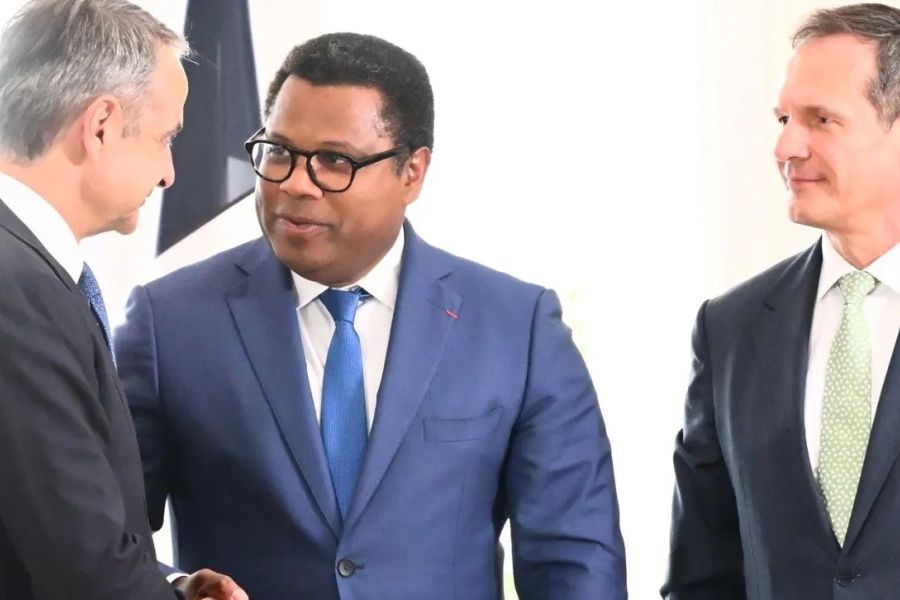
Greek Prime Minister Kyriakos Mitsotakis described Meridiam's investment as a strong vote of confidence in the project and Greece's energy sector, saying the interconnector would end Cyprus' energy isolation while strengthening security in the eastern Mediterranean.
The Crete-Cyprus section alone will stretch about 898 kilometres beneath the Mediterranean and has already secured €657 million in EU funding through the Connecting Europe Facility, according to the Great Sea Interconnector project.
But getting the cable from the drawing board to the seabed has proved anything but straightforward.
The project has faced questions over its final cost, financing, regulatory arrangements, and geopolitical risks. Cyprus has also sought assurances over how much the project could ultimately cost consumers. Earlier this year, Energy Minister Michael Damianos acknowledged that further financing could be necessary as costs are reassessed. Reuters reported in May that the project was awaiting a new financing assessment from the European Investment Bank.
That is what makes Meridiam's arrival particularly significant.
This is not a small investor dipping a toe into an experimental project. Founded in 2005, Meridiam specializes in large infrastructure developments requiring huge amounts of capital and decades-long commitments.
It has been involved in more than 130 projects internationally, representing around €100 billion in mobilized investment. Among them is NeuConnect, the 725-kilometer undersea electricity cable being built between Britain and Germany, experience that is particularly relevant to the Cyprus-Greece project.
Under the new arrangement, Greek grid operator IPTO will remain a strategic shareholder in GSI and retain technical responsibility for the project, including operating the interconnector once completed.
Meridiam's majority stake brings additional capital and international infrastructure expertise, but perhaps just as importantly, another heavyweight investor with an interest in seeing the project finished.
The agreement also comes with a new strategic arrangement involving IPTO, GSI, and French cable manufacturer Nexans. The immediate focus will be on moving ahead with work, including completing seabed surveys.
For Cyprus, however, Meridiam's arrival should not be confused with every outstanding problem suddenly disappearing.
Regulatory matters still need to be resolved and long-term financing secured. Approval of financing from the European Investment Bank is also still under consideration.
And the project has another complication that money alone cannot necessarily solve: geopolitics. Previous survey work has been caught up in tensions over competing maritime claims in the eastern Mediterranean.
Still, bringing in an international infrastructure investor with a majority stake changes the equation considerably.
The longer-term ambition stretches beyond Greece and Cyprus. Plans call for the electricity network eventually to extend from Cyprus to Israel, creating an energy corridor linking the eastern Mediterranean with Europe. IPTO has completed a cost-benefit study for that next section and is expected to submit it to regulators in Cyprus and Israel.
For households in Cyprus that have spent another summer discussing electricity shortages, blackouts, expensive power and the strange reality of cutting back solar production when there is too much of it, the grand European energy language surrounding GSI can sometimes feel far removed from everyday life.
But underneath all those billions, cables, and corporate agreements lies a simple idea: Cyprus would no longer have to run its electricity system entirely on its own.
Meridiam's investment does not mean the cable is arriving tomorrow. But after years of announcements, arguments and delays, having an experienced international investor put substantial money, and its name, behind the project could be one of the more tangible signs yet that someone intends to get it built.
Source material: Proto Thema; additional project information from GSI, IPTO and Reuters.


