Newsroom
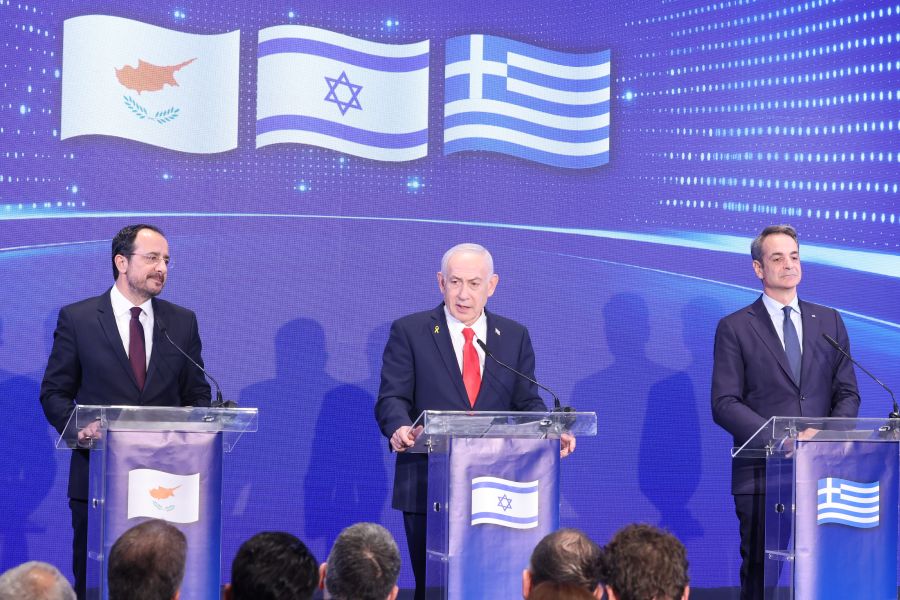
Cyprus, Greece, and Israel took another step toward closer coordination during the 10th Trilateral Summit held in Jerusalem, reaffirming their strategic partnership amid mounting geopolitical pressures in the Eastern Mediterranean. The leaders issued a wide-ranging Joint Declaration outlining an ambitious roadmap for cooperation across multiple sectors, showcasing their shared belief that deeper collaboration is essential for long-term regional stability and prosperity.
Bilateral Cyprus–Israel relations emphasized
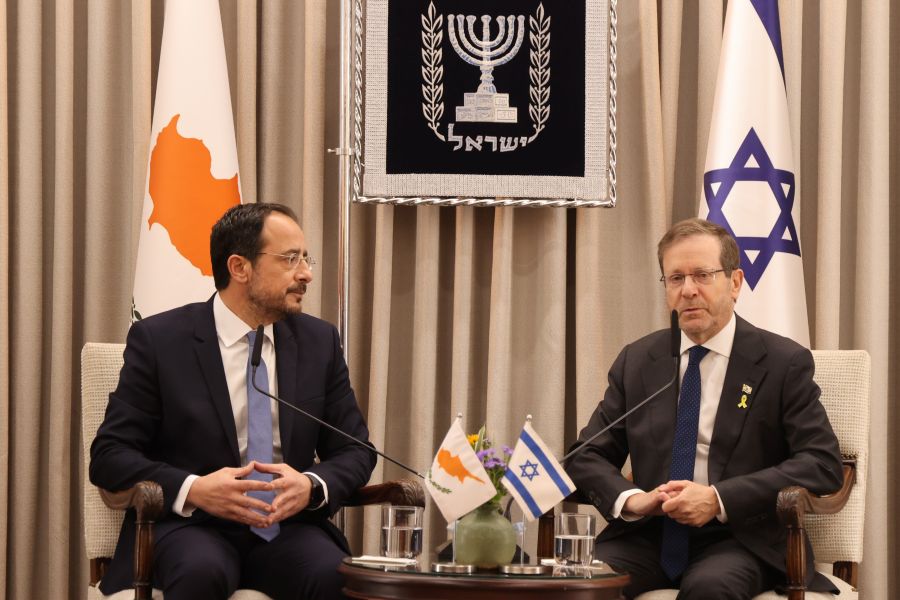
Earlier in the day, Israeli President Isaac Herzog described relations between Cyprus and Israel as having reached “enormous” levels in recent years during talks with Cypriot President Nikos Christodoulides. Herzog praised Cyprus as a stabilizing force in the region, calling it a bridge for peace and a key contributor to the Eastern Mediterranean’s functionality. He also emphasized strong people-to-people ties, noting that Israelis hold Cyprus in particularly high regard.
Christodoulides on expanding cooperation
President Christodoulides said his visit combined bilateral diplomacy with participation in the trilateral framework, expressing confidence that the summit’s outcomes would further strengthen cooperation. He pointed to tangible achievements in defense, energy, innovation, trade and tourism. The high volume of travel between Cyprus and Israel, reaching up to 186 weekly flights during the summer, was cited as a clear indicator of deepening societal ties.
European Union engagement as a priority
The Cypriot leader emphasized the importance of drawing the European Union more actively into regional developments. He noted that this would be a key priority during Cyprus’s upcoming Presidency of the Council of the EU, aiming to link trilateral initiatives more closely with EU policies and resources.
Institutionalizing the Trilateral Framework
In their Joint Declaration, the leaders reaffirmed their “unwavering commitment” to institutionalizing cooperation. They agreed to hold annual leaders’ summits and intensify coordination at the ministerial level. The declaration also confirmed their intention to maintain the 3+1 framework with the United States, while keeping the door open to other like-minded partners.
Security and defense cooperation
Security and defense featured prominently in the discussions. The leaders agreed to strengthen coordination in counter-terrorism, maritime security and military cooperation, while reaffirming their determination to protect critical maritime infrastructure. Particular attention was given to the planned Maritime Cybersecurity Center of Excellence in Cyprus, expected to become operational in 2026.
Regional developments and humanitarian issues
Regional developments, including the situation in Gaza, were addressed in detail. The leaders acknowledged humanitarian contributions by Cyprus and Greece, notably through the “Amalthea” maritime corridor. They called for the immediate return of remaining Israeli hostages and for the disarmament of Hamas under agreed frameworks, while reaffirming Israel’s right to self-defense in accordance with international law and stressing the need for secure delivery of humanitarian aid to civilians.
Energy and connectivity initiatives
Energy and connectivity emerged as central pillars of the trilateral partnership. The three countries reiterated their commitment to joint projects in natural gas development, electricity interconnections and renewable energy, grounded in international law and respect for Exclusive Economic Zones. Advancing the Great Sea Interconnector and linking it to the India–Middle East–Europe Economic Corridor was described as strategically vital for regional resilience and economic growth.
Cooperation beyond security and energy
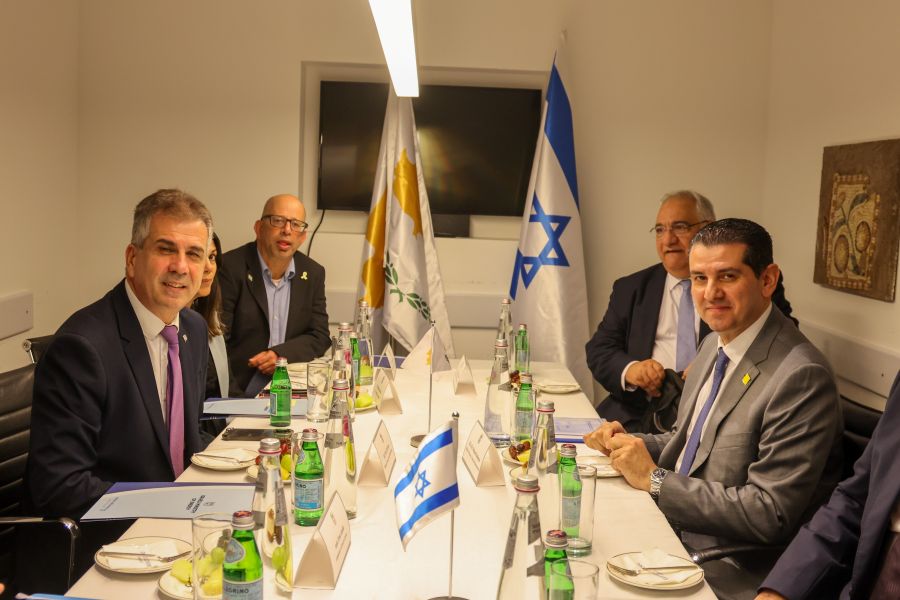
Beyond security and energy, the declaration outlined expanded cooperation in emergency preparedness, environmental protection, climate action, health, science, technology and artificial intelligence. Several new trilateral working groups are to be established, alongside efforts to strengthen access to EU research initiatives such as the Horizon program.
Political and democratic foundations
The leaders emphasized the democratic foundations and long-term resilience of their partnership, while rejecting destabilizing ambitions in the region. They talked about the trilateral format as a constructive platform capable of contributing to a broader regional security architecture.
Wider regional and international issues
On broader regional and international matters, the leaders welcomed progress in dialogue between Israel and Lebanon, reaffirmed support for Lebanon’s sovereignty, and reiterated their commitment to expanding the Abraham Accords. They also reaffirmed Jerusalem’s importance to the three monotheistic religions, pledging to uphold the status quo at the city’s holy sites and protect the cultural heritage of Christian communities.
Condemnations and final diplomatic engagements
The Joint Declaration strongly condemned antisemitism worldwide and reiterated full support for a just, comprehensive and sustainable solution to the Cyprus problem, based on international law and relevant UN Security Council resolutions. The day concluded with President Christodoulides inviting President Herzog to visit Cyprus, an invitation that was accepted, and with Christodoulides holding a separate telephone conversation with Palestinian Authority President Mahmoud Abbas, reflecting Cyprus’s continued engagement with all parties in the region.