By Marisa Fyrilla
My grandmother and mother are among those displaced in 1974 from Famagusta, and if the war had never happened, I would have been raised there. Reading about UN envoy Holguin’s recent visit and President Christodoulides’s remarks on Varosha took me back to my first visit to the “ghost town” and the feelings I carried away with me. I went there not as a local or a returning resident, but as a sort of ‘tourist’.
As I walked through the abandoned buildings, I did what every tourist does in an unfamiliar place: I gazed. Strolling through abandoned buildings with bullet holes, passing by empty restaurants and small businesses with rusty signs, and seeing broken windows and dilapidated houses was an extraordinary experience for me and, I'm pretty sure, for the other tourists as well.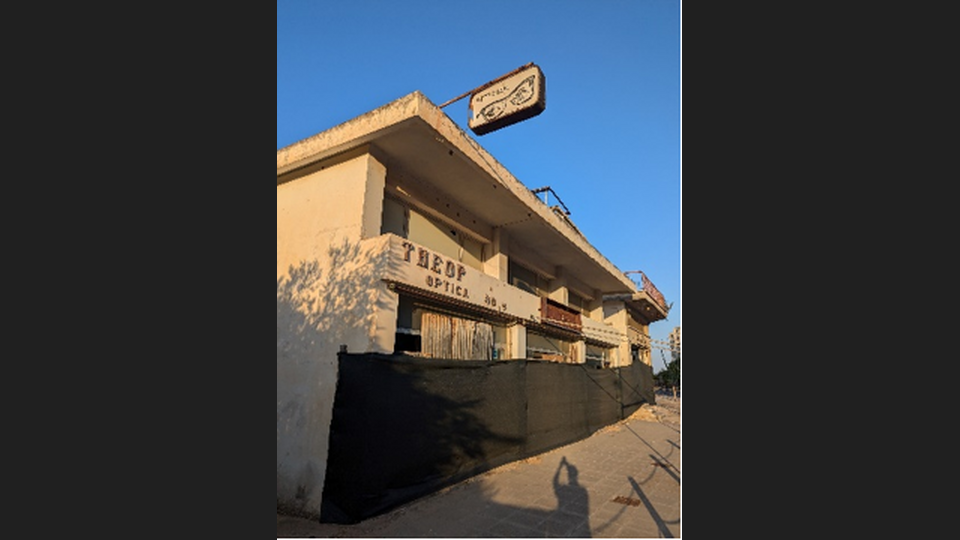
What was a place of struggle, pain, and uprooting for my family is a place for a ‘peculiar beach day’ (TripAdvisor, 2025) for other tourists, and as much as I hate to admit it, a bit for me as well. I found myself stuck in a strange paradox: enjoying the unfamiliarity and peculiarity of the place as a ‘tourist’ while also filled with rage over my stolen identity as someone who was supposed to be a local but arrived only as a visitor.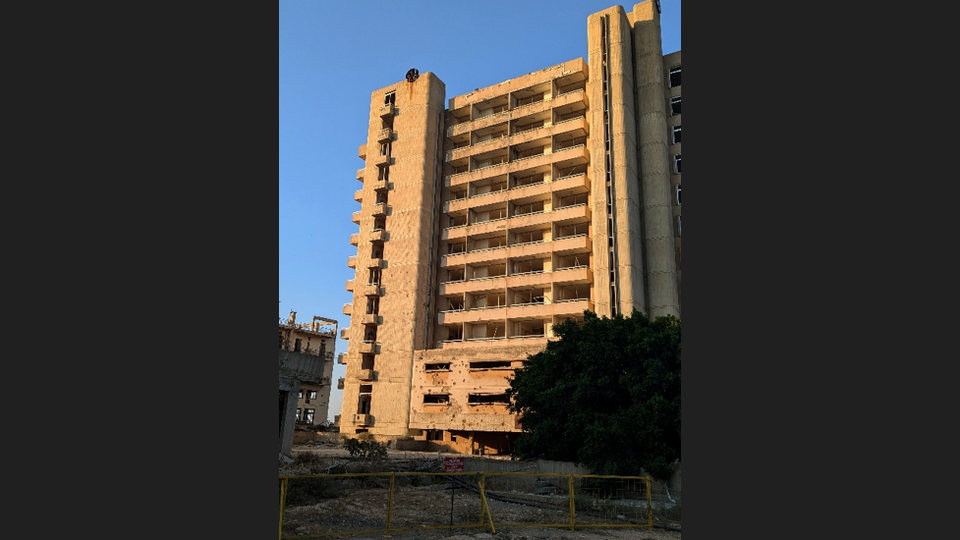
Going to the beach with my family is a normal holiday experience for me; however, going to the beach in the ‘Ghost Town’ of Varosha was far from ordinary. Although I engaged in activities I do on any of my beach holidays—such as swimming, sunbathing, and relaxing—the surroundings were far from soothing, unlike those of other beaches. The familiar act of relaxing at the beach became extraordinary, transformed by the site’s atmosphere. Even though I felt excited about experiencing this absurd beach day among the ruins, my gaze was still influenced by my complex relationship with the place, leaving me with feelings of uneasiness, sadness, and rage.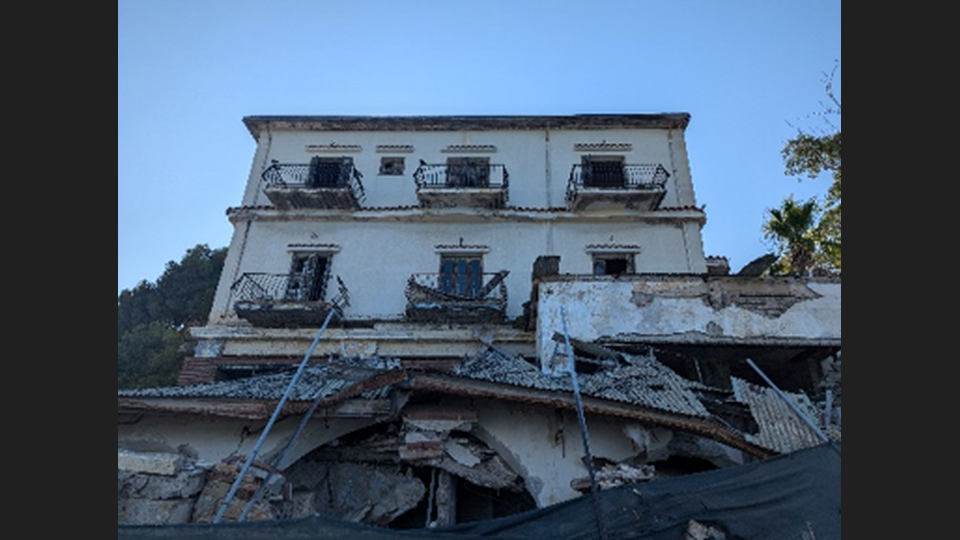
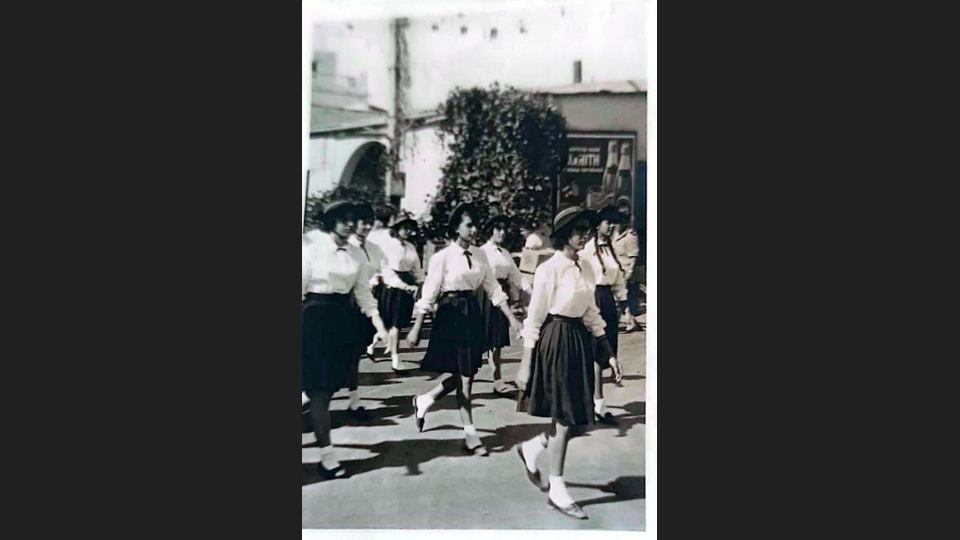
The irony of engaging in tourist activities in a place that was supposed to be my home made me develop an intense desire to find familiarity within the town. My search for familiarity did not derive from a desire for comfort, but from a deeper emotional need to connect with a place that I felt belonged to me through memory, heritage and loss. While other tourists enjoyed cycling around town and taking photos, I was more focused on finding traces of signs that could connect me to my family’s life here.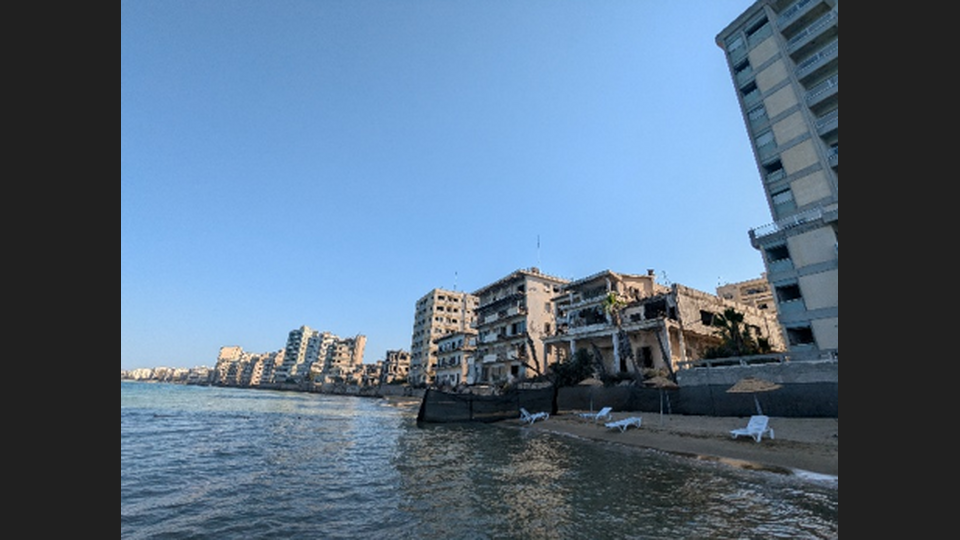
Although I was sightseeing like most of the tourists there, my gaze was shaped by my dual position as both an insider with family history and also as an outsider visiting the place for the first time. My imaginative link to the town did not emerge in that single moment; it developed over years of listening to stories, looking at photographs, and watching archival videos.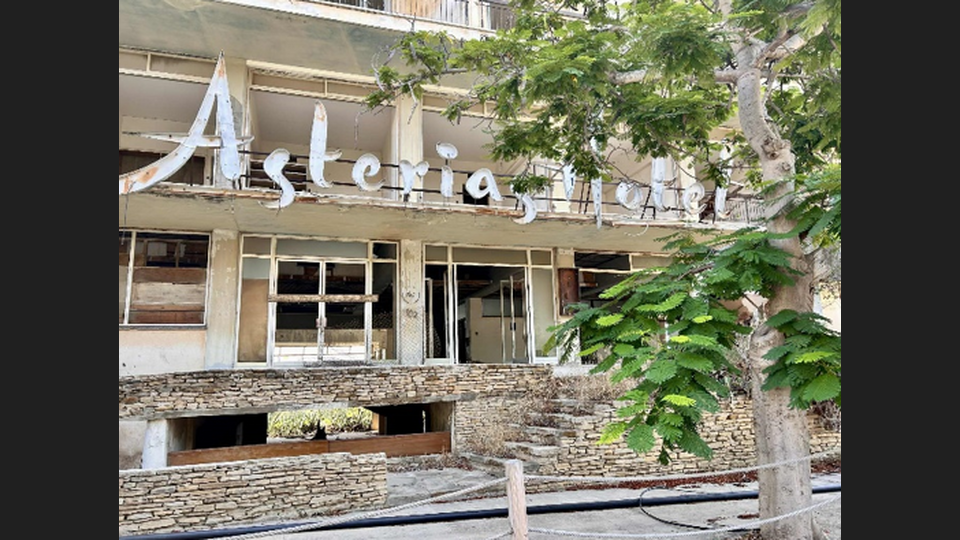
The ruins around me did not only represent war and destruction; they also held traces of life that could link me to my family. The deserted street that led to the sea, the wrecked hotels, the abundant restaurants, the rusty mailboxes all stopped being ruins as I imagined the stories my grandma told me, reimagined the photos she showed me, and even the vintage advertisements I saw of the place. The hotels were once again blooming with visitors, the abandoned restaurants overflowing with the smells of freshly made food, and the roads were full of life. My gaze was not only visual but emotional and imaginative, shaped by memory and loss as much as by sight.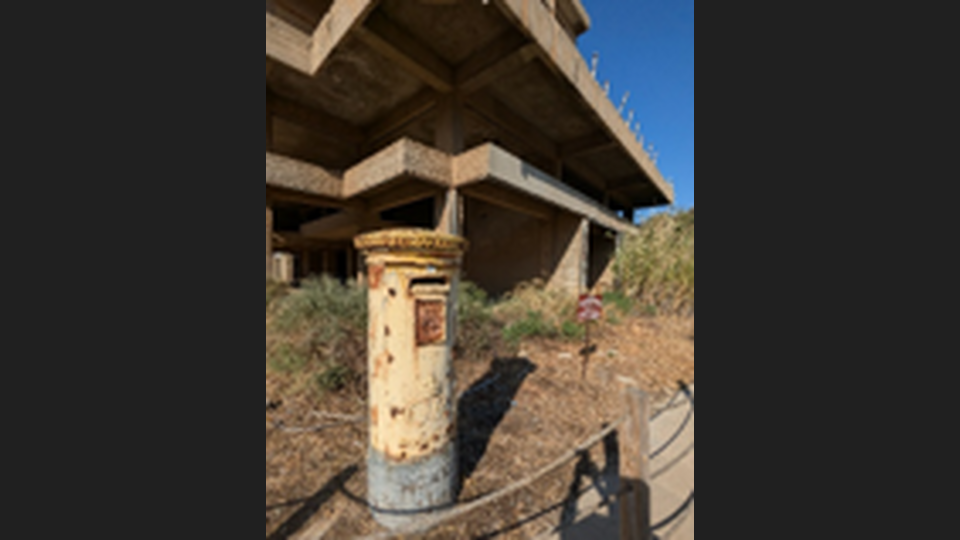
The roads I walked for the first time were the same roads that my grandma and her family would walk every day to go to the beach; the sea I swam in for the first time was the same sea that my grandma learned how to swim in, and suddenly, the place that was supposed to be unfamiliar became familiar through the stories. Even though, in theory, I was a ‘tourist’ visiting the place for the first time in moments when I recalled those stories, I momentarily felt like a local.