Newsroom
If you spent last year saving for a flat, a steady housing index might sound at odds with what you saw in the listings. The two figures measure different things. Cyprus’ central bank recorded a 9.6% annual rise in apartment prices in the final quarter of 2025. Over the year as a whole, Eurostat found that home prices relative to household income barely moved.
The Cyprus index stood at 91.61 in 2025, compared with 91.63 in 2024 and 92.03 in 2023. A score of 100 represents Cyprus’ own long-term average since 2000. So the 2025 reading puts the ratio about 8.4% below its historical average. When home prices and household incomes rise at roughly the same pace, the ratio can hold steady even as buyers face higher asking prices.
For a first-time buyer, the more immediate questions are how much cash is needed upfront and whether the monthly mortgage payment fits the budget. The national index compares prices with average income per person. Eurostat points to other measures that can give buyers a fuller picture, including how many years of income it takes to buy a home and how much it costs to borrow.
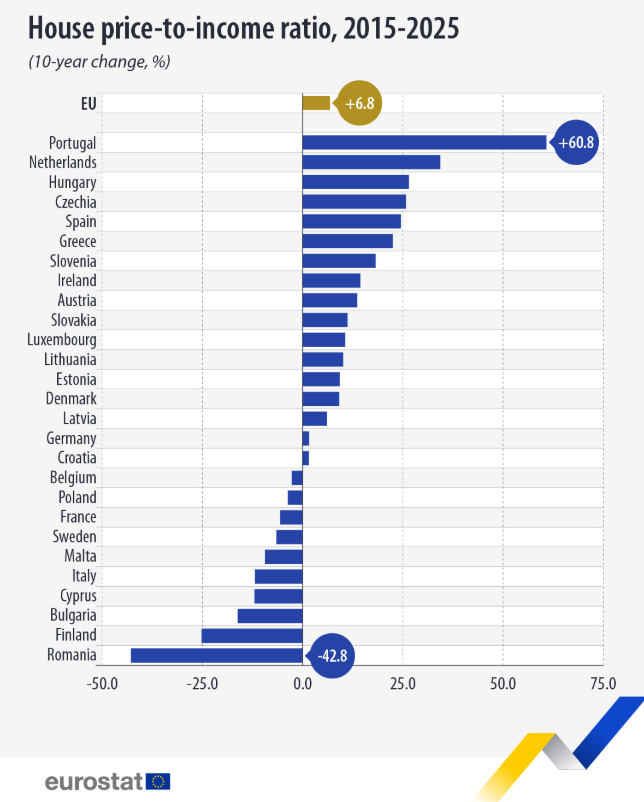
Across the EU, home prices pulled ahead of household incomes over the past decade. The bloc’s price-to-income ratio was 6.8% higher in 2025 than in 2015, rising in 17 member states and falling in 10. Portugal recorded the biggest increase at 60.8%, while Romania saw the biggest drop at 42.8%. Those figures show how much the relationship between prices and incomes changed within each country. A buyer comparing actual prices across countries would need a different measure.