


Apostolos Kouroupakis
“All public pavements, pedestrian streets, squares and other public spaces must be constructed in a way that ensures the continuous and unobstructed movement of pedestrians, particularly people with disabilities or reduced mobility. All necessary measures must also be taken to prevent accidents caused by slipping, falling, or colliding with obstacles.”
This is what the Streets and Buildings Regulations, KDP 248/2017 and KDP 262/2018, require. But are these rules actually being enforced? Is there compliance with EU Regulation 305/2011 on construction products and its basic requirement on “Safety and Accessibility in Use”?
I believe many of the provisions described in these regulations exist only on paper when redevelopment work is carried out.
Things are even more difficult in areas redeveloped years ago or where authorities and planners failed to pay the necessary attention. Add to these shortcomings and irregularities our rampant selfishness and “not my problem” attitude, and the result is not simply disappointing but deeply troubling and unpleasant.
Nicosia’s Old City is a telling example. The roads, pavements, and pedestrian streets of the historic center resemble a jungle, as photographs published by “K” on its website last Monday showed.
Of course, Nicosia is not the only city where pedestrians cannot move around freely, particularly those using wheelchairs, people with mobility or other disabilities, and parents pushing baby strollers. This is a problem in every city in the country, particularly in their historic centers.
Special routes for blind people or other groups are out of the question. Such things belong in the realm of science fiction.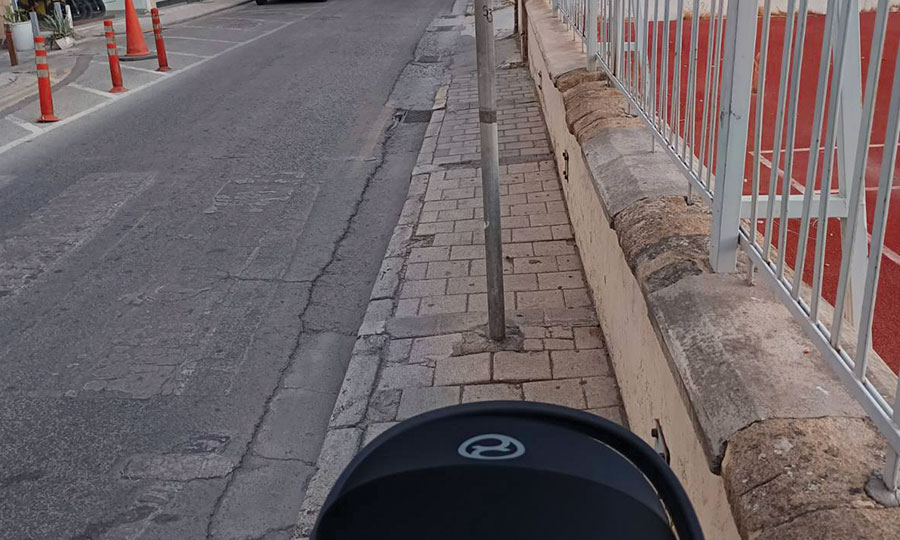 Special routes for blind people or other groups are out of the question. Such things belong in the realm of science fiction. Our pavements cannot even get the basics right.
The idea of sustainable urban mobility has become something of a bad joke because our cities cannot claim to be accessible when they remain almost impossible to navigate for anyone who is not driving.
It is difficult to understand why the historic centers of Nicosia and other cities are in such poor condition, and why anyone hoping to enjoy a carefree walk must first be brave and adventurous.
Pavements are permanent obstacle courses. So-called pedestrian streets often provide ample space for tables and chairs, rubbish bins and all kinds of waste.
Mobility weeks may be organized, and people may be encouraged to leave their cars at home. Such initiatives are interesting and important, but they are not permanent solutions. Nor are they being carried out in a way that can achieve their intended purpose: changing our culture and securing a commitment from the state and municipalities to provide citizens with clear and accessible pavements and pedestrian streets.
Municipal lighting is equally inadequate. Unless you are extremely careful — and you need to keep your eyes wide open because our pavements are full of traps — you may suddenly find yourself facing scaffolding, a badly parked vehicle or a freshly dug hole opened by some public service but never properly repaired.
### The criteria
What criteria are used when redevelopment projects are carried out, and at what point does a contractor’s responsibility end? How are the materials used on roads and pedestrian streets selected?
Anyone walking along the long-suffering Ledra or Onasagorou streets will know that those small concrete blocks can become traps for pedestrians, wheelchairs, baby strollers, sandals and almost every other kind of footwear.
The same applies to the wooden decking outside Nicosia Town Hall. It was clearly built with a limited lifespan, and that time appears to be running out.
The redevelopment of roads, pedestrian streets and entire neighborhoods must be carried out responsibly and supported by proper planning. Yet I often have the impression that sustainable urban mobility is sacrificed for the sake of appearance.
Municipal and state authorities must therefore address sustainable urban mobility seriously if we want to claim that our cities and public spaces are genuinely open and accessible to everyone, without exception.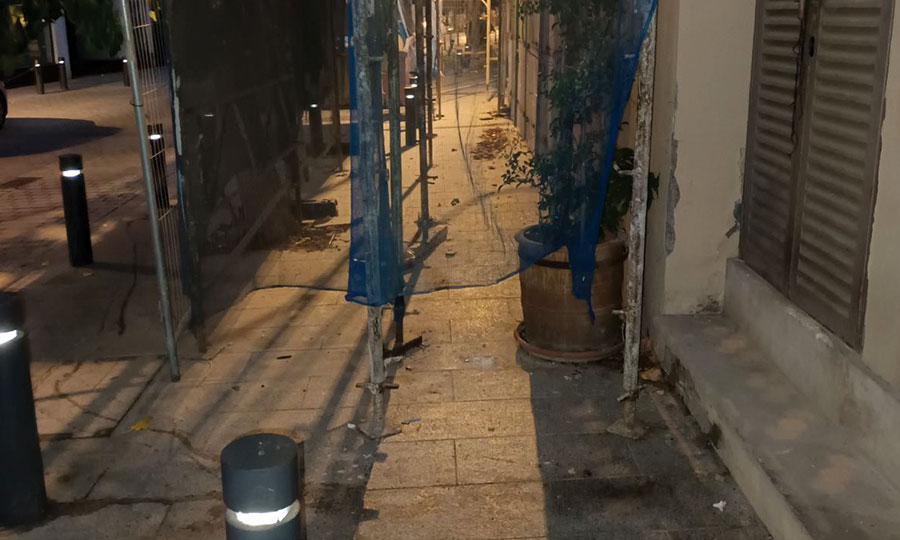 Municipal lighting is equally inadequate. If you are not careful, you may suddenly find yourself facing scaffolding, a badly parked vehicle or some other obstacle.


