

Rafaela Dimitriadi
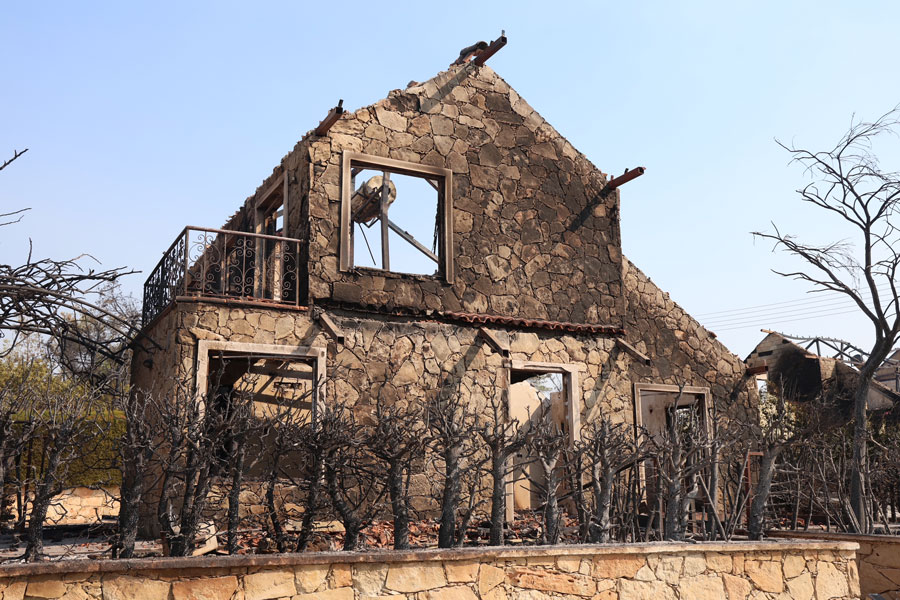
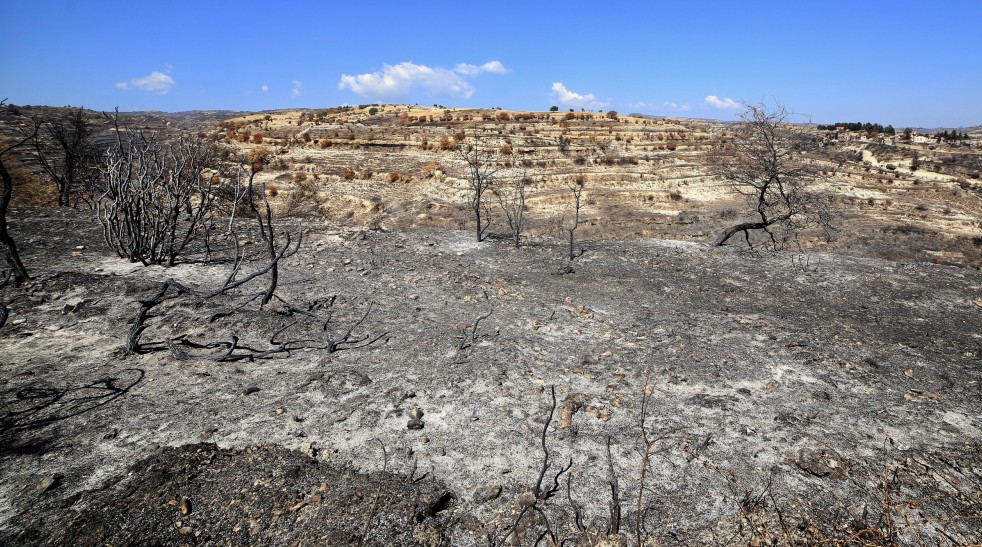
Two of our fellow citizens lost their lives. The green turned black. Homes were burned; 125 square kilometers of land were reduced to ashes. Forests and agricultural areas were consumed by flames. Today marks one year since that dark day when the wildfire swept through the mountain communities of the Limassol district, leaving behind unimaginable destruction.
The residents of the communities lived through nightmare moments. They mourned the loss of their people. They watched the work of a lifetime disappear. Hundreds of people were forced to abandon their homes, while many spent the night sleeping in their vehicles. People trapped, villages without electricity, children evacuated from camps, roads closed, residents, firefighters and volunteers fighting to bring an end to hell. This was the scene that unfolded on that tragic night in the Limassol district, where minutes felt like centuries.
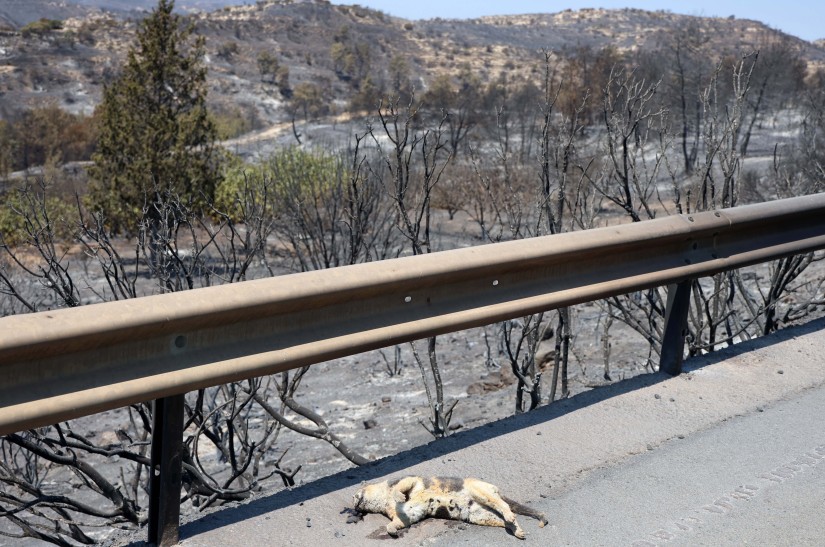
The community leaders described the despair that prevailed, noting that such destruction had never been seen before.
People trapped, villages without electricity, children evacuating camps, closed roads, residents, firefighters and volunteers trying to put an end to hell.
The flames intensified rapidly, and the fire front spread at an unimaginable speed. As the fire threatened residential areas, authorities proceeded with a series of evacuations.
The timeline of the tragedy
The adverse weather conditions that day, with an orange warning in effect and strong winds, did not help firefighting efforts. On the contrary, they made them more difficult.
According to the Fire Service operational report, the first call was received at 1:28 p.m. through a private telephone regarding a grass fire on the road from Malia to Arsos.
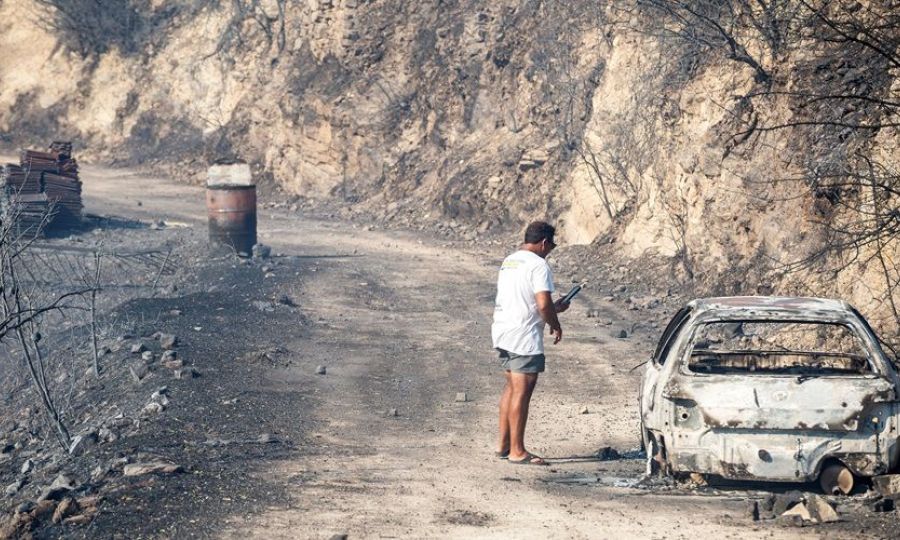
According to the report, at 1:33 p.m., the Pachna Rural Fire Station departed for the scene with two fire engines, a 5,000-liter water tanker, and a rapid intervention vehicle carrying 1,200 liters of water. At the same time, the station officer requested the response of the Kyvides Rural Fire Station. At 1:43 p.m., the Pachna Rural Fire Station arrived at the fire.
The adverse weather conditions that day, with an orange warning in effect and strong winds, did not help firefighting efforts but instead made them more difficult.
According to the chief of the National Guard, the order to activate aerial firefighting resources was given at 1:49 p.m., and the first aerial water drop using the available aircraft took place at 2:18 p.m.—50 minutes after the fire was detected.
The flames intensified rapidly, and the fire front spread at an alarming speed. As the fire threatened inhabited areas, authorities proceeded with successive evacuations. Malia was among the first areas affected, while the wildfire then spread to other mountain communities of Limassol.
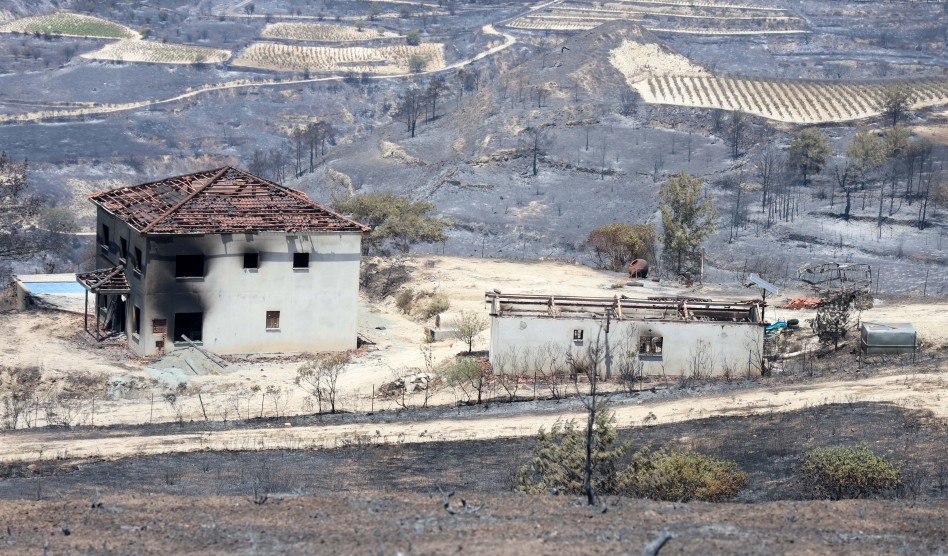
According to the Cabinet, the following communities were affected:
Omodos, Arsos, Koilani, Vasa Koilaniou, Vouni, Silikou, Malia, Lofou, Agios Therapon, Agios Amvrosios, Kissousa, Pachna, Kato Kivides, Pano Kivides, Souni-Zanatzia, Alassa, Monagri, Agios Georgios Silikou, Kouka, Potamiou, Sotira and Ypsonas.
The order to activate aerial resources was given at 1:49 p.m., and the first aerial water drop using the available aircraft took place at 2:18 p.m.
Throughout the day and night, large forces from the Fire Service, Forestry Department, Civil Defense, other services, and volunteers battled the flames. The forces remained on alert in the following days.
According to the Fire Service operational report, the first call was received at 1:28 p.m. through a private telephone regarding a grass fire on the road from Malia to Arsos.
On the evening of July 23, the worst-case scenario was confirmed. The bodies of two people, Maro Filippidi, 77, and Dimitris Filippidis, 81, former residents of Limassol, were found inside a vehicle on the Monagri–Alassa road.
On the black morning of July 24, the battle against the flames continued. That evening, Fire Service spokesman Andreas Kettis announced that there were no longer any active fronts, only flare-ups.
The battle against flare-ups continued for a third day, while by the evening of July 25, the situation appeared to be fully under control.
Questions and responsibilities
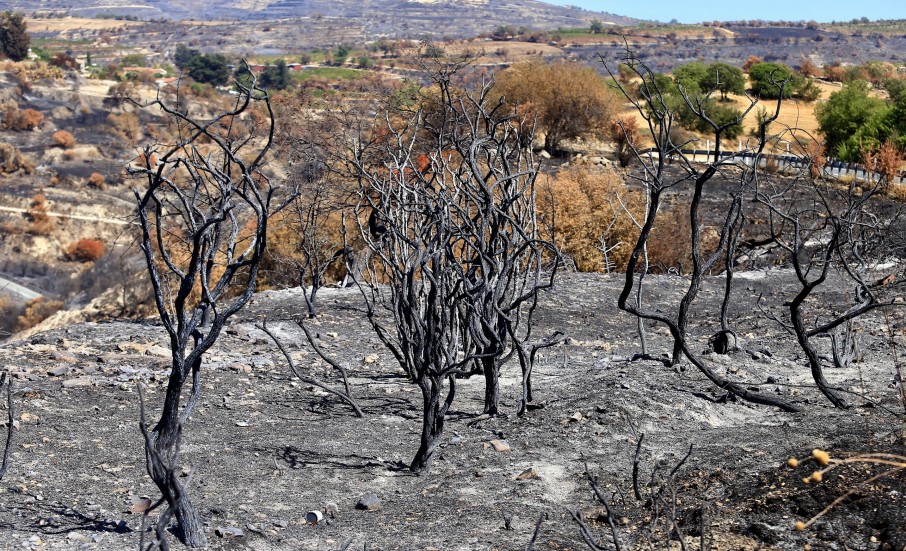
The hell created that day left deep wounds, major questions and sparked public debate over response times and weaknesses in the system.
The tragedy highlighted in the harshest possible way the need for changes that should have been put in place before the disaster.
The state mechanism was forced to face its responsibilities. This year, officials say they are prepared, noting themselves that many things have changed since last year.
“The fire was running like a 100-meter sprinter”
One year later, during the Gastronomos Awards held in the village of Vouni, honoring the people of Limassol’s burned lands, community leaders described what they experienced that day, what the wildfire left behind, and the condition of their communities today.
Describing the day of the deadly wildfire, Malia community leader Marilena Athini said there was initially confusion, which quickly turned into fear and anxiety.
“The emotions were mixed,” she said.
She explained that 10 homes were consumed by flames, seven of them completely destroyed, while the community’s mosque, one of the oldest in Cyprus, was also destroyed.
Today, she said, residents are waiting for restoration work to begin, as they try to stand back on their feet.
The community leader of Vouni, Matthaios Protopapas, recalled that they initially rushed to help Malia, but within minutes the destruction reached their own village.
He said that within just three minutes, the fire had reached the western side of Vouni.
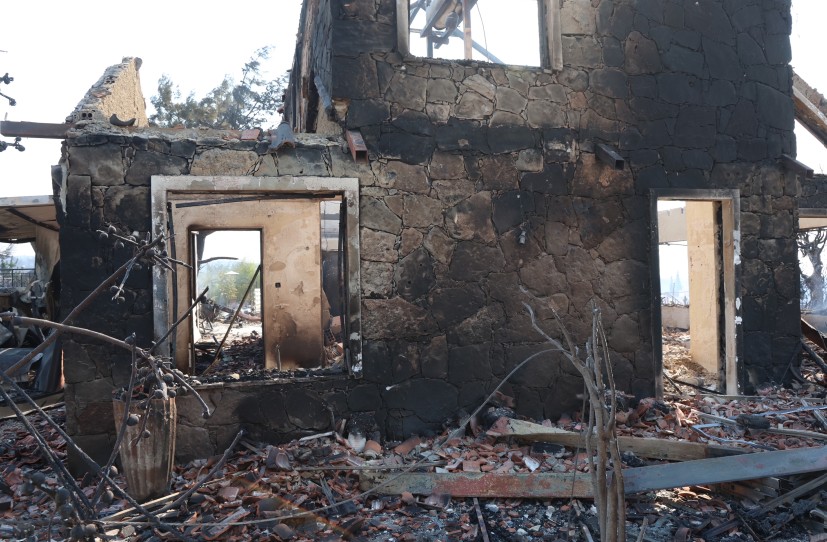
Referring to the 69 homes that were destroyed, he described the situation as unprecedented and expressed hope that they would never experience anything similar again.
He estimated that it may take 50 years for the wounds of the disaster to heal, while noting that hope for rebirth has begun through the planting of 4,000 trees.
The description by the community leader of Omodos, Evgenios Michael, was equally striking. He said that in the 60 years he could remember, he had never witnessed such devastation.
He described the fire as moving at the speed of a 100-meter sprinter.
Omodos, he said, was surrounded by flames, and, although homes were saved, the greatest wound was inflicted on agricultural land.
The community leader of Vasa Koilaniou, Michalis Mosfilis, said the fire crossed the village from one end to the other in just 40 minutes.
Five homes were completely destroyed, and another 30 properties suffered damage, he said.
He expressed satisfaction that electricity and water supplies were restored in record time, giving residents their first sense of relief.
The community leader of Silikou, Nikos Aresti, described as shocking the moment he saw the fire enter the first homes of the village.
The community leader of Kyvides, Konstantinos Papadopoulos, described a suffocating atmosphere where people struggled even to breathe.
He said the decision about where residents should be taken was extremely difficult.
Speaking about the following day, he admitted that he realized it may have been the hardest decision of his life.
One year later, he said, many affected residents have already received compensation, and the restoration process is progressing positively.
The community leader of Agios Therapon, Therapon Chrysostomou, said those hours were a matter of survival and that they had to find the strength to stand again.
Sixty-four homes were burned, he said, adding that the community’s entire property was lost when referring to the environmental impact.
Regarding the current situation, he noted that the necessary funds for repairing homes have been approved.
Speaking about the dramatic moments experienced by the community, the community leader of Arsos, Giannakis Giannaki, stressed that what the wildfire revealed was that communities rely on their own strength.
The community leader of Potamiou, Simos Constantinou, said the village was saved thanks to the determination of 10 to 15 people who stood against the flames.
The community leader of Souni–Zanatzia, Nikos Vikis, described it as a massive environmental disaster, saying the fire moved relentlessly from pine tree to pine tree.
He also noted that damage to the school is estimated at €168,000. According to him, the president of the Republic promised that it would be transformed into a cultural center.
The community leader of Agios Amvrosios, Stelios Grigoriou, said six families lost their homes.
“The hopeful message comes from nature,” he said.
Sixty-five homes were burned in Lofou, with 30 completely destroyed.
The community leader, Ioannis Neophytou, despite the heavy impact of the disaster, stressed that the community had no choice but to remain strong.
The Limassol wildfire tragedy must not be forgotten.
One year later, the wounds remain open, and extreme weather conditions serve as a reminder that prevention, preparedness, and rapid response leave no room for complacency.
Protecting human life and the natural environment is everyone’s responsibility.
- Fire in Ergates brought under control after burning seven hectares
- Minors admit to starting Limassol fire with fireworks
- Limassol’s fire-hit community leaders honored for their courage and resilience
- Public raises €1.2 million for Limassol fire victims
- Farm animals among the silent victims of Limassol fires


