Newsroom
For someone living on a €508 pension, another €256 a month could make a difference at the supermarket, when the electricity bill arrives or when it is time to fill the heating tank.
That is one of the increases illustrated in new Labor Ministry examples showing how the proposed pension reform would affect people across different income groups. The largest percentage gains would go to those with the lowest earnings, while higher earners would see much smaller increases.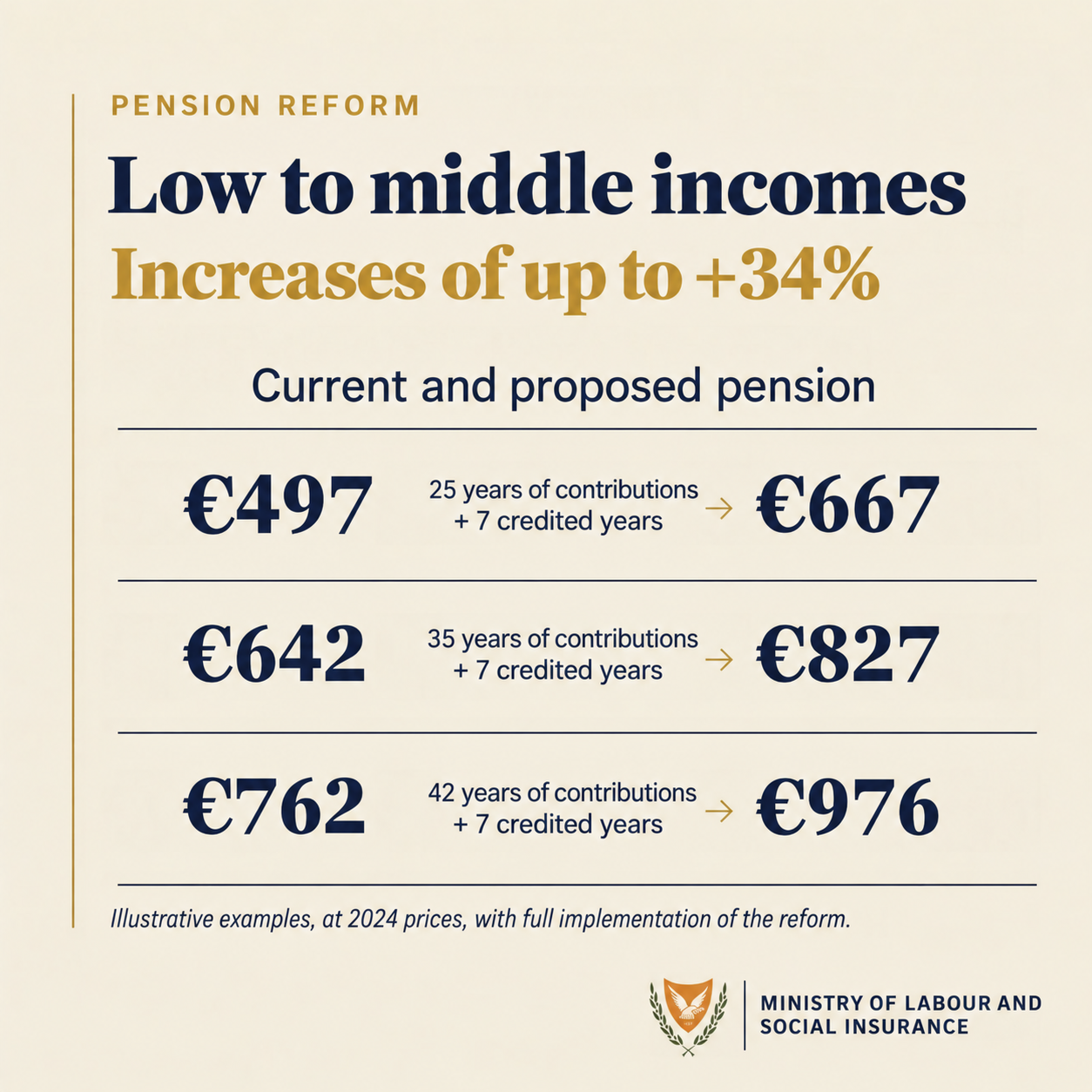
The figures are examples of what pensions would reach once the reform is fully implemented, rather than amounts everyone would receive immediately. They are calculated using 2024 prices.
Under the latest proposal, increases would be paid in stages over three years: 30% of the total increase in the first year, another 30% in the second, and the remaining 40% in the third. The government aims to introduce the new system on Jan. 1, 2027, subject to parliamentary approval.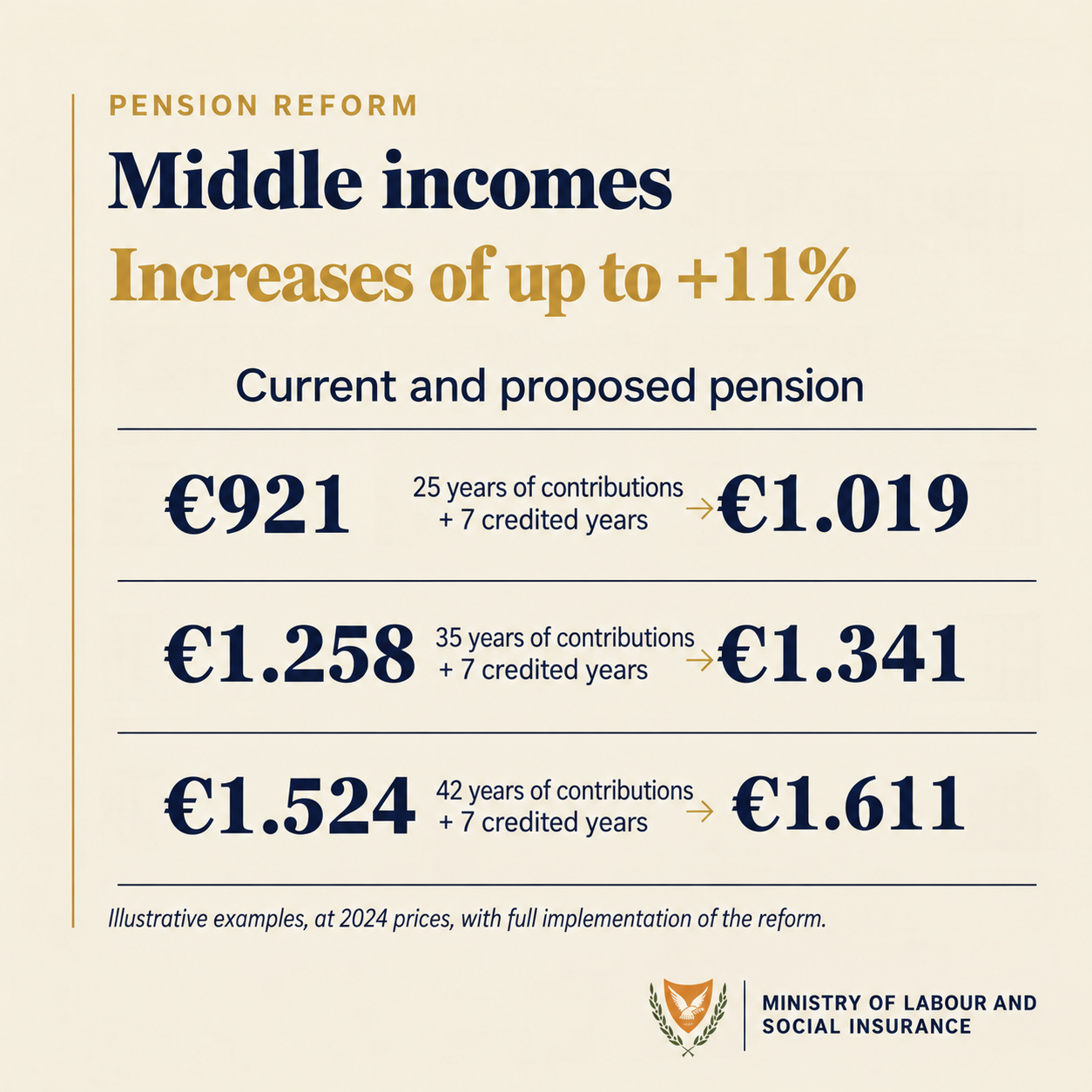
The biggest gains at the bottom
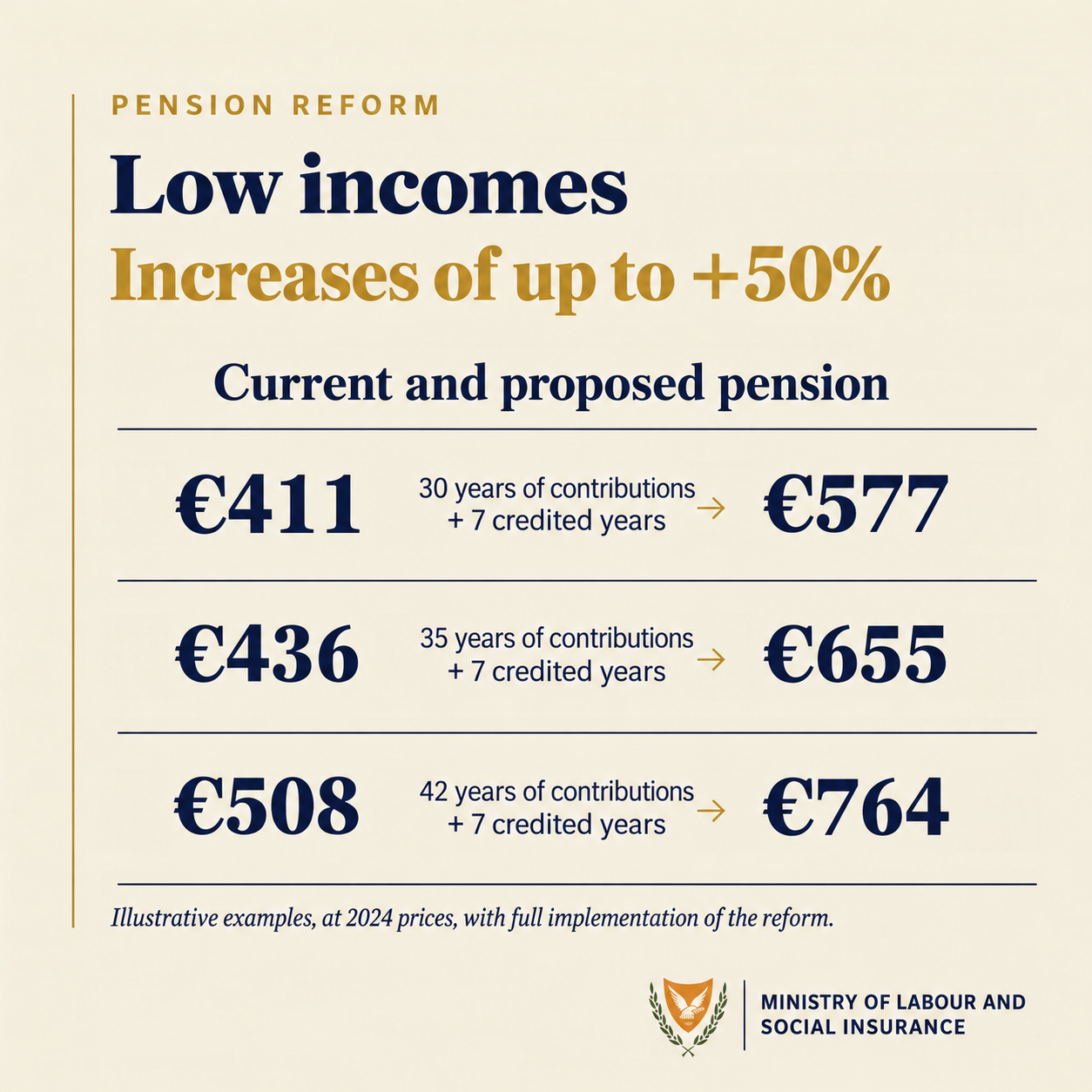
For low-income earners, the ministry’s examples show a pension of €411 rising to €577—an additional €166 a month.
Another example, involving 35 years of paid contributions and seven credited years, shows a pension increasing from €436 to €655, a gain of €219.
For someone with 42 years of contributions and seven credited years, the amount would rise from €508 to €764. That is roughly a 50% increase.
Credited years are periods recognized for pension purposes even though the person was not paying contributions through employment.
What changes for other earners?
People in the low-to-middle-income group would also receive substantial increases. A pension of €497 would reach €667, while €642 would become €827 and €762 would rise to €976, depending on the contribution record.
The increases are smaller for middle-income earners. The examples show pensions rising from €921 to €1,019, from €1,258 to €1,341, and from €1,524 to €1,611.
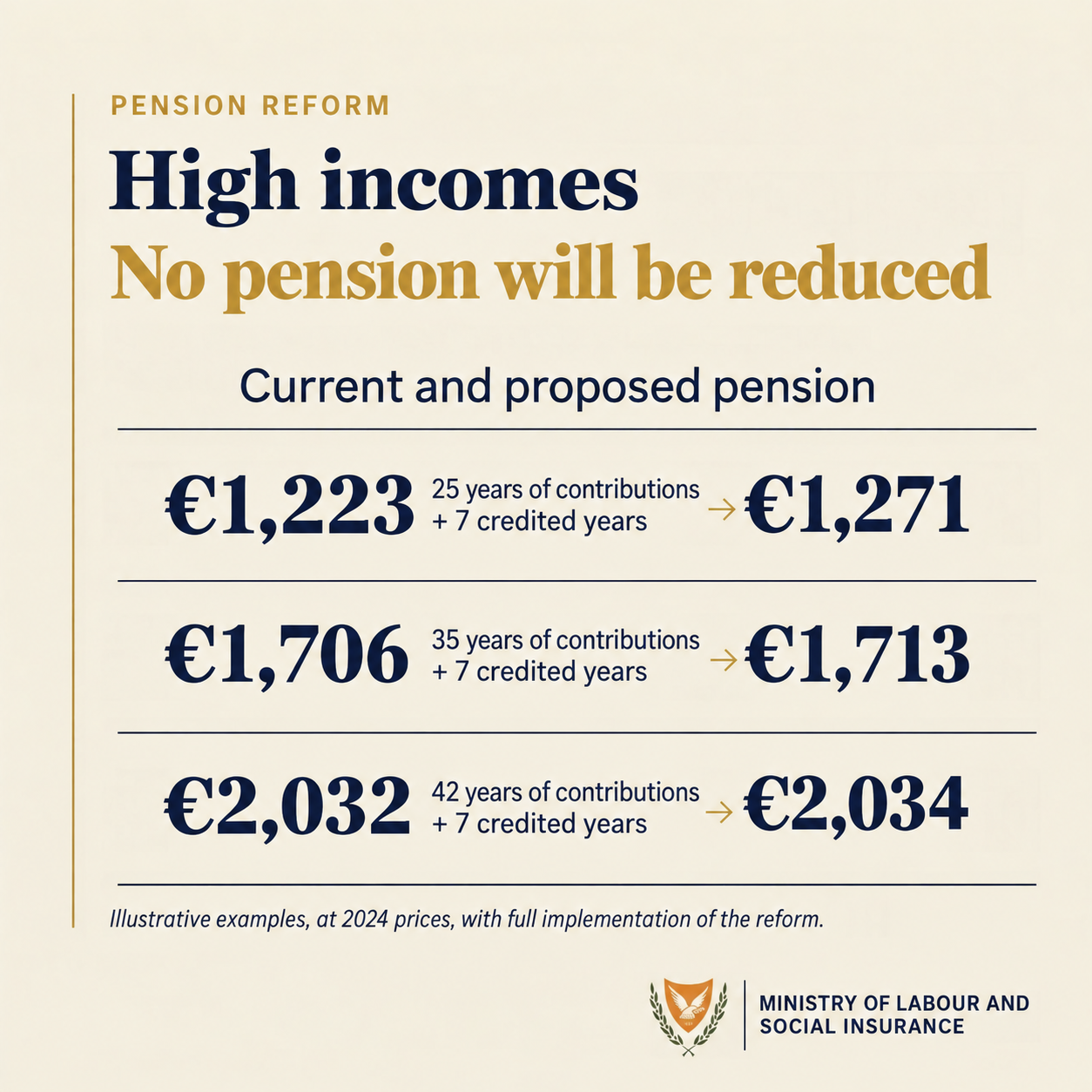
At the higher end, the difference narrows considerably: €1,223 would become €1,271, while pensions of €1,706 and €2,032 would increase to €1,713 and €2,034, respectively.
The government says no existing pension would be reduced under its proposal.
For households trying to work out what this means for their budget, the key is that there is no single increase applying to everyone. Earnings and the years recognized in each person’s insurance record affect the calculation.
The bill still has to complete legal checks, receive Cabinet approval, and go before Parliament. The ministry’s tables offer a picture of the intended changes; the final rules will depend on the legislation MPs approve.