

Martha Kehagias
A bottle or can worth just a few cents may not seem like much, but when thousands are collected, the total can help fund children's ambitions, feed rescued animals or support local community projects.
That is already happening in Portugal, where a new deposit return scheme for plastic bottles has created unexpected fundraising opportunities for individuals and organizations. The experience could also offer food for thought in Cyprus, where empty aluminium cans have been collected to support charitable causes, including hospital equipment through Cans for Kids and feral cats through Cans for Cats.
Under Portugal's Volta scheme, plastic bottles up to three litres carry a €0.10 deposit. Consumers can reclaim the money by returning eligible containers to collection machines, receiving vouchers that can be exchanged for cash or discounts.
For two sisters, aged 10 and 13, the system has become the foundation of an ambitious project. Rather than limiting themselves to bottles used by their own family, they began asking neighbours to save empty containers for them.
The girls distribute letters explaining their project and arrange times to collect bags of bottles left outside people's homes. Their goal is to gather 120,000 bottles by June next year, allowing each of them to earn €6,000 toward future educational and travel plans.
The project has also attracted considerable attention online. By mid-August, the sisters had collected more than 5,300 bottles and earned €537, while restaurants and other businesses had begun offering to contribute their empty containers.
Their approach avoids one of the more controversial aspects of deposit return schemes: people searching through public rubbish bins for discarded bottles.
Reports from Portugal have described rubbish being scattered as people hunt for containers that can be exchanged for cash. However, the sisters say their bottles are donated directly by households and businesses rather than retrieved from rubbish.
The fundraising potential of discarded containers is also being put to use by an animal sanctuary in the Portuguese town of Vendas Novas.
The owner of Gatil Original, which cares for around 40 older, sick and vulnerable cats, has established partnerships with local businesses that set aside their empty bottles for collection. The refund money is then used to purchase food for the animals.
One restaurant alone provided enough bottles to generate about €50, while the sanctuary has since developed several other business partnerships. The goal is to generate enough income from the containers to cover the cats' food costs.
The idea may sound familiar in Cyprus.
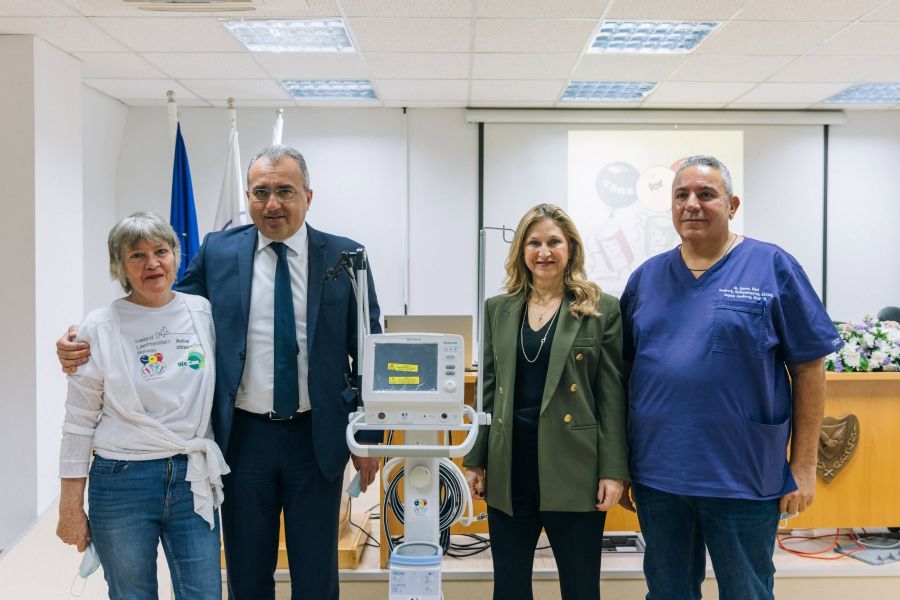 This Fisher & Paykel heated humidifier is one of many pieces of life-saving medical equipment donated to children's wards by Cans for Kids, funded entirely through community aluminium recycling.
Local initiatives demonstrate how apparently worthless aluminium containers can be transformed into support for social and charitable causes. Campaigns involving the collection of aluminium cans have helped raise funds connected with children's needs and the care of stray and feral cats.
The Portuguese experience suggests that a deposit return system can create another layer of opportunity. Instead of individuals simply reclaiming the deposit on their own bottles, schools, charities, animal welfare groups and community organizations could potentially encourage households and businesses to donate their refundable containers.
Even small collections can add up.
A civic group in Portugal, for example, has placed containers where residents can donate bottles to support efforts to restore a former forest rangers' building. One organizer collected 116 bottles in a single deposit, generating €11.60, while the group also receives containers from a local sports association and individual supporters.
Portugal introduced its scheme as part of efforts to meet European Union targets for collecting single-use plastic bottles. The EU's Single-Use Plastics Directive requires a 90 per cent collection rate for deposit bottles by 2029, with deposit return systems among the methods countries can use to achieve that goal.
With the right organization, a bottle or can can potentially do more than stay out of a landfill. It can help pay for a child's dream, provide food for rescued animals or give a community group a modest but useful source of funding. And as Cyprus has already shown through its own can-collection campaigns, sometimes the things people throw away can have a second life that goes far beyond recycling.


