

Martha Kehagias
Cyprus is one of only a small number of European countries using DNA-based techniques as part of routine water monitoring, according to a new report from the European Commission’s Joint Research Centre (JRC).
The approach may sound highly technical, but its basic principle is straightforward. Scientists can take a water sample and look for tiny traces of genetic material left behind by organisms living in or passing through the water. These traces, known as environmental DNA, or eDNA, can help identify which species are present without scientists having to find and identify every organism by traditional methods.
For Cyprus, the technology is currently being used to monitor phytoplankton, microscopic organisms that live in water and play an important role in aquatic ecosystems. The country is applying DNA-based methods to phytoplankton monitoring in rivers and coastal waters.
The function of DNA-based water monitoring
Traditional monitoring can involve collecting water samples and examining organisms under a microscope or using other laboratory techniques to determine what is present. DNA-based monitoring adds another tool. Every organism leaves genetic traces in its surroundings. Cells, fragments of tissue and other biological material can enter the water, leaving behind DNA. Researchers can extract the genetic material and analyze it to determine which organisms are represented. This can allow scientists to detect organisms that are difficult to find through conventional sampling. It can also provide information about several organisms from the same water sample.
The presence and quantity of different organisms can tell scientists about the condition of an ecosystem. Changes in the biological community can indicate that water conditions are changing, whether because of pollution, changes in nutrients, temperature, salinity or other environmental pressures.
DNA testing does not mean that Cyprus is simply testing whether water is safe to drink. The programme described by the JRC concerns the ecological condition of water bodies under the EU Water Framework Directive. In other words, the question is not only whether water contains something dangerous to humans, but whether the aquatic environment is functioning as it should.
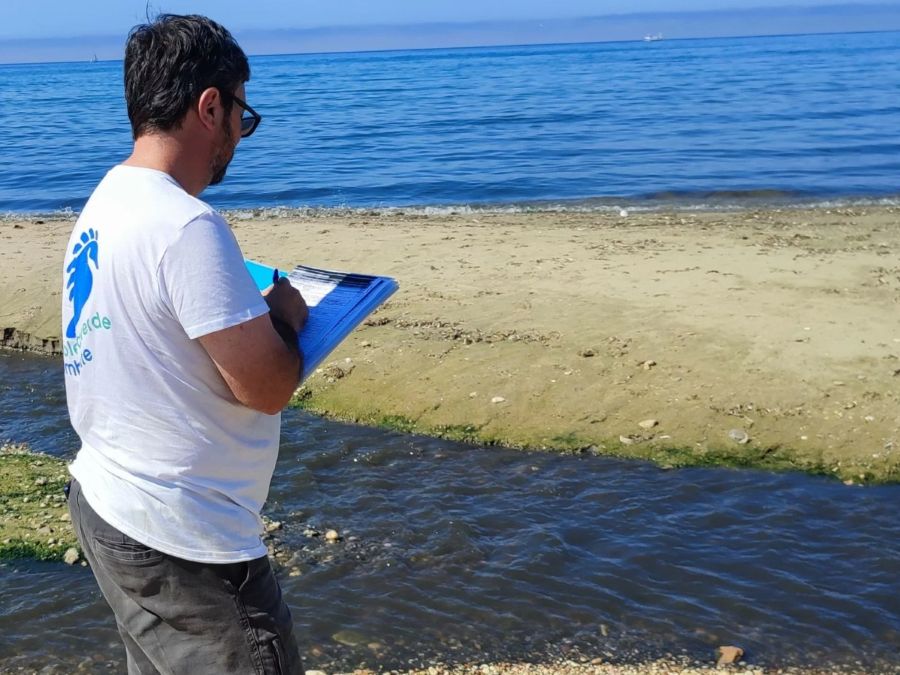 Photo credit: www.sudsalute.it
Economic impact
Healthy water ecosystems have an economic value even when that value is not immediately visible. Cyprus’s tourism industry depends heavily on its coastline and natural environment. Fisheries and businesses operating around coastal areas also depend on functioning marine ecosystems. Wetlands and other water bodies provide ecological services that can be expensive to replace or restore once they have been damaged. More effective monitoring can help authorities identify environmental deterioration before it becomes more difficult and costly to deal with. Detecting a problem at an early stage can potentially reduce the expense of restoring a damaged ecosystem later.
There is also a European dimension. The JRC report shows that DNA-based monitoring remains relatively uncommon in official routine monitoring. Only two countries taking part in the survey, representing 8 per cent of participants, reported using such approaches routinely under the Water Framework Directive. The other 24 countries, or 92 per cent, had not yet adopted them for official routine monitoring.
Cyprus, therefore, has an opportunity to develop expertise in a technology that is still at an early stage of adoption across Europe. That could create opportunities for scientific research and specialist technical services, although the report does not quantify any direct economic benefit for Cyprus.
A new way to study Cyprus’s salt lakes
The JRC report also examines work being carried out specifically in Cyprus’s hypersaline lakes. Hypersaline lakes contain much higher concentrations of salt than normal freshwater bodies. Cyprus has several temporary lakes of this type, whose conditions can change significantly depending on rainfall and evaporation.
Researchers are developing a phytoplankton-based index and a hybrid eDNA index to assess the ecological condition of five temporary hypersaline lakes: Akrotiri, Larnaca Airport Lake, Larnaca Main Lake, Orfani and Soros. The aim is to develop a more reliable way of assessing these unusual ecosystems by combining information about phytoplankton with genetic evidence from the water. For the environment, that could provide a valuable baseline for understanding how these lakes change over time. The information could help scientists distinguish normal seasonal changes from signs of ecological stress.
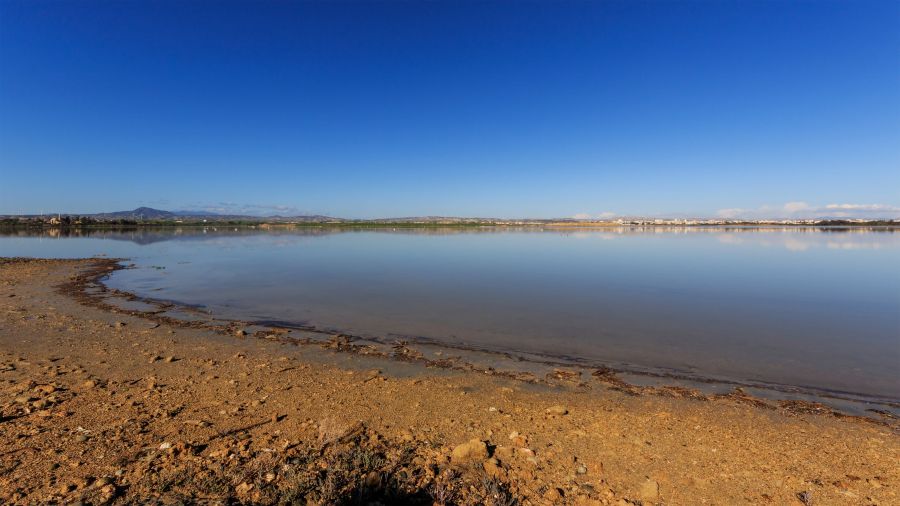 Larnaca Salt Lake, By A. Savin/Wikimedia Commons
Overall impact
Water is a particularly important environmental issue for an island such as Cyprus, where freshwater resources are limited and coastal and wetland ecosystems face pressures from development, agriculture, climate conditions and changes in water availability. DNA-based monitoring is not a replacement for conventional environmental testing. Rather, it adds another method for finding out what is happening in an ecosystem. The significance of Cyprus being among the few European countries already using the approach routinely is therefore less about a new test being introduced for the public and more about improving the ability to understand the country's water environments.
If the technology continues to develop, a small water sample could provide scientists with an increasingly detailed picture of the organisms living in a river, sea or temporary lake.
With information from CNA, European Commission, and Metabarcoding and Metagenomics.


