


Opinion
“There was Antonis, a man who emigrated to America from Greece, who thought he was a ‘real Greek’ and that everyone from Alatsata [present-day Alacati] and Asia Minor were inferior. Antonis worked in a restaurant, and he made a point of letting people like my uncle and other ‘Ottoman Greeks,’ as he called them, in only through the south door, which was for Blacks.”
This anecdote – which so poignantly describes the relationship between the Greek immigrants from Greece and those from Asia Minor in the United States in the 1930s – was shared by the nephew of a man who was among the first to make the crossing, and now lives on the country’s northeast coast.
‘The division was not just between Greeks from Greece and those from Asia Minor, but also between the “Ottoman Greeks” according to where they came from’
“Immigrants were separated into three distinct categories: those who came in the early 20th century as economic migrants, those who immigrated to avoid being drafted into the Ottoman Army, and those who fled to the United States as refugees after the Asia Minor Catastrophe or earlier because of the pressure they came under,” historian, sociologist and researcher Giorgos Topalidis tells Kathimerini, with reference to interviews he has conducted with 250 Greek Americans of Anatolian descent.
“Many residents of Imvros, Tenedos, Marmara and Eastern Thrace left right after World War I,” he says, noting that strict legislation in place between 1919 and 1924 forced many families to spend several years living apart.
“It’s very hard to put an exact number on this migration wave,” adds Topalidis, who is the founder and project coordinator of the Ottoman Greeks of the US Project (OGUS) in the University of Florida’s Samuel Proctor Oral History Program.
Topalidis explains that authorities registering newly arrived migrants at New York’s Ellis Island recorded their last place of residence rather than their place of birth, meaning that a lot of the information concerning provenance is wrong.
He adds that the Greeks from Asia Minor quickly created community networks when they arrived. “I have identified 40 across the United States and 20 in New York alone,” he says, adding that one of the most emblematic of these is the Marmarinon Benevolent Society, which was founded in Los Angeles in 1909. “Most settled in the big cities and found work through their networks,” says Topalidis, explaining that many worked in retail commerce or opened restaurants, while a few who were doctors or lawyers, say, continued practicing those professions. “One typical example was the publisher of the newspaper Kopanos in Smyrna, who continued publishing it under the same name in Boston,” notes the 43-year-old researcher.
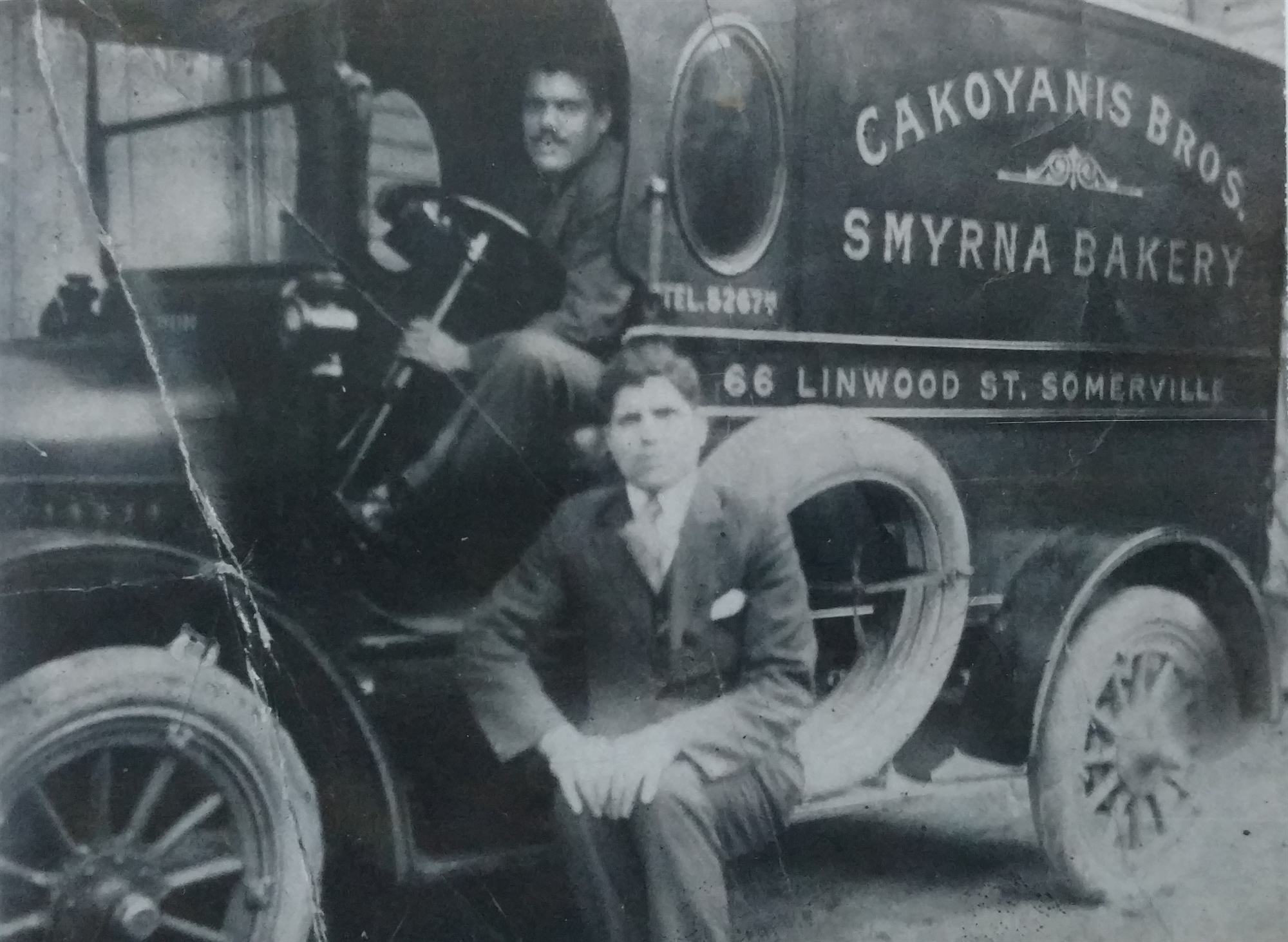
At home, they spoke demotic Greek to each other and taught their children English, using Turkish only when they wanted to say something they didn’t want the youngsters to understand or when discussing food. “To this day, you won’t hear them use the word ‘dolma,’ but ‘giapraki’ and ‘sarmas,’” he says, using the Anatolian word for stuffed vine or cabbage leaves.
The Greeks from Greece tended to treat the Anatolians with suspicion or downright disdain, calling them “Turkish spawn” or “Turkish speakers,” and opposing marriages between the two communities. “In order to be accepted as white Americans, the ‘Ottoman’ Greek immigrants and refugees often used what I refer to in my thesis as the ‘Hyper-Hellenist destigmatization narrative.’ This narrative places the ‘Ottoman Greeks’ in a socioeconomic class above the Greeks from Greece in the US. By using this narrative, the ‘Ottoman Greeks’ carved out the ideological space of their self-determination, first as Greeks and then as white Americans, via what emerged as the Greek-American identity in 1920,” says Topalidis.
As a defense mechanism, they also tried to prove that they were smarter and more hardworking and that their roots were more ancient. “What is also impressive is that the division was not just between Greeks from Greece and those from Asia Minor, but also between the ‘Ottoman Greeks’ according to where they came from,” he adds, saying that it was an effort that has left deep generational trauma. “I had to convince them to talk to me. They didn’t want to drag up unhappy memories, and many felt bad because their families did not embody the American dream,” he says.
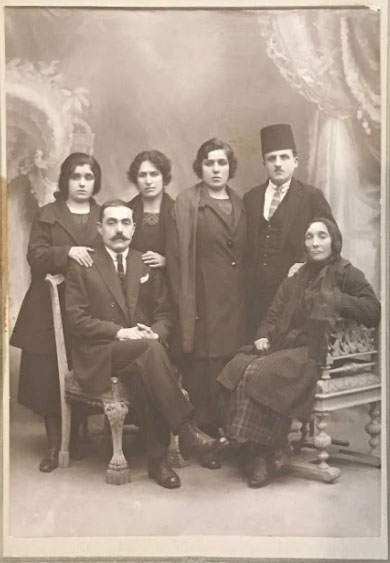
Parents spoke demotic Greek to each other and taught their children English.


