


Hector Georgiou
I accepted, with some reservations, my colleague Apostolos Kouroupakis’ invitation, or challenge, to travel to the occupied areas for a report for the Sunday edition of Kathimerini. But my reservations faded as soon as I caught sight of the crystal-clear blue waters off Kyrenia, waters I had never seen before but had heard about since I was a child.
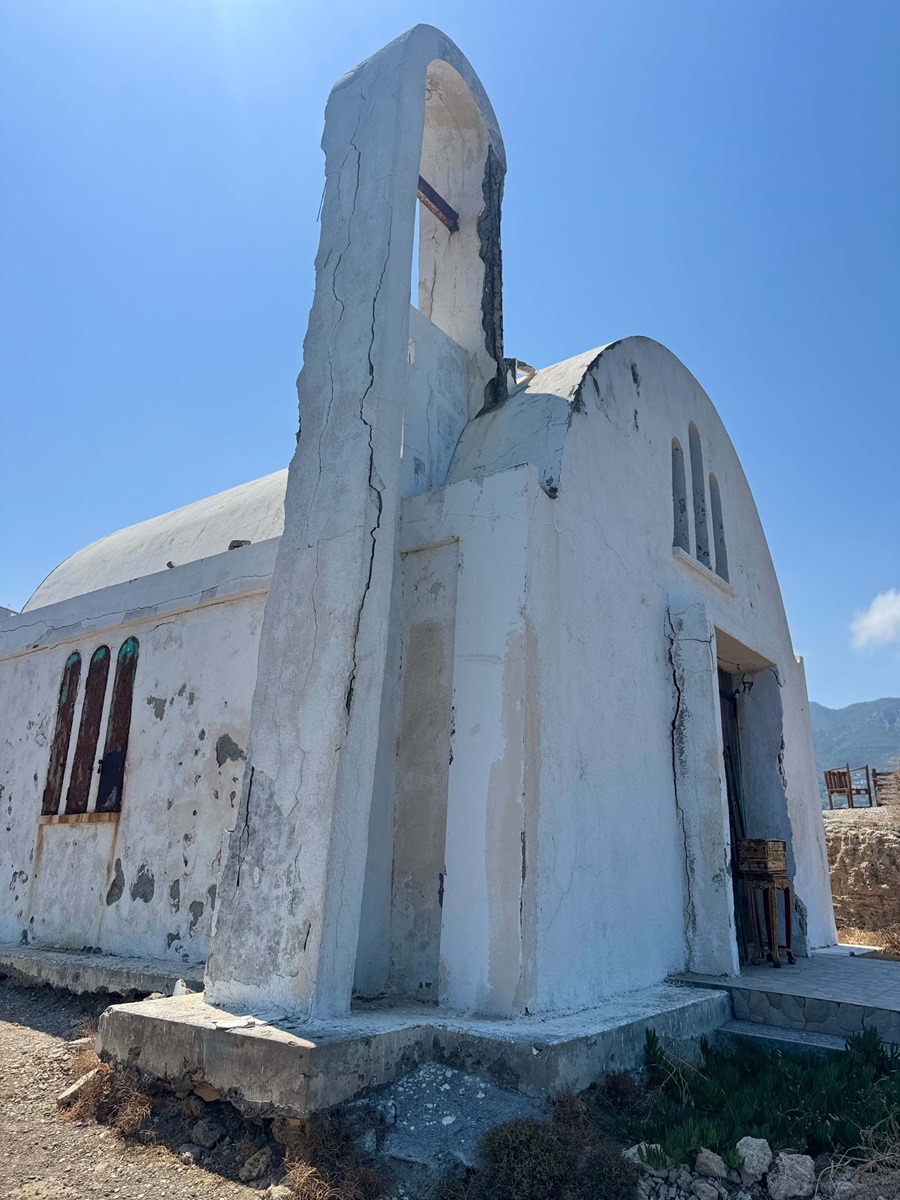
After a journey of about an hour from the Agios Dometios checkpoint, we reached our first destination, the Church of Saint Phanourios in Agios Georgios, Kyrenia. It is a church without a cross, sealed off, with the passage of time clearly etched into its walls.
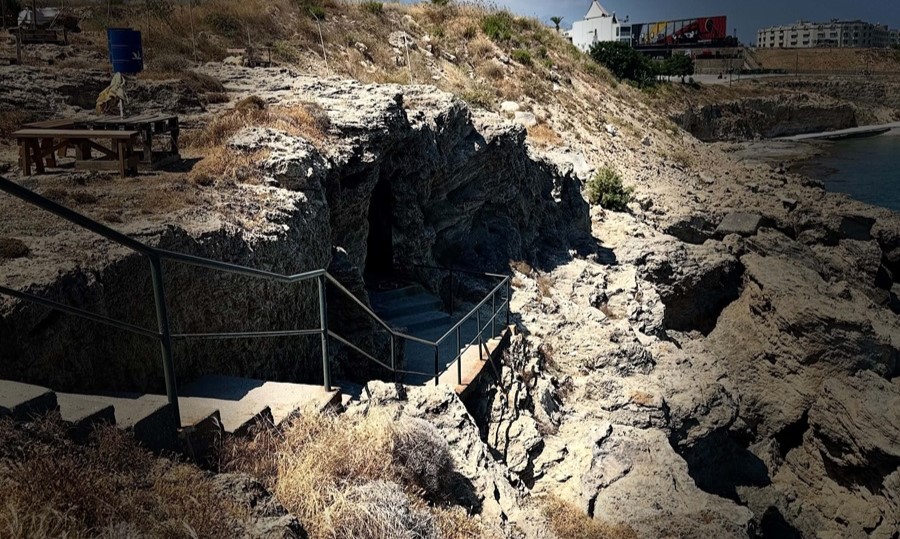
Nearby is the saint’s cave. According to local stories, this is where Saint Phanourios hid while being pursued by the Saracens after arriving in Cyprus from Asia Minor. It is a small cave filled with icons and votive offerings left by Greek Cypriots who periodically travel to the area on pilgrimage, particularly on his feast day, August 27.
The sights, smells and cicadas, a hallmark of summer, captured the atmosphere of a real village.
In front of the church stretched the deep blue sea, which could easily have been compared to a painting, while behind us the imposing Pentadaktylos mountain range rose into the sky.
But that peaceful picture was soon disrupted. A warship, most likely Turkish, disturbed the serenity of the water, while the uncontrolled development at the foothills of Pentadaktylos showed the damage human activity can do to the environment, regardless of nationality or religion.
Looking up at Pentadaktylos from below, we continued towards the village of Karmi, a place that had been unknown to me until the previous day. The village is built on the northern side of the western section of the Pentadaktylos range, just 15 to 20 minutes from the Church of Saint Phanourios, at an altitude of more than 300 metres.
As we climbed towards the village, the view behind us reminded me of images from another country rather than Cyprus.
The idyllic surroundings changed suddenly when, just a few meters before the entrance to the village, we came across a bulldozer blocking the road as workers loaded tiles for the houses rising up in front of us.
There were not one or two houses, but dozens, most of them with swimming pools. The contrast was striking.
Where we had expected to find a quiet village with traditional houses, some of which were still there, we instead found what could almost be described as a construction site. Buildings stood side by side, each seemingly competing to dominate the landscape.
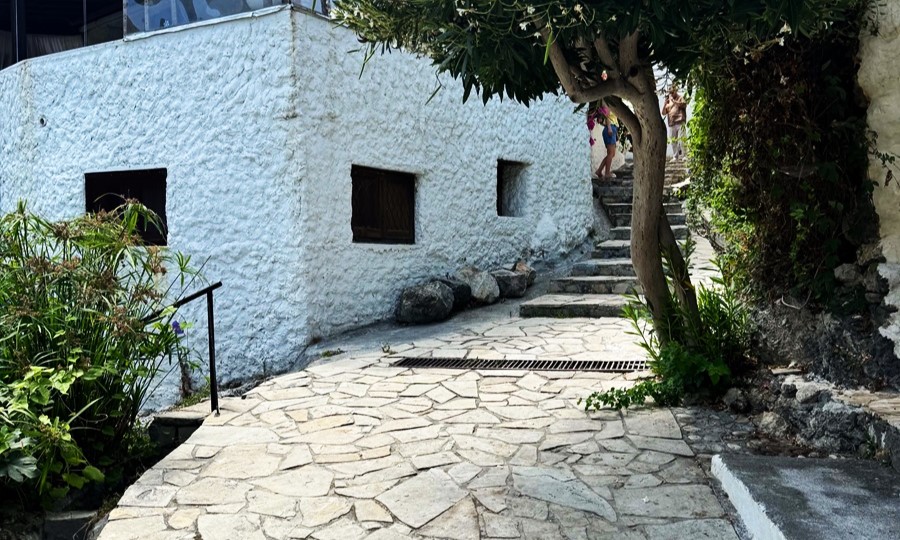
The scene changed again when we reached the center of the village. The sights, smells and cicadas, a hallmark of summer, brought the atmosphere of a genuine village back to life.
Walking through the narrow lanes between the renovated stone houses, we came across a small, makeshift library beneath the familiar kamara, the traditional arched structure. The old books, mainly in Turkish and English, appeared to be there for passersby, as well as for the British people who have moved to the area in recent years.
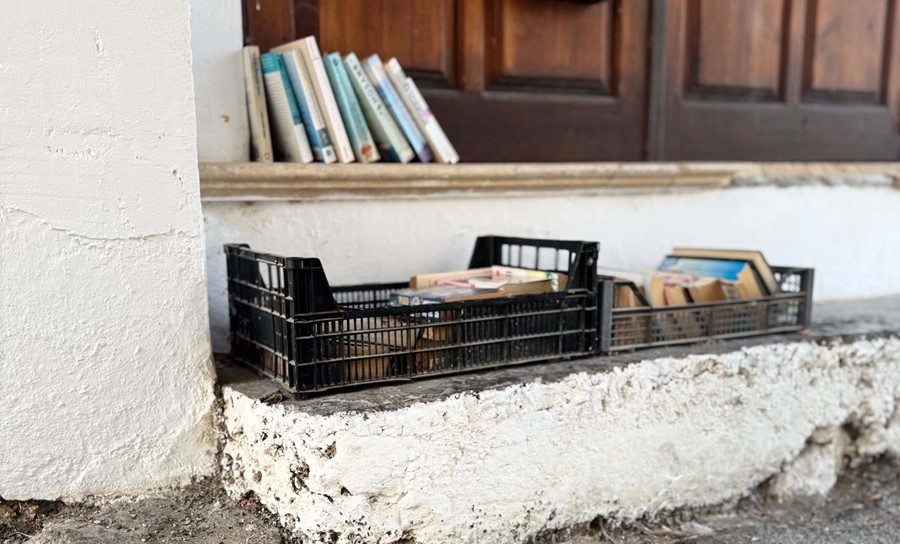
I was told that quite a few Britons, among others, have decided to move to Karmi, mainly retirees who want to spend the rest of their lives in Cyprus, specifically in occupied Karmi.
The village cemetery, too, has begun to take on an increasingly “English” character. A quick look at some of the graves revealed English names.
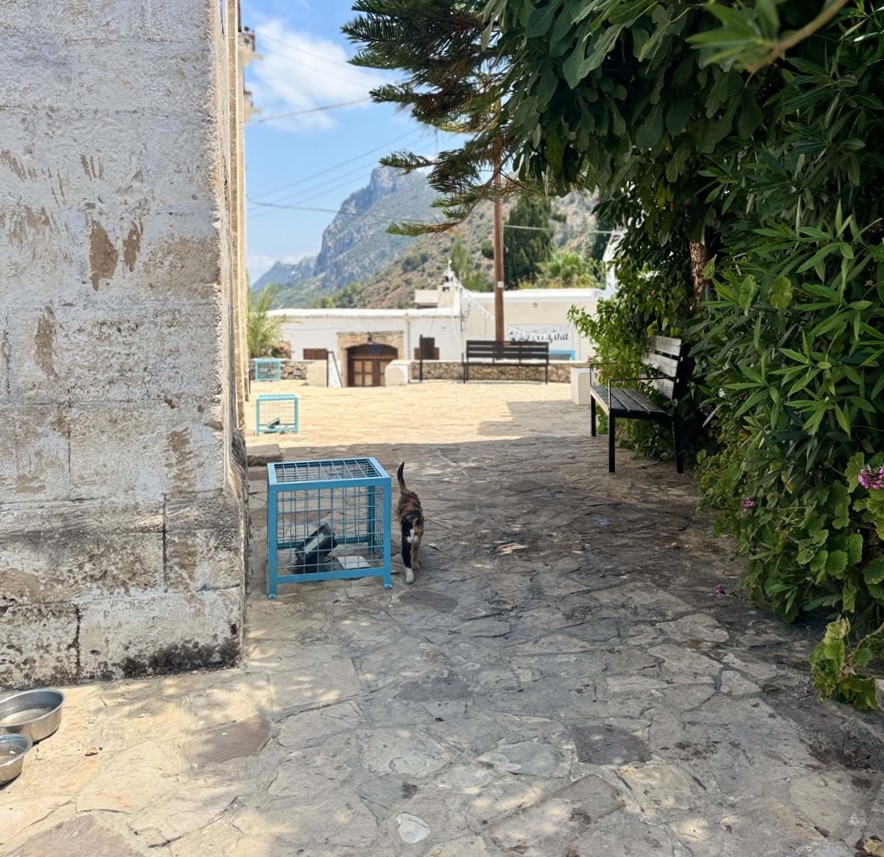
We reached the village church. A cat and a family, apparently Turkish Cypriot, in the courtyard were signs that there was life there. Apart from the workers, we had not seen anyone else.
As we continued walking around the village, I kept discovering just how beautiful it was. Yet my thoughts kept returning to the 1974 invasion.
We took the road back with mixed emotions. On the one hand, I had seen the beauty of a place that, until the previous day, I had never known. On the other, I could not escape the thought of what might have been and whether history could have been written differently.


