


Paris Demetriades
In the heart of Nicosia’s historic center, down a narrow alley between the bustling Ledra and Onasagorou streets, sits Phivos Mastridis’s fabric shop. For almost half a century, it has been a landmark of this small neighborhood within the old city walls. The awning reads “English fabrics and cashmere,” and Mr. Mastridis continues to cut and sew, practicing a craft that is gradually disappearing.
I pass his shop quite often, but I have never stopped to look inside. A few days ago, I finally decide to do so when I see him standing in the doorway. “Can I come in just to see what you have?” I ask spontaneously one afternoon. Without a moment’s hesitation, he replies, “Yes, of course! But don’t limit yourself to this space. The building has three floors, and they’re all full of fabric,” he tells me with almost childlike enthusiasm.
I step inside, captivated by the colors, the feel of the fabrics, and the chaotic order of the seemingly endless stock. There is so much fabric that you have to squeeze your way through the rooms. I feel pleasantly trapped in a place straight out of a novel. Mr. Mastridis unlocks a door for me, and I explore the upper floors, too. “This is one of the oldest buildings in Nicosia,” he tells me.
Lost among the bolts of fabric, I ask him how long he has been working in this shop. He answers naturally, “Always.” I smile and rephrase the question. “I mean, since what year?” He tells me the shop opened in 1982, then clarifies, “My brother and I opened the shop together. Unfortunately, I lost him in an accident,” he says.
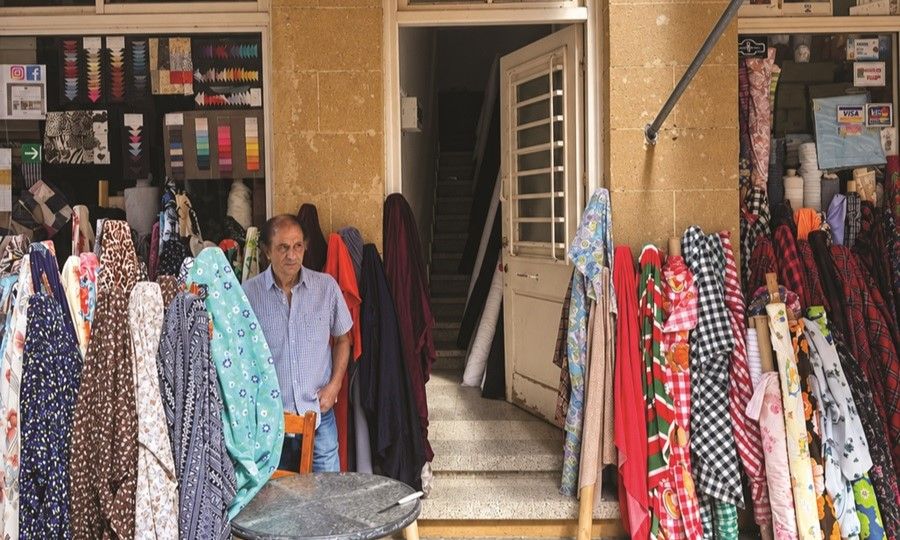 “The reality is that business has declined significantly because most people now prefer to buy ready-made clothes. People tell you, ‘Why should I pay for fabric when I can buy something ready-made?’ But those who want quality are missing out,” says Phivos Mastridis, one of Nicosia’s last traditional fabric merchants.
The many colorful options
I explore the shop, which seems to have changed very little since the early 1980s. I look at the patterns and colors, notice the fabric scraps, and ask him whether fabric shops and the traditional fabric trade have a future.
“The reality is that business has declined significantly because most people now prefer to buy ready-made clothes. People tell you, ‘Why should I pay for fabric when I can buy something ready-made?’ But those who want quality are missing out. Ready-made clothes simply don't offer as many choices in colors and quality.
“For example, if you want to buy a new pair of pants, you'll go to a clothing store and find blue, black, gray, brown, and that's about it. Your choices are limited. Here, look, you have 30 different colors and fabrics to choose from.”
From his response, I can tell that he has come to terms with the situation, but he doesn't seem ready to give up. “Here, though, you can choose from more than thirty different colors and fabrics. It's not the same.”
He then asks me enthusiastically, “Do you know what cashmere is?” I'm not sure, so I don't answer. He immediately launches into an explanation.
“It's the finest quality of fabric, although there are different types of cashmere. The name comes from Kashmir, a region between India and Pakistan where there are many sheep. Cashmere comes in different grades, too.
“When you take wool from the upper part of the animal, which is exposed to the sun and rain, you get a lower grade of cashmere. The wool from the animal's sides is definitely better quality and softer. The finest quality comes from underneath the belly, where the wool is never exposed to the sun or rain and is completely soft. The processing also makes a difference,” he explains happily.
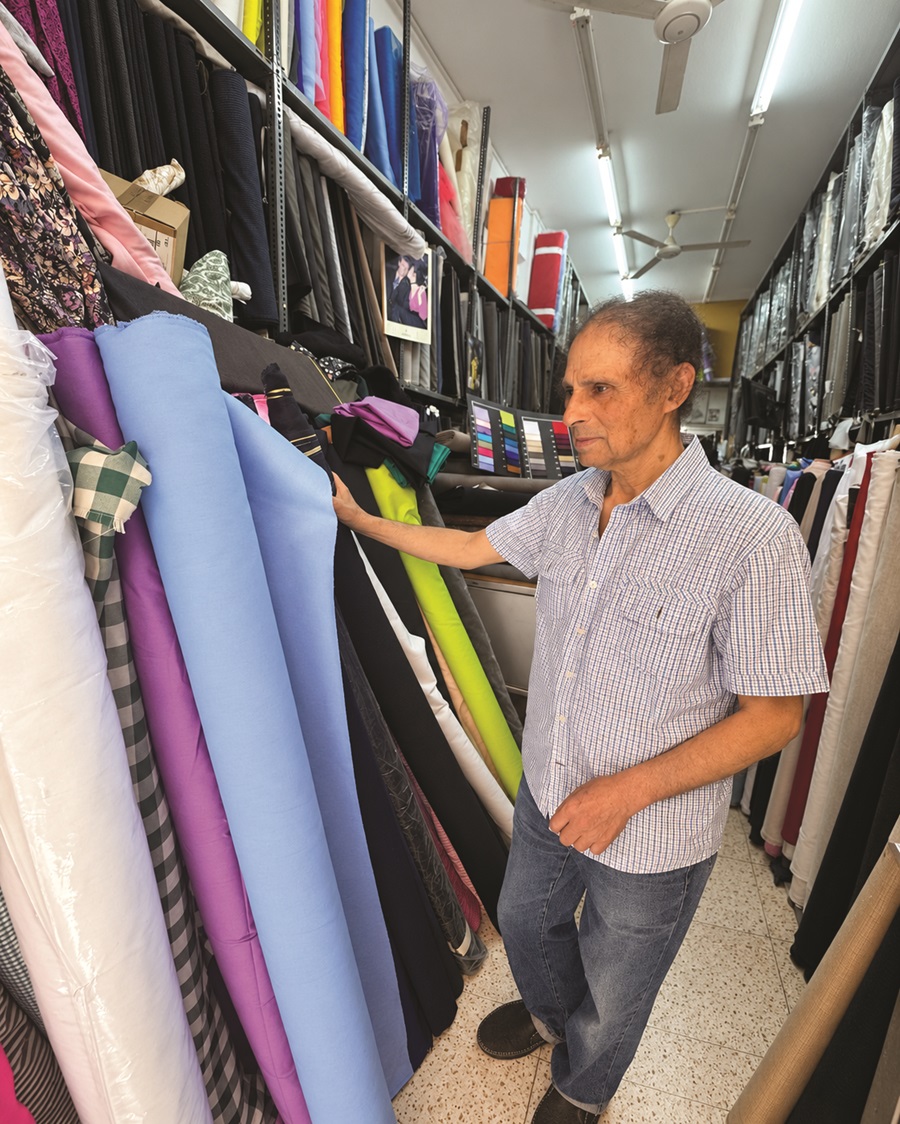 “I step inside, captivated by the colors, the feel of the fabrics, and the chaotic order of the seemingly endless stock. There is so much fabric that you have to squeeze your way through the rooms.”
We then talk about how he works. He explains that customers, both men and women, come in and describe roughly what they want and what they're looking for.
“We show them the different types of fabric we have for what they need, and then we take it from there. Most of the time, we can work out the measurements based on our experience.”
He then shows me two brightly colored fabrics. “The ones I'm working on now will be made into uniforms for doctors and nurses at a clinic. This particular doctor chose burgundy.”
Mr. Phivos continues telling me about his work. He explains that fabric merchants usually work with tailors and talks about their working hours. He adds that Christmas is their busiest time of year.
“We work for ten to fifteen days beforehand, including Saturdays, Sundays, and Wednesdays. Government employees usually come shopping because they're on leave.”
As our informal tour continues, he asks me, “Do you know what those colorful fabrics are?” Before I can answer, he explains, “They're tulle. They're lightweight fabrics like the ones brides wear over their heads. They can also be used for mosquito nets.”
During my visit, Mr. Phivos occasionally stops to speak with customers coming in and out of the shop. I start to think that I should let him get back to work. By now, though, I've decided that I might as well buy some fabric to have a pair of pants made for myself, choosing from the extensive range of colors.
I pick a shade that would indeed have been difficult to find in a ready-made pair of pants, just as Mr. Mastridis had told me at the beginning of our conversation. His point proves true. I say goodbye after buying the fabric I've chosen, thinking that it would be a shame to lose this range of colors, variety, and personal service in favor of mass-produced clothing and impersonal shopping experiences.
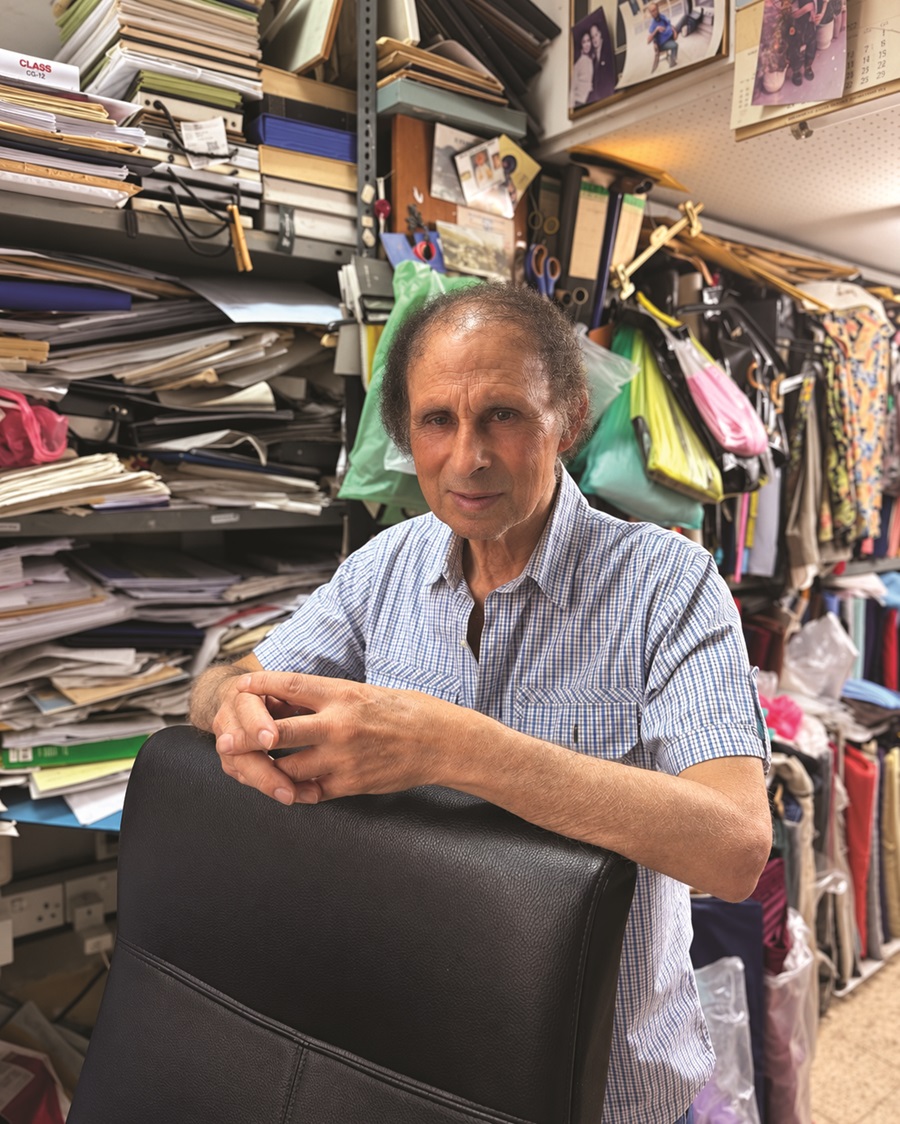 As I leave Phivos Mastridis’s shop, I think about how much would be lost if his range of fabric colors, the variety, and the personal service disappeared in favor of mass-produced clothing and impersonal shopping experiences.


