


Thanasis Photiou
The meeting between Nikos Christodoulides and Tufan Erhürman was never expected to produce dramatic news. But it was expected to reveal something perhaps more important: whether the renewed activity surrounding the Cyprus problem in recent months can develop into a political process, or whether it will lose momentum and become yet another round of meetings aimed at managing the deadlock diplomatically.
That is the real test of today’s meeting. It is not whether the two leaders had a “good and constructive discussion,” or even whether they agreed to continue meeting. The question is whether anything emerged that narrows the gap between where things stand today and the resumption of meaningful negotiations.
During his visit to Cyprus in late July, Antonio Guterres effectively gave the two leaders a specific assignment. He linked the next step to “sufficient progress” in three areas: confidence-building measures, the method to be followed in a new process and the substance of the Cyprus problem.
Confidence-building measures are not a formal condition for convening another expanded meeting. They are, however, one of the areas in which the U.N. secretary-general expects to see progress.
Measured against that standard, the outcome of today’s meeting appears more limited than the recent diplomatic activity surrounding the Cyprus problem might suggest.
After nearly three hours, Christodoulides and Erhürman did not agree on anything that significantly narrows the distance toward meaningful negotiations. They did agree, however, to meet every week, and more often if necessary, in an effort to achieve that.
In short, the two leaders will hold talks to agree on how they will hold talks, where those talks should begin and which of the issues discussed and agreed in the past will be treated as settled when negotiations resume.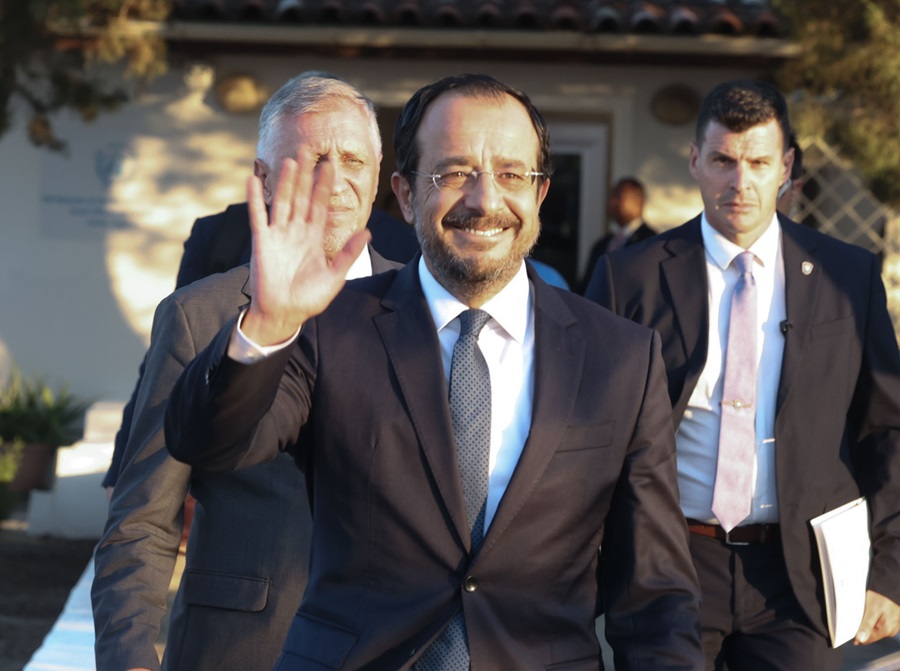
That is clearly necessary. And yes, the prospect of frequent, direct political contact is a positive development. But the central requirement is still missing: creating the conditions needed for the real process to begin.
The brief United Nations statement is revealing in that respect. It described the meeting as “constructive,” said the two leaders had reviewed progress along the path outlined by Guterres and noted their agreement to intensify their contacts.
Beyond announcing the members of the Coordinating Committee of the Civil Society Advisory Body, however, it recorded no meaningful political movement.
The “yes, but” surrounding today’s developments can be found almost everywhere. After a three-hour meeting, the two leaders say they are determined to accelerate the process, but they could not even agree on opening new crossing points.
The crossings are perhaps the clearest example of the distance between what the two sides say, what they mean and what they ultimately do.
In principle, both sides agree with the secretary-general and say they want new crossing points to open. In practice, they disagree over which crossings, how they should operate and under what conditions. In the end, they agree on none.
The inability to reach agreement even on crossing points carries enormous political significance. If such difficult negotiations are required over a confidence-building measure, an issue clearly less complicated than those at the heart of substantive negotiations, then how should the distance separating the two sides on the major issues be assessed?
In that sense, the agreement to hold weekly meetings is a step forward. It allows today’s meeting to be described as one that did not fail. But neither did it achieve anything that fundamentally changes the situation.
What it did was create a mechanism through which the two sides will try to achieve that progress in the coming weeks.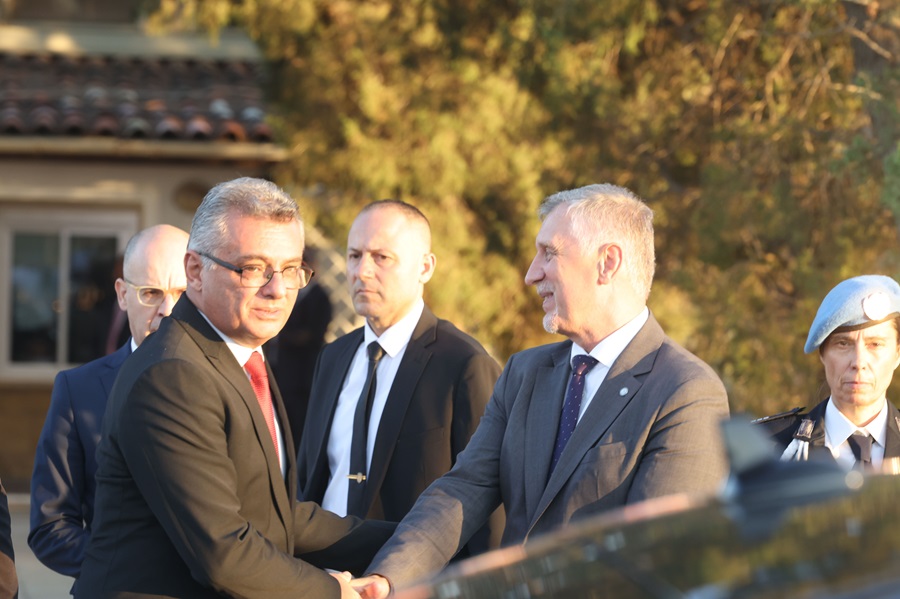
The frequency of these meetings will also gradually remove the excuse that there has not been enough direct contact. At some point, they will have to produce a result.
Otherwise, the process itself risks becoming a substitute for progress, before the two sides descend into a full-blown blame game. Not that this would be unfamiliar territory in the Cyprus problem.
The problem in Cyprus was never a lack of talks.
The next critical stage will be to determine whether, through the work now underway to record previous convergences, the two sides can at least agree on what has already been agreed.
If they cannot, then before negotiating the future, they will effectively have to renegotiate the past.
Perhaps even that will not prove necessary.
- Christodoulides and Erhürman agree to step up Cyprus talks
- Ankara tells EU: End Turkish Cypriot isolation before seeking a role in Cyprus talks
- Erhürman: Children should not pay the price for the Cyprus problem
- Erhurman says he is ready for weekly talks but Nicosia has ''homework'' to do
- Barcelona FC plans football camp in occupied Cyprus


