Shemaine Bushnell Kyriakides
“You weren’t there to hold my hand when I needed you.”
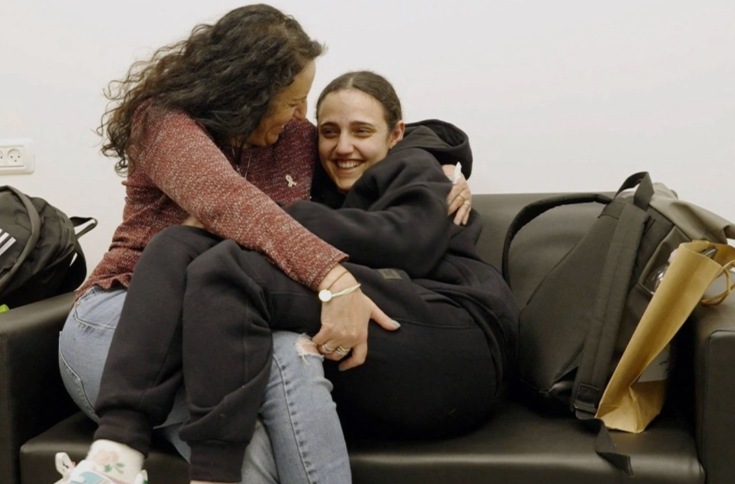
Romi Gonen said those words to her mother after coming home from 471 days in Hamas captivity. Meirav Leshem Gonen had spent those days trying to bring her back. But she could not change the fact that, when her daughter needed her beside her, she had been unable to get there.
“And she was right,” Meirav recalled in her speech at an October 7 memorial organized by the Israeli Embassy in Nicosia in late September. “I wasn’t.”
When we spoke during her visit to Cyprus, I began with a simple question: How was Romi?
“Love is not always the ability to save someone,” Meirav said. “Sometimes love is the ability to make room for them.”
She was making progress, Meirav explained. Her injured hand had undergone five surgeries to restore some function. But when our conversation turned to healing, she was careful. Recovery was a process. It did not mean everything would eventually disappear.
“There is a part that will not heal,” she said.
She included the family in that, too.
As we mark three years since the Hamas-led attacks on Israel on Oct. 7, 2023, Meirav offers a perspective that can be lost once the homecoming photographs have been taken. Her daughter is back. The relief is real. So is the work of finding their way back to each other.
For a mother, that has meant accepting something painfully difficult: love cannot always protect your child, and it cannot fix everything afterward.
Before Oct. 7, Meirav worked mostly from home in northern Israel, advising women in business and raising her five children. She stayed away from the news. Then Romi was taken hostage, and her life became a succession of interviews, meetings, and appeals for help.
In our conversation, she recalled those first days of uncertainty. Her son returned from abroad on Oct. 8, and she told him they had to consider the possibility that Romi had died.
Four days into the ordeal, she said, something changed. She describes an inward experience of hearing her daughter tell her:
“Mommy, I’m alive, and you will bring me back alive.”
It was not contact from captivity. It was a conviction she felt inside herself. From then on, she believed they would bring Romi home alive.
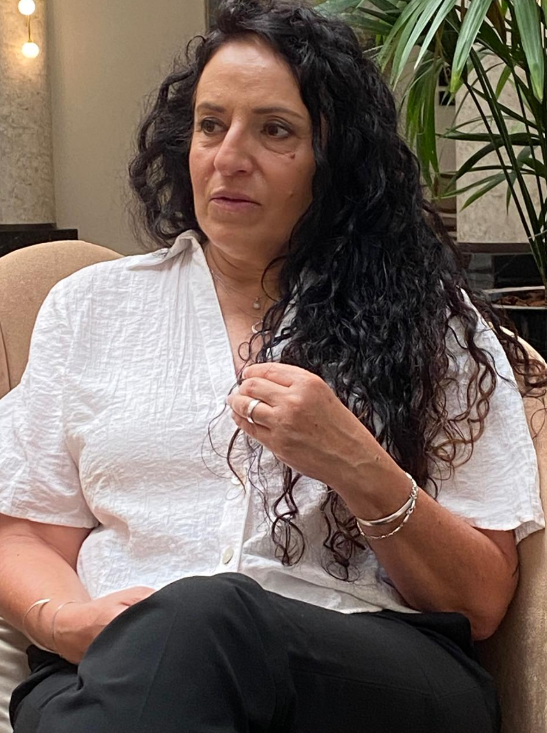
Her search for help brought her to Cyprus just 10 days after Romi was taken. The Jewish community and the Israeli Embassy had organized a rally for the hostages’ return. It was the first international rally she attended.
Returning here in September, she remembered what that support had meant.
“At a moment when our world had collapsed, Cyprus told us something incredibly simple: You are not alone,” she said in her memorial address.
People here could not remove her fear or reach her daughter. But they could stand beside her. She has not forgotten that they did.
Her family found other ways to keep Romi present in people’s minds. Romi loved leopard print, so her sisters encouraged supporters to wear leopard-print clothing or accessories on Wednesdays and share photographs online.
It was a detail that belonged to Romi herself. Meirav wanted people to see the person behind the word “hostage”: someone with her own tastes, relationships, and life to return to.
As the months passed, Meirav also began meeting people across Israel whose views differed from hers. Some of their conclusions about how to bring the hostages home were difficult to hear.
In her speech, she explained why she went anyway.
“My instinct could have been to tell them they were wrong. Instead, I went to meet them.”
She calls it “stepping outside your mind.” An expression that can mean losing your mind became, for her, a way of describing the effort to move beyond her own experience and understand someone else’s.
That willingness to listen did not mean she had no criticisms.
When I asked whether politicians had used the hostage families, she distinguished between those who used the connection to promote themselves and those advocating an approach they believed would secure a release. The former, she felt, was wrong. The latter was more complicated.
Even the families disagreed about the best strategy. Sharing the same desperate wish did not mean agreeing on how to achieve it. She wanted politicians to find a way to work together.
I also asked whether she felt an affinity with Palestinian mothers who had lost their children.
She began with the conviction that no mother should lose a child in horrific circumstances.
Then she spoke about women in Gaza. She expressed sympathy for them while describing, in stark terms, how she believed they were treated: as though they did not matter, with little voice or control over their own lives.
Her criticism was directed at Hamas. She argued that its actions harmed Gaza’s population and that ordinary people lacked the power to resist it.
She wanted children in Gaza to have the opportunities available to other children. But she did not believe Israel could deliver that change alone.
Countries providing funding and supporting the leadership had responsibilities, too, she said. She called for international involvement in changing leadership and education and ensuring that money improved people’s lives rather than financing weapons and tunnels.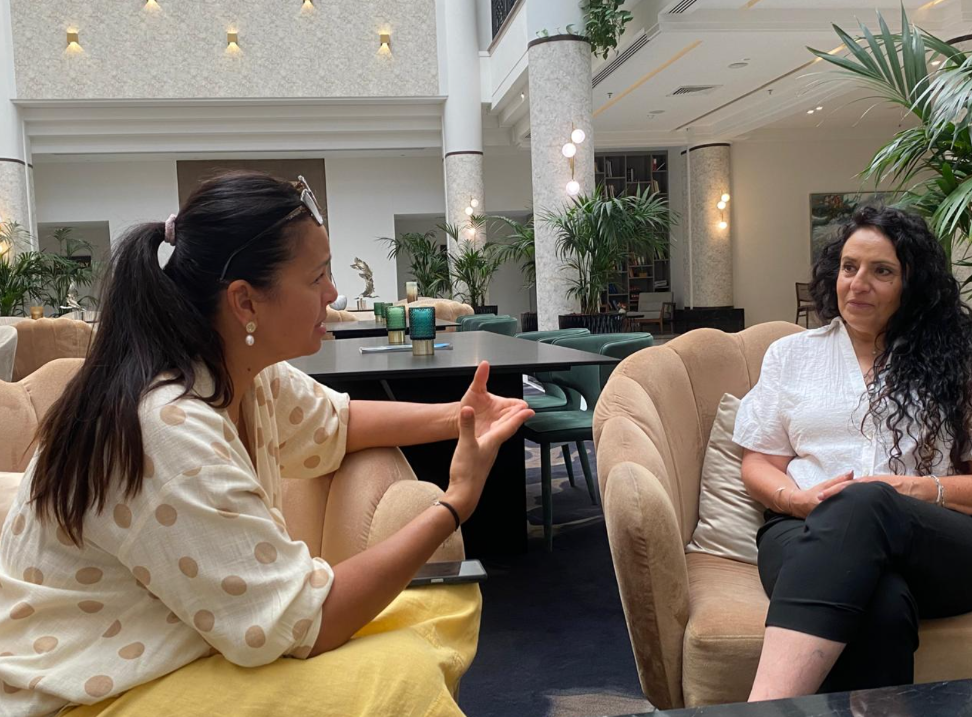
In her memorial speech, she extended the appeal beyond governments. Each person, she argued, had a part to play: listening beyond their own experience and taking responsibility for what they could change.
“Personal responsibility is where collective responsibility begins,” she said.
Cyprus had shown her what that could look like when people chose to support a family they did not know.
“You stepped outside your own lives and made room for our pain,” she told the gathering in Nicosia.
Romi returned home on Jan. 19, 2025.
Meirav had imagined that bringing her daughter back would be the end of the story. Instead, she described the reunion as the happiest day of her life “and one of the hardest.”
There was the injured hand and the long rehabilitation. There were also the experiences mother and daughter had lived through separately.
“She had lived through 471 days that I knew nothing about,” Meirav said in her address. “And I had lived through 471 days that she knew nothing about.”
They loved each other deeply. They had both changed.
“In a strange way, we had to meet each other again.”
Meirav’s instinct was to move closer, protect, and put things right. Sometimes, though, Romi needed space for her siblings, her friends, the people helping her recover, and her anger.
Her mother had to accept that she would not always be the person Romi needed at every moment.
“Love is not always the ability to save someone,” she said. “Sometimes love is the ability to make room for them.”
During our conversation, she spoke warmly about Romi’s podcast, on which she had recently appeared as a guest.
“She’s speaking truth and she’s very authentic,” she said.
Mother and daughter are building a relationship Meirav describes as more honest and open. There have been weddings in the family. Romi has a boyfriend. There are things to celebrate, alongside what they continue to carry.
Meirav first came to Cyprus asking for help bringing her daughter home. This time, she returned with Romi home and a different understanding of what being her mother required.
She could not give her back those 471 days. She could listen to what her daughter needed now.
“Life did not return to what it was,” she said in her memorial address.
“Life moved forward.”