

Martha Kehagias
A migration emergency in the Spanish enclave of Ceuta has caused a sharp diplomatic rift across the European Union, prompting Italy to suspend border-free travel with Spain while tens of thousands of migrants head back across the border to Morocco.
Between 50,000 and 60,000 people entered the small North African territory starting early Thursday, representing nearly 70 percent of Ceuta's entire population. Spanish authorities deployed troops and border police as local businesses shuttered and frightened residents stayed indoors. Thousands of mostly young men packed city squares looking for food. At least 57 people drowned or died attempting the passage.
Air and sea borders suspended
Citing national security and the need to protect the European Union's external boundaries, Italian Prime Minister Giorgia Meloni announced late Thursday that Italy would temporarily suspend the Schengen agreement with Spain. The executive order halts regular open-border travel between the two nations, introducing mandatory passport checks at airports and seaports.
The influx of migrants equaled nearly 70 percent of Ceuta’s total population.
Italian Foreign Minister Antonio Tajani defended the temporary measure, calling it an essential step under EU treaties to prevent unregulated movement and combat potential security risks. French President Emmanuel Macron announced parallel plans to strengthen monitoring along France's land border with Spain, while offering assistance to Spanish officials handling the emergency.
Several EU member states aligned with Rome, including Finland, the Netherlands, Denmark, the Czech Republic, and Sweden. Finnish Interior Minister Mari Rantanen accused Spain of failing to secure its external boundary. European Commissioner for Home Affairs Magnus Brunner pointed out, however, that existing legal rules already limit direct travel from Ceuta to mainland Europe, keeping checks on outbound travelers active.
Madrid reacted with sharp criticism. Spanish Prime Minister Pedro Sánchez stated that member states must respect European treaties and actual data, pointing out that official Frontex statistics show Italy registered more irregular entries than Spain in recent years. Spanish Foreign Minister José Manuel Albares formally summoned Italy’s ambassador in Madrid to demand an explanation.
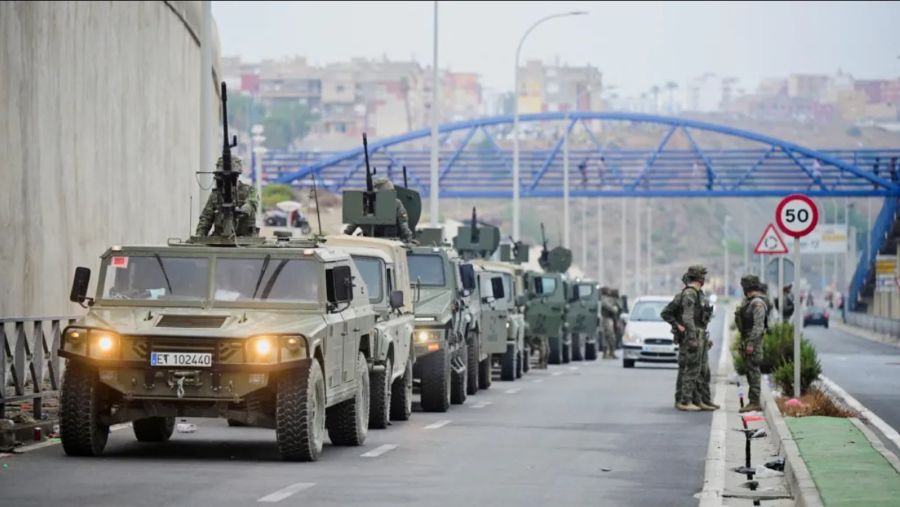 Source: Reuters via BBC
Fast departure back to Morocco
Despite the political fallout in European capitals, the emergency on the ground began easing rapidly. By Friday afternoon, Spain's Interior Ministry reported that more than 48,300 migrants had already returned to Morocco voluntarily, leaving the enclave at an estimated rate of 150 people per minute.
Facing closed storefronts, scarce food, and the realization that gaining legal residency in Spain was unlikely, hundreds of people filed toward the border posts to walk back into Morocco. Spanish Civil Guard units and military personnel stationed along Tarajal beach monitored the shoreline, turning back small groups arriving by sea under a long-standing bilateral return agreement.
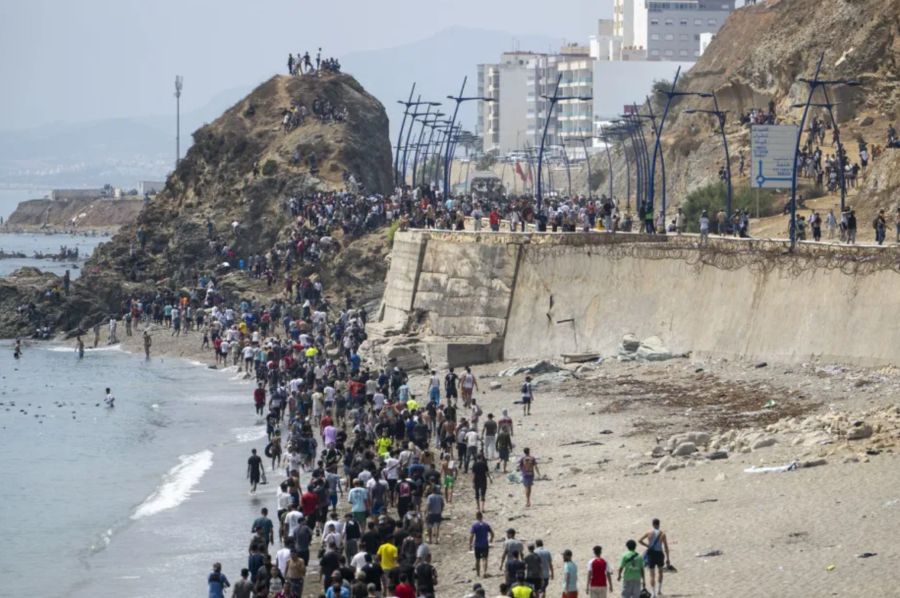 Source: Abu Adem Muhammed/Anadolu Agency via Middle East Monitor
Smuggling networks and legal controversy
Prime Minister Sánchez blamed criminal human-smuggling syndicates for orchestrating the mass crossing. According to Spanish officials, human traffickers intentionally distorted a recent Spanish Supreme Court ruling. The court had determined that migrants intercepted at sea near Ceuta or Melilla could not be summarily deported without formal legal processing.
False reports spread across social media platforms, convincing thousands of young Moroccans that reaching the shoreline would guarantee legal status. Border security posts saw minimal initial resistance, allowing crowds to swim around coastal jetties or walk around perimeter fences during hot summer weather.
Located on the North African coastline across the Strait of Gibraltar from mainland Spain, the twin enclaves of Ceuta and Melilla form the European Union's only land borders with the African continent. Prior to this surge, UN figures recorded fewer than 3,000 entries into Ceuta for all of 2026 through mid-July.
The situation drew comments from world leaders. US President Donald Trump attributed the border breakdown to weak legal enforcement, while European Commission President Ursula von der Leyen called the scenes unacceptable and called for an immediate halt to uncoordinated crossings.
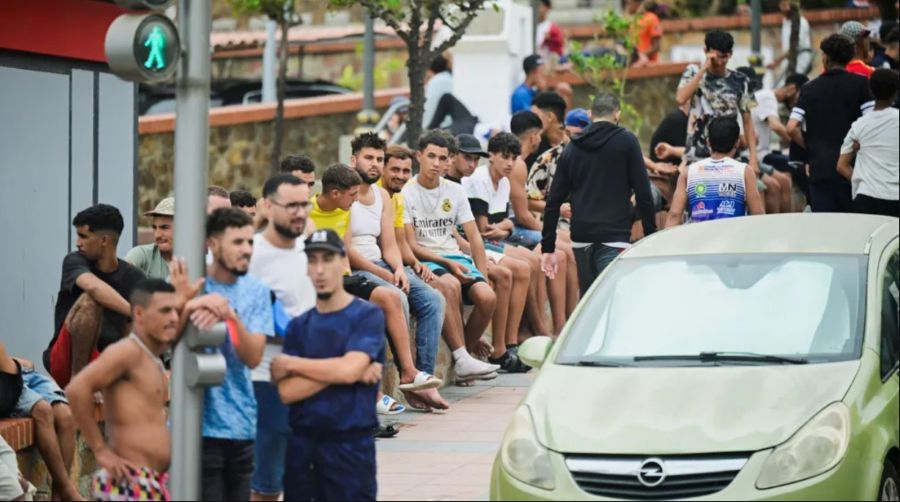 Source: Reuters via BBC
With information from Euronews, the BBC, and Middle East Monitor.


