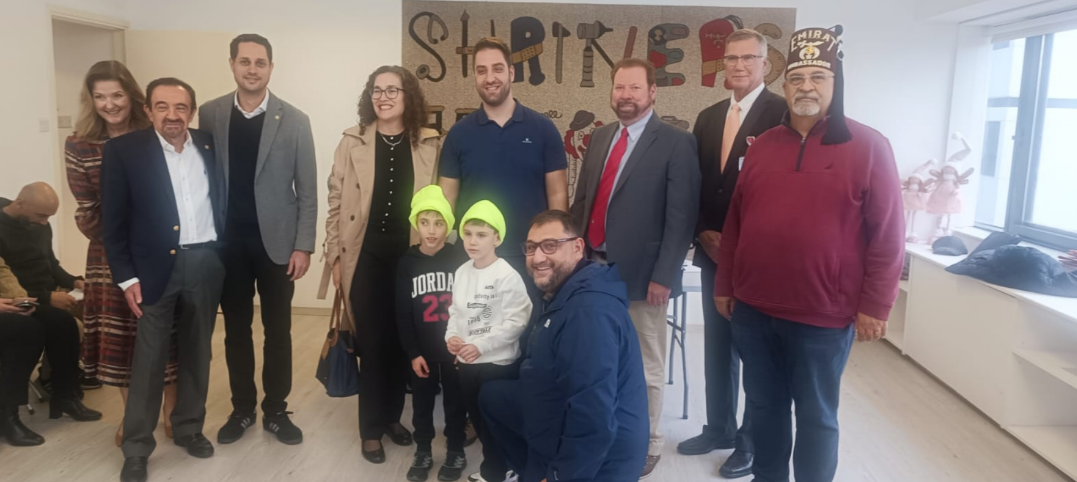
Shemaine Bushnell Kyriakides
There are moments you think you’re going somewhere to offer support, only to realize you’re the one who leaves changed.
Our visit to meet three Syrian girls recovering from burn injuries was one of those moments.
My daughter and I were invited to Ronald McDonald House in Nicosia to spend time with three girls, aged between 8 and 13, who were in Cyprus at the invitation of the Shriners doctors for surgery. The girls had suffered severe burns to their faces and bodies when a diesel truck exploded inside their refugee camp in Syria. Injuries like these didn’t just scar skin. They followed a child into every room she entered.
As we walked in, both my daughter and I felt nervous. Hesitant. Unsure of what to expect. If you’ve ever walked into a hospital room, a hospice, or any place where pain lives close to the surface, you know the feeling, the pause before you step inside, and the quiet fear of saying the wrong thing. My daughter felt it more than I did. I don’t think she had ever seen someone whose face had been so badly damaged. I worried about what she might say, or not say, and whether silence might come across as fear.
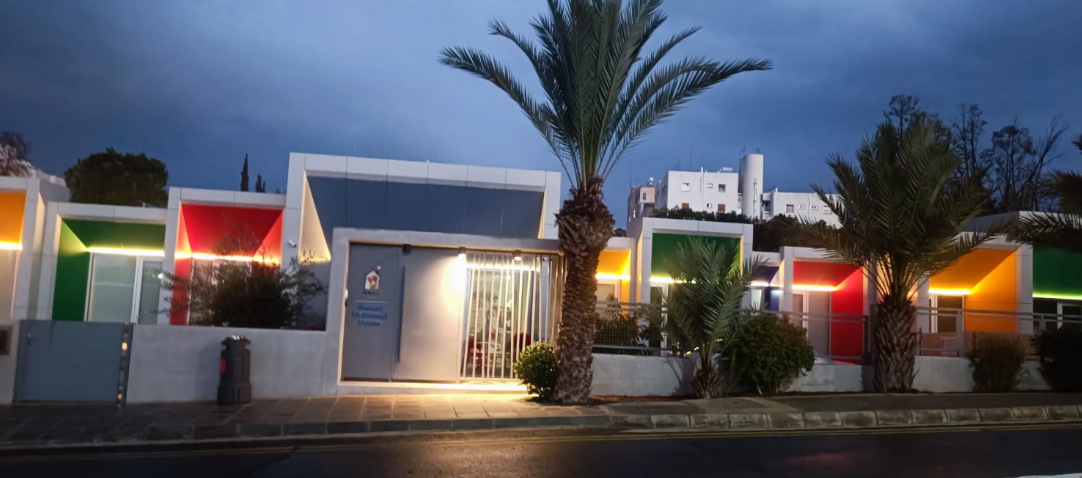
They were in Cyprus because of the Shriners, volunteer medical teams from Shriners Children’s Hospitals that travel to Cyprus on a regular basis, and in collaboration with the George and Thelma Paraskevaides Foundation, to operate on children whose injuries are too complex and too costly to be treated otherwise. For the girls, this visit marked the beginning of a long and painful road of reconstructive surgery, one step at a time.
One of the girls, a 13-year-old everyone called Juju, immediately connected with my daughter. They didn’t share a common language, so they spoke through Google Translate, filling the room with laughter, shy smiles, and hand gestures. It was awkward and beautiful in the way only children can manage, the kind of moment where walls fall before you realize they were there.
We spent about an hour together. And when it was time to leave, Juju looked at my daughter and told her she was beautiful. That moment broke my child.
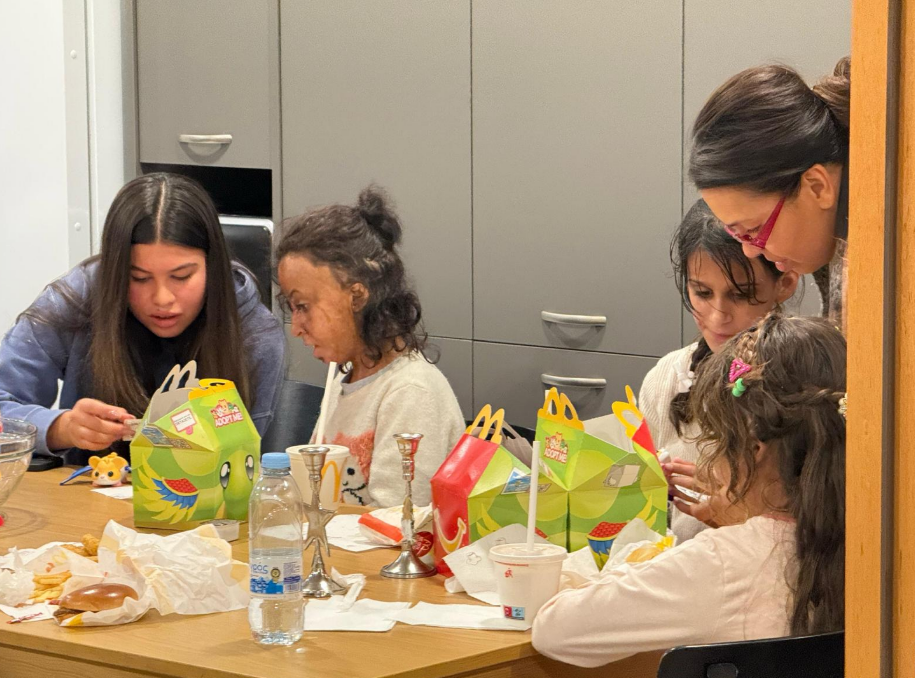
She cried as we walked away, not out of sadness, but disbelief. She couldn’t understand how a girl who had been through so much, whose scars were impossible to ignore, could be so effortlessly kind. So quick to give something to someone else. If you’ve ever been humbled by a stranger’s grace, you know how quietly powerful that can be.
But what a privilege it was to meet them.
Juju, her mother, and her uncles were expected to return to Cyprus for further surgeries, possibly as early as March, again covered by the Shriners Foundation. The help didn’t end when the bandages came off or when they boarded a plane home. It continued.
During the most recent visit, Shriners medical teams carried out dozens of complex surgeries on children, many of them burn victims, working quietly inside public hospitals, far from headlines and holiday lights. These were children whose injuries told stories of war, accidents, and displacement. Some would leave with scars. Others would leave with hope. And let’s not forget the thousands of Greek Cypriot children who have also benefited from Shriners’ care over the years, from spinal and orthopedic surgeries to complex limb reconstructions, many of whom would never have had access to such treatment otherwise. Often, the children left with both scars and hope.
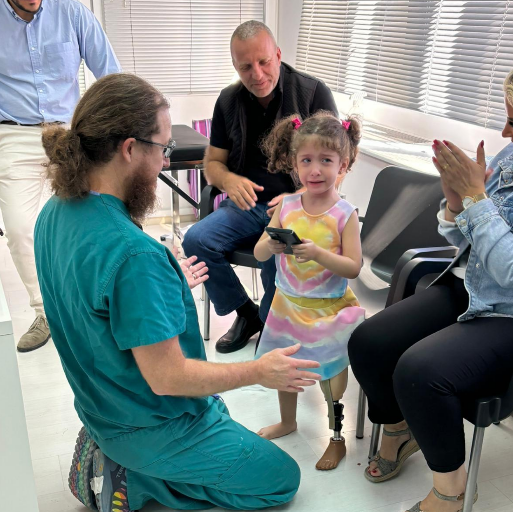
Spending time around the Shriners doctors made one thing very clear to me: this work is personal. You see it in the way they speak about the children and in how deeply they know every case. Dr. Laura Kozloski, who comes to Cyprus every time, can explain every detail of a child’s injuries, how they happened, what was done, and what still needs to be done, without hesitation. Not because it’s written on a chart, but because it lives in her. And just as easily, she speaks about the need for donors, for support, for keeping this philanthropy alive. Not for prestige. For the next child.
That was the moment I realized something had shifted for me too.
This isn’t about nationality. Or borders. Or politics. It’s about children. And once you see that kind of passion up close, once you watch people give so fully, so consistently, you don’t really get to walk away unchanged. I’ve decided that, in whatever way I can, I want to continue helping support this work. Because when you see it done right, when you see it done with heart, it stops being abstract.
There is a saying often associated with the Shriners: "A man is never too tall to stoop to help a child."
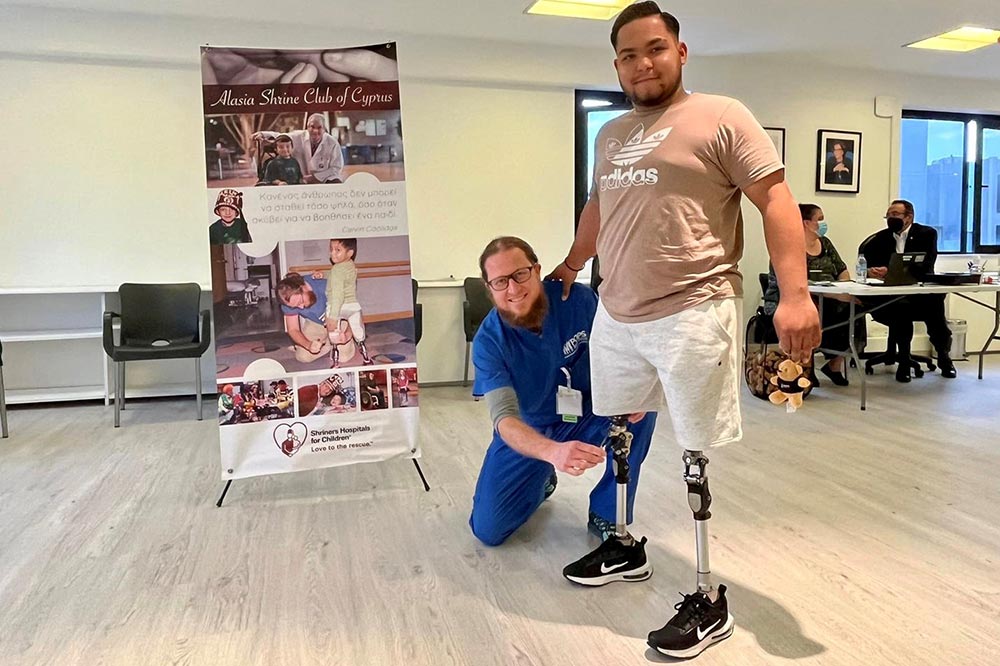
This Christmas, that line felt less like a slogan and more like a truth.
As we moved through a season full of opinions, noise, and distractions, I kept thinking about Juju, about her kindness, her strength, and the way she comforted my child without even realizing it.
Because sometimes the people we think we are going to help end up teaching us the most.