

Newsroom
After weeks of speculation, mixed signals, and previous announcements by US President Donald Trump that suggested a breakthrough was near, Washington and Tehran appear to be closer than ever to ending a conflict that has kept the Middle East on edge and sent shockwaves through global energy markets.
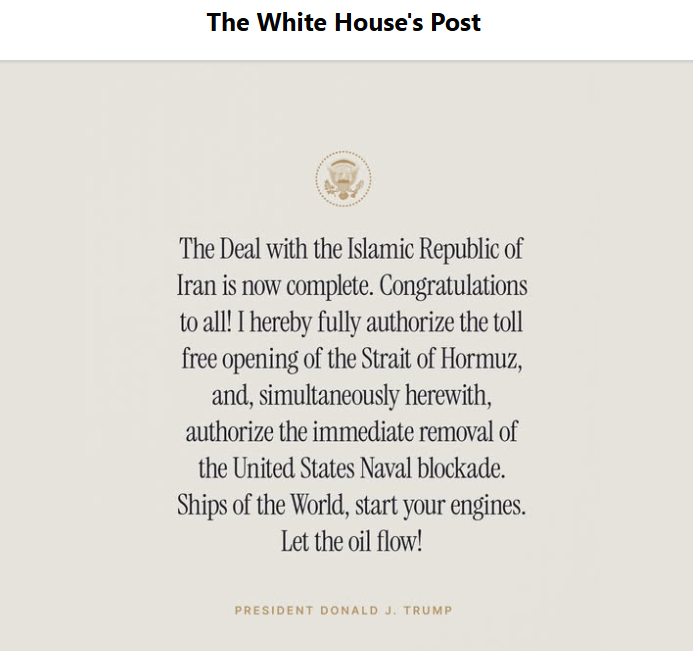
According to reports from international media, the United States and Iran have reached a framework agreement that could bring an end to months of fighting. A formal signing is expected later this week, although several key issues, including the future of Iran’s nuclear program and the exact terms surrounding the reopening of the Strait of Hormuz, still remain unresolved.
President Trump confirmed it in an X post:
For Cyprus, the development is more than just another foreign affairs headline.
Sitting just a short distance from one of the world’s most volatile regions, the island has spent months watching the crisis unfold from its doorstep. The conflict brought fears of wider instability, concerns over regional security, and a direct economic impact as oil prices climbed and the cost of transporting goods increased.
The Strait of Hormuz, a narrow waterway between the Persian Gulf and the Gulf of Oman, carries roughly one-fifth of the world’s oil and gas supplies. Any disruption there quickly travels across the globe, eventually reaching ordinary households in Cyprus through higher fuel prices, more expensive electricity, and increased costs for everyday products.
Now, markets are responding with cautious optimism.
Following the announcement of the possible deal, oil prices fell sharply as investors bet that a reopening of the strait and a reduction in tensions would help stabilize global energy supplies. Global stock markets also moved higher, reflecting renewed confidence that the worst of the crisis may be over.
For the average Cypriot, however, any financial relief is unlikely to be immediate.
A drop in international oil prices can take time to filter through to petrol stations, electricity bills, and supermarket shelves. But if the agreement holds, the longer-term impact could mean less pressure on household budgets at a time when many families are still struggling with the high cost of living.
Beyond economics, a calmer Middle East would also be a strategic relief for Cyprus. The island has played a significant role throughout the crisis as the nearest European Union member state to the region, serving as a hub for diplomatic efforts, evacuation operations, and humanitarian coordination.
But analysts warn that this is not a finished peace deal yet.
The history of the negotiations has been marked by sudden announcements, reversals, and disagreements over what exactly has been agreed upon. The coming days, and whether a formal agreement is signed and implemented, will determine whether this is truly the beginning of a new chapter or simply another pause in a long and unpredictable conflict.
*With information from Reuters, The Guardian, Wall Street Journal


