

Newsroom
An international team of archaeologists has completed a major field campaign in the valley of the Peristerona River, shedding new light on how copper production under Roman rule shaped both society and the environment in Cyprus’s north-western Troodos foothills.
The research forms part of the Life at the Furnace (LAF) project, directed by Dr Kristina Winther-Jacobsen of the University of Copenhagen and Dr Angus Graham of Uppsala University, in collaboration with The Cyprus Institute. Excavations were led by Dr Roser Marsal of the Universitat Autònoma de Barcelona. The project is conducted under the auspices of the Department of Antiquities of the Deputy Ministry of Culture.
The 2025 field season, which concluded on 7 November, focused on the landscape surrounding the Peristerona River and the site of Agia Marina Xyliatou–Mavrovouni, an area known for its large copper slagheap. By combining archaeological finds with environmental data, the team aims to understand how Roman-era copper production, often linked to foreign control of Cyprus, affected local communities and ecosystems.
Surface survey work this season concentrated on a small cultivated plateau north of the village of Agia Marina Xyliatou. Here, archaeologists identified an Iron Age sanctuary, indicated by fragments of figurines including handmade horses, a bull, large human figures, and a mould-made figurine of the goddess Astarte. In later periods, from the Hellenistic to the Early and Late Roman eras, the sanctuary appears to have been replaced by a settlement. Evidence suggests this settlement may have been connected to copper production, as indicated by a localized scatter of slag.
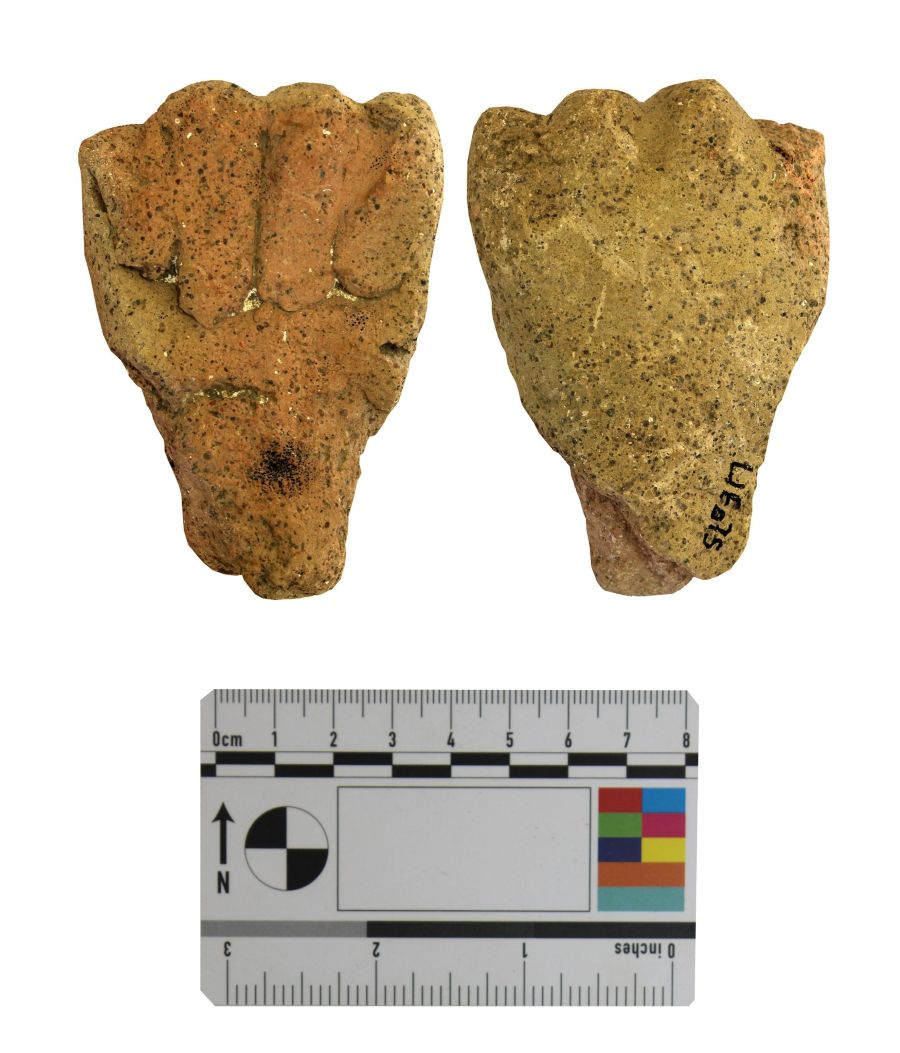
Survey activities also continued at a key crossing point of the Peristerona River on the border between the districts of Kato Moni and Orounta, where researchers mapped the wider context of the Chalcolithic site of Stavros tou Kounti.
At Agia Marina Xyliatou–Mavrovouni itself, the team began excavating structures first identified during preliminary clearance in late 2024. These excavations revealed an unexpectedly complex water-management system spread across three artificial terraces. The system includes basins, cisterns, and plastered hydraulic installations, highlighting a sophisticated approach to controlling and storing water.
Material used to backfill these installations dates mainly to the Late Hellenistic and Middle Roman periods, suggesting that the settlement experienced a peak in activity during this time. How this water-management infrastructure relates to copper smelting remains an open question and will be a focus of future research.
The Life at the Furnace project is supported by the Carlsberg Foundation and the Enboms Foundation, and its findings continue to refine our understanding of Cyprus’s industrial and social landscape during antiquity.


