

Newsroom
Sperm from a Danish donor who unknowingly carried a dangerous cancer-linked mutation was used in fertility treatments across Europe, including in Cyprus, investigators have confirmed. And the scale of it is staggering: the man fathered at least 197 children before anyone realized something was wrong.
The revelation comes from a major investigation by 14 public broadcasters, including the BBC, which traced the donor’s sperm over a 17-year period. Some of the samples also went to Greece and a “very small” number of British families who sought treatment in Denmark.
The donor, a student at the time, looked perfectly healthy and passed every routine screening. But hidden in up to 20% of his sperm was a mutation in the TP53 gene, a key tumor suppressor that normally helps stop cells from turning cancerous. Because the mutation wasn’t in his whole body, it slipped through unnoticed.
Children conceived with the affected sperm, however, inherit the mutation in every cell. This condition, known as Li-Fraumeni syndrome, pushes lifetime cancer risk to nearly 90%, particularly in childhood. Some of the donor-conceived children have already died.
“It’s a terrible diagnosis,” said Professor Claire Turnbull of London’s Institute of Cancer Research. “There’s a lifelong burden of living with that risk.”
The European Sperm Bank in Denmark has acknowledged the donor’s sperm was widely distributed to clinics in multiple countries, including here in Cyprus, over nearly two decades.
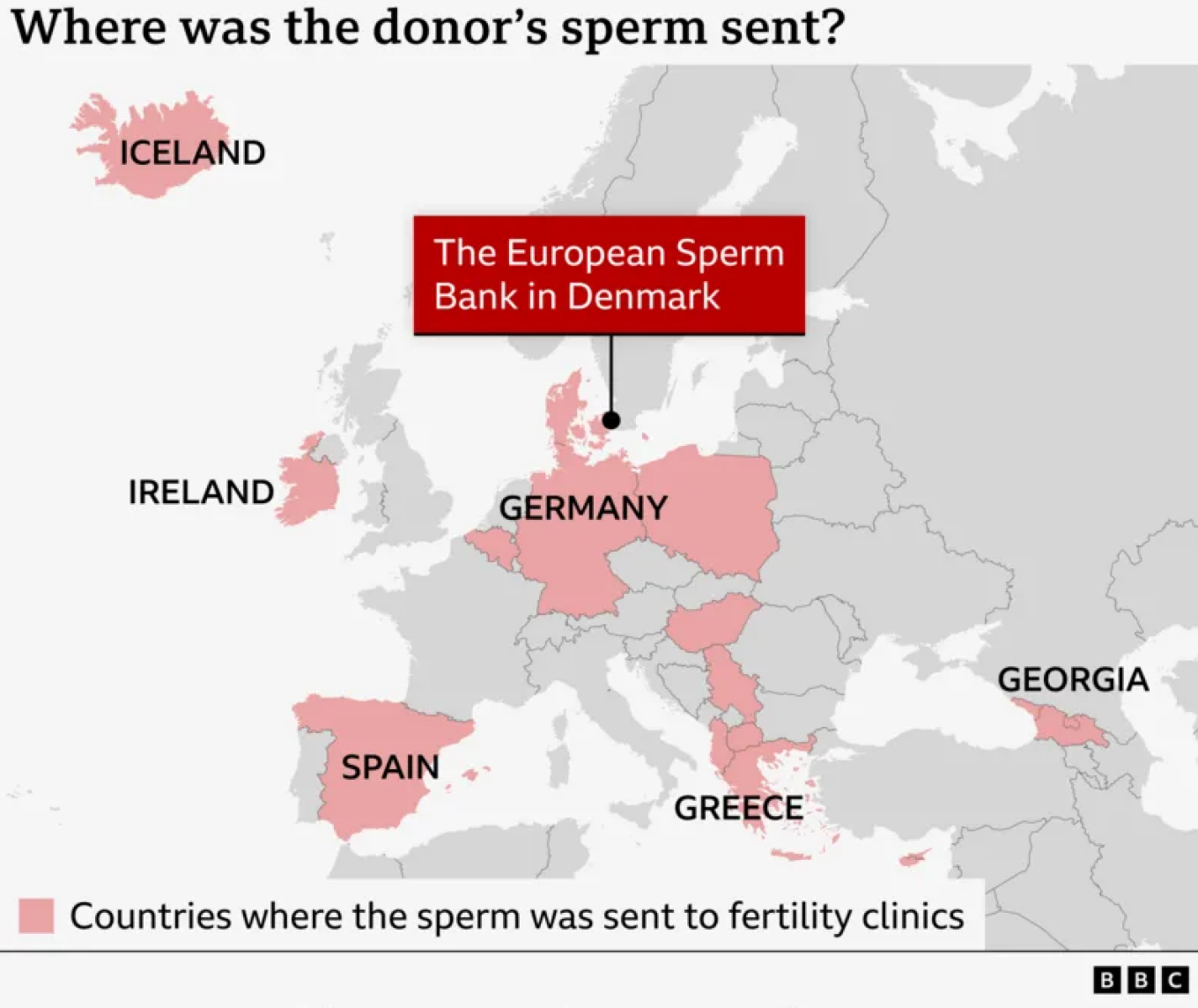
For families now receiving the news, the shock isn’t just the mutation itself but the sheer scale of the donor’s reach. The case has reopened debate over how sperm banks screen donors, how long donations should be used, and whether countries need stricter limits and better tracking systems.
Authorities are now working to contact families who may be affected, in Cyprus and across Europe, as the investigation continues to unfold.
*Source: BBC


