Newsroom
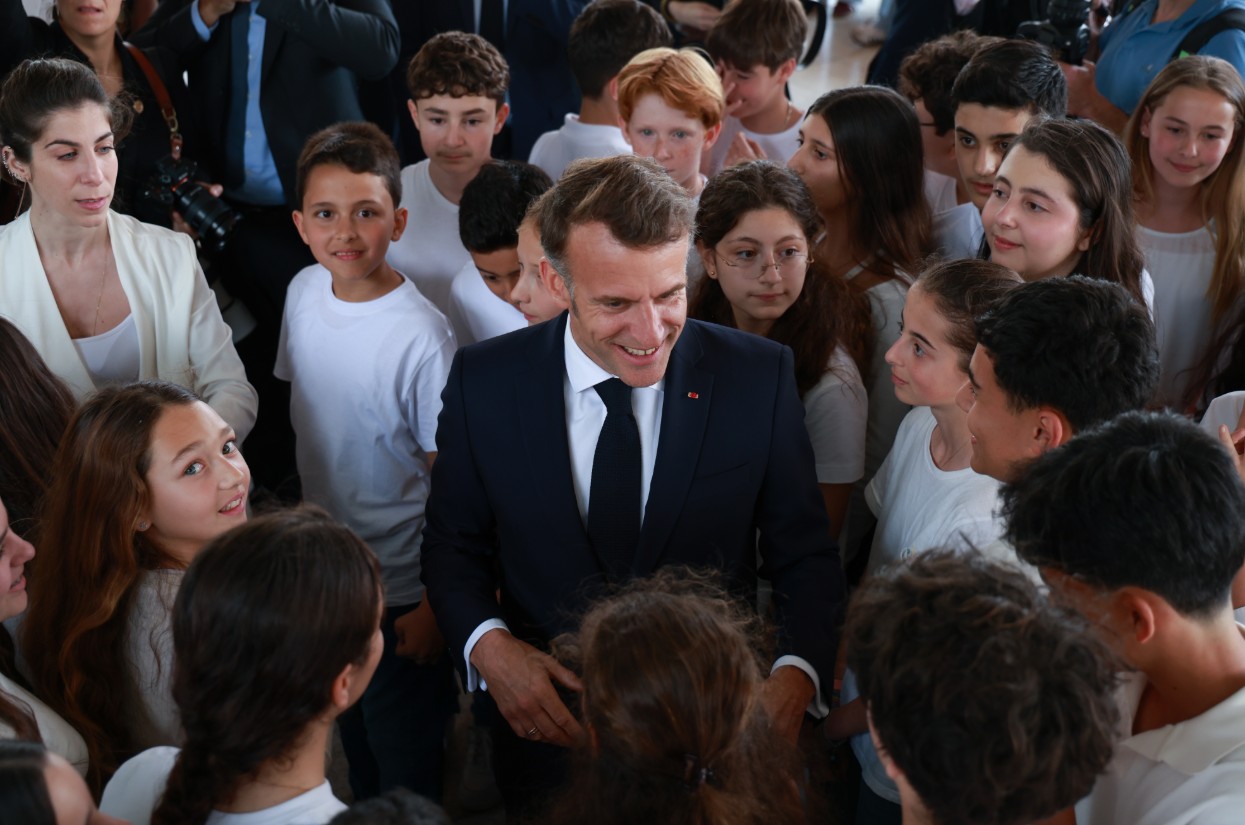
French President Emmanuel Macron visited the French–Cypriot School in Nicosia on Thursday, joining Cypriot President Nikos Christodoulides in a symbolic stop that placed education at the heart of growing ties between Cyprus and France.
The visit to the French–Cypriot School in the capital brought together students, teachers, and officials in what is seen as more than a formal protocol appearance; it was a moment highlighting how the two countries are building closer cultural and educational links.
The school itself, known as the French–Cypriot School of Nicosia, is a bilingual educational institution that reflects the long-standing cooperation between Cyprus and France. It combines elements of the French curriculum with Cypriot education, offering students a multicultural environment where languages, identity, and international outlook meet in everyday learning.
For many Cypriot families, institutions like this represent a growing opportunity: children being educated in more than one language, exposed to different European perspectives, and prepared for studies and careers beyond the island.
During the visit, Macron and Christodoulides were welcomed by students and staff, with classrooms briefly becoming the backdrop for diplomatic conversation. But the focus quickly shifted from politics to pupils, students who now grow up navigating both Cypriot and French cultural influences as part of their daily school life.
Cyprus with us, for sure. pic.twitter.com/SsbiA3yTHE
— Emmanuel Macron (@EmmanuelMacron) April 23, 2026
Education has increasingly become a quiet pillar of Cyprus–France relations, alongside defense, energy, and regional cooperation. Schools like this one are often described as living bridges between the two countries, less visible than summits and treaties but just as influential in the long term.
For Cyprus, the symbolism also runs deeper. In a small country where international education is highly valued, bilingual schools like the French–Cypriot School are often seen as gateways, opening doors to European universities, careers abroad, and wider cultural exchange.
And for students on the ground, the message was simpler: leaders may come and go, but education is where future relationships are built.