

Newsroom
For many Cypriots, the people who clean public buildings, maintain government facilities, support hospital operations, and keep essential services running often go unnoticed until they stop working.
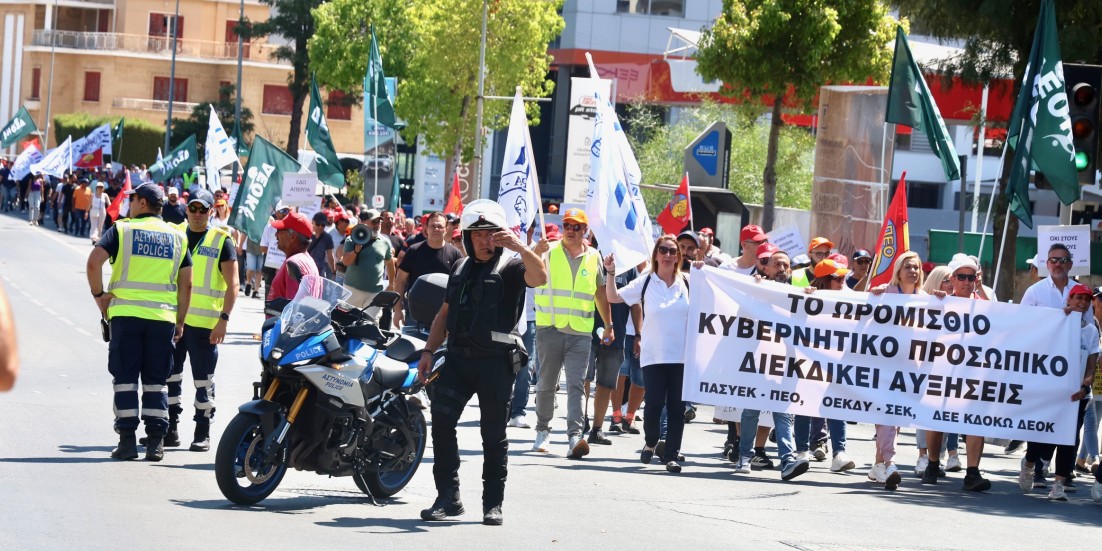
That reality was on full display on Wednesday as hourly-paid government employees staged a 24-hour nationwide strike, the first of its kind since the Republic of Cyprus was founded.
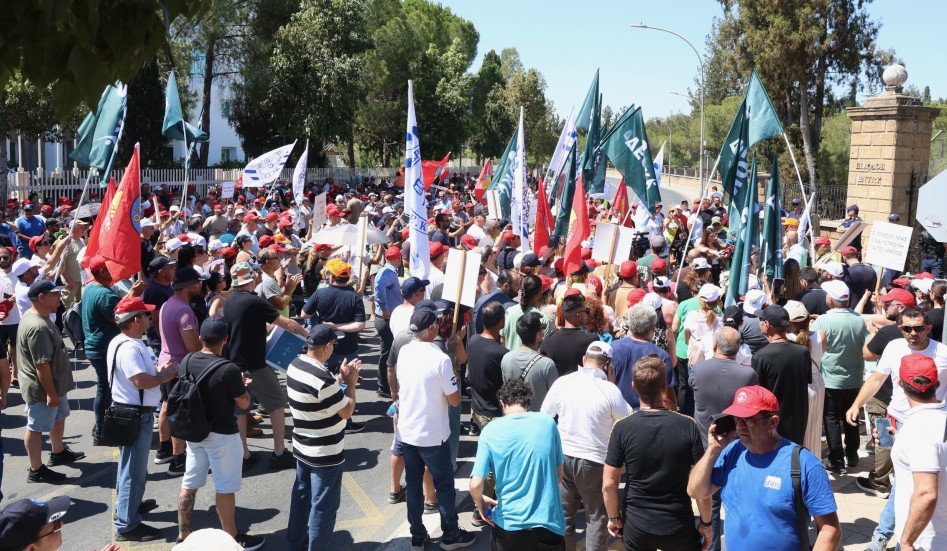
Hundreds of workers gathered outside the Ministry of Finance before marching to the Presidential Palace, carrying banners and chanting slogans such as “No to starvation wages” and “We are not second-class workers.”
Their message was simple: after years of rising living costs, they say their pay has failed to keep up.
According to the unions representing the workers, hourly-paid government employees have received a total salary increase of just 1.5% over the past 17 years.
“We are not asking for luxuries,” union representatives said during the protest. “We are asking for fair wages and respect for the work we do every day.”
The strike was organized by OEKDY-SEK, PASYEK-PEO and DEE KDOKO-DEOK, with workers demanding salary increases and other benefits to be applied retroactively from January 1, 2025.
The unions also delivered a memorandum to President Nikos Christodoulides, calling on him to intervene and help break the deadlock with the Ministry of Finance.
What does this mean for the public?
The strike is expected to affect a number of government services, although emergency and essential operations remain in place.
One area causing concern is beach safety.
The Ministry of Interior warned that lifeguard coverage could be reduced across Cyprus because of the strike, urging the public to take extra care while swimming or taking part in sea activities.
The warning comes at a time when beaches are packed with families, tourists, and young people looking to cool off during the summer heat.
In the health sector, officials moved to reassure the public that hospitals would continue operating safely.
The State Health Services Organization (OKYpY) said public hospitals would operate with security staffing levels, giving priority to emergency cases and patient safety.
Accident and Emergency Departments will continue operating normally, while care for hospitalized patients is not expected to be affected.
At the same time, the Pancyprian Union of Government Doctors (PASYKI) said it supports the workers' right to protest but stressed that responsibility for managing any disruptions rests with health authorities and not doctors.
A cost-of-living issue
The strike comes at a time when many households are already feeling pressure from higher housing costs, food prices and everyday expenses.
For many of the workers marching on Wednesday, the issue goes beyond salaries. They say it is also about recognition and being treated fairly after years of service.
Whether the protest leads to a breakthrough remains to be seen, but the message from outside the presidential palace was clear: workers believe the cost of living has moved forward, while their pay has been left behind.


