

Newsroom
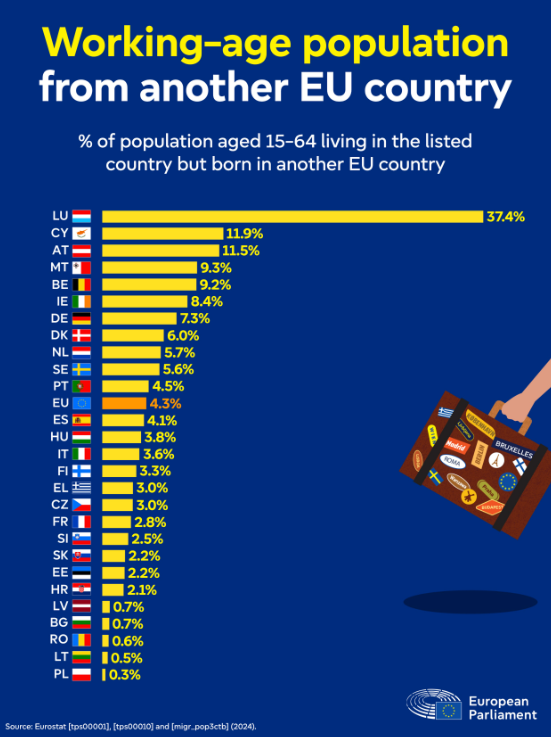
Cyprus is one of the European Union’s biggest magnets for workers from other EU countries, ranking second among all member states for the share of its working-age population made up of people born elsewhere in the bloc.
According to European Parliament data, 11.9% of people aged 15 to 64 living in Cyprus were born in another EU country, a figure surpassed only by Luxembourg, where the share reaches 37.4%.
The numbers highlight Cyprus’ role as a destination for Europeans seeking jobs, better opportunities, or a different lifestyle, from professionals and business owners to families who have made the island their home.
Behind the statistics are thousands of Europeans who have moved to Cyprus over the years, contributing to sectors such as tourism, education, healthcare, finance, technology, and construction.
The EU-wide figures show that mobility between member states has become a major part of European life. In total, around 16 million Europeans live or work in another EU country, moving across borders for employment, family reasons, or new opportunities.
To make life easier for people who move within the bloc, the European Parliament has approved updated rules on social security coordination.
The changes aim to address some of the challenges faced by workers who move between countries, including uncertainty over benefits and access to support.
The new rules include:
- Clearer rules on unemployment benefits, helping people understand which country is responsible for their support.
- Updated rules on long-term care and family benefits, reflecting the reality of more Europeans living and working abroad.
- Better cooperation between EU countries to reduce delays and confusion when citizens move across borders.
For Cyprus, where almost one in eight working-age residents comes from another EU country, the changes could have a direct impact on many households.
A European worker who spends part of their career in Cyprus and another part elsewhere in the EU may now find it easier to navigate issues such as pensions, unemployment support, or family benefits.
What does this mean for Cyprus?
For Cyprus, the figures tell a bigger story about the island’s changing workforce and economy. A country that once saw many of its own citizens leave abroad for work has increasingly become a place where Europeans from across the EU choose to settle, build careers, and raise families.
The presence of EU workers has helped fill gaps in key sectors facing labor shortages while also bringing new skills, languages, and experiences to the workplace. At the same time, it means Cyprus’ systems, from social security and healthcare to housing and public services, must adapt to a more mobile and international population.
With thousands of people moving between Cyprus and other EU countries during their working lives, clearer rules on benefits and social protection could make a real difference for families who have built lives across borders.
The numbers also reflect a wider reality: Cyprus may be a small island, but its economy and workforce are becoming increasingly European, connected not only through trade and tourism but also through the people who choose to call it home.


