

Newsroom
The Department of Antiquities of Cyprus has announced significant new discoveries from recent excavations at the extra-urban cemetery of the Late Bronze Age harbour city of Dromolaxia-Vyzakia, better known as Hala Sultan Tekke.
The excavations, carried out in May and June 2025, were led by Professor Peter M. Fischer of the University of Gothenburg, heading a team of local and international specialists. Work focused on Area A of the cemetery, guided by earlier geophysical surveys and surface finds.
Hala Sultan Tekke was a thriving urban centre covering at least 25 hectares, founded around 1650–1630 BC during the transition from the Middle to the Late Bronze Age. The city flourished for almost 500 years before its destruction and abandonment around 1150 BC, emerging as one of the most important hubs in the eastern Mediterranean during its peak.
Tombs, a well, and sealed histories
The 2025 field season revealed several man-made structures affected by centuries of erosion and agricultural activity, including a long-abandoned well and two chamber tombs dating to the 14th century BC. A modern borehole drilled near the ancient well confirmed high groundwater salinity at around 10 metres below the surface, a factor that likely rendered the well unusable even in antiquity.
The two chamber tombs, whose roofs had collapsed in ancient times, proved especially valuable. While some objects were damaged by the collapse, the fallen debris sealed the tombs, preserving their contents and offering archaeologists rare, undisturbed insights into Late Bronze Age burial practices.
International expertise and advanced documentation
The excavation was supported by Dr Rainer Feldbacher and members of the Swedish mission, while artefacts from both earlier and current campaigns were processed by Professor Teresa Bürge at the Archaeological Museum of the Larnaka District. Bioarchaeological work on the human remains was undertaken by Professor Kirsi Lorentz and Dr Yuko Miyauchi of The Cyprus Institute. Digital documentation and material analyses were carried out by Professor Sorin Hermon and his team at the same institute’s STARC centre.
A crossroads of the Bronze Age world
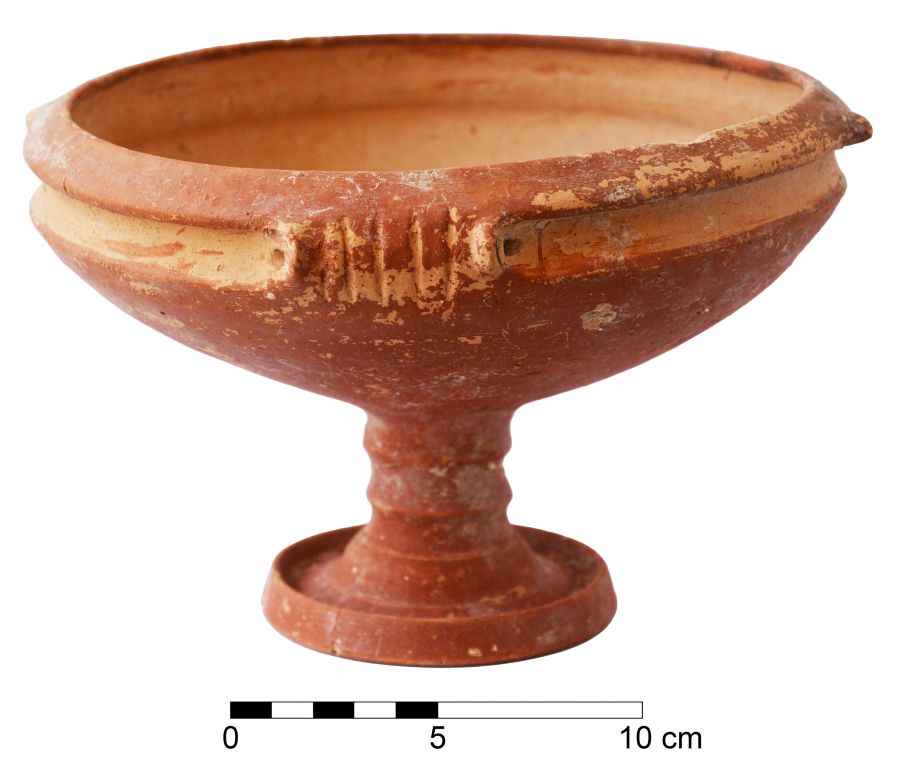
The tombs yielded an exceptional array of finds, including finely made local pottery, tools and personal ornaments. Particularly striking was the diversity of imported luxury goods, underscoring Hala Sultan Tekke’s role in long-distance trade networks.
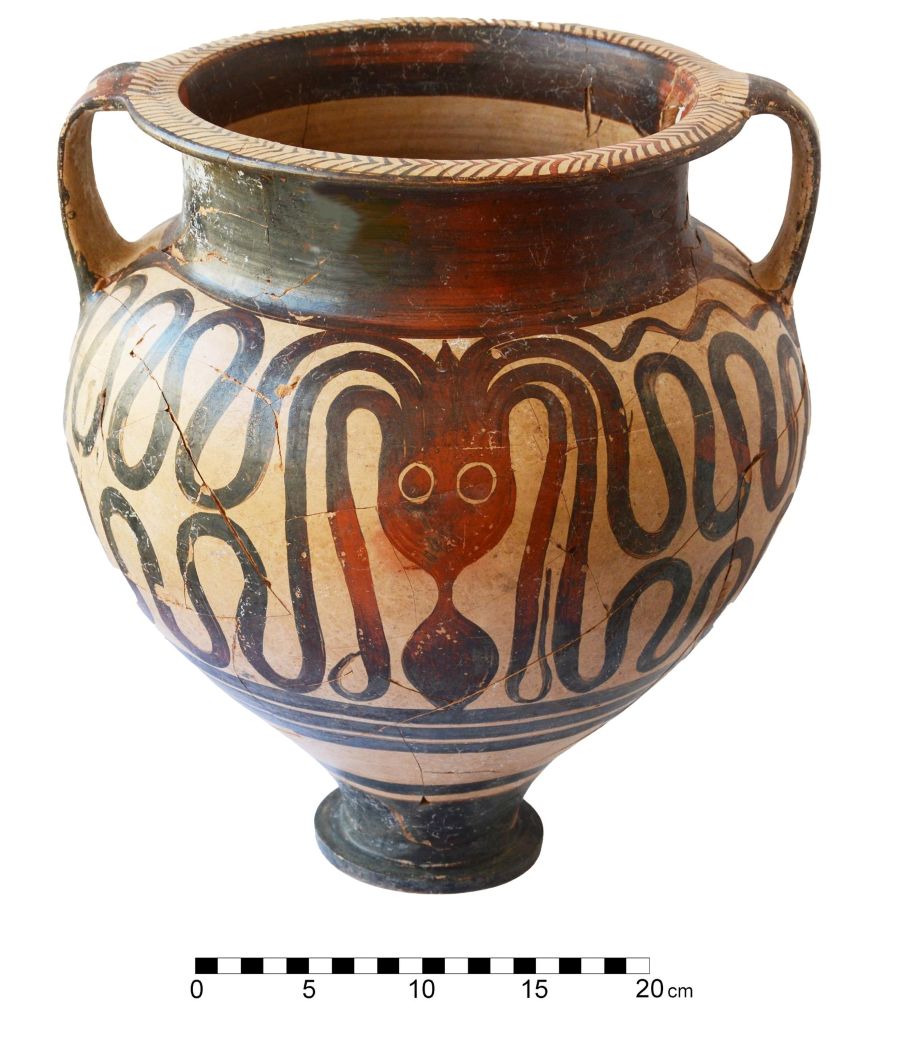
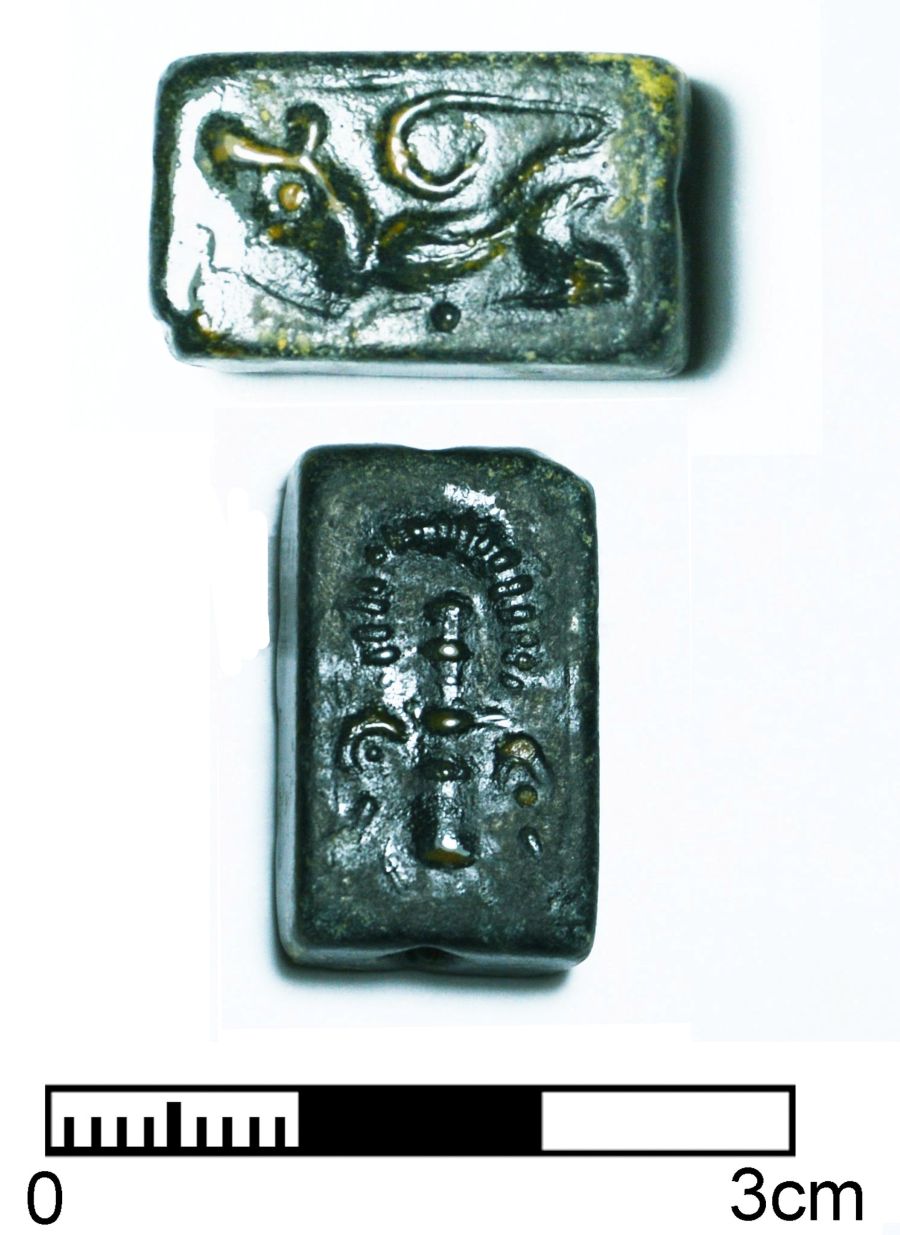
Ceramics arrived from the Greek mainland, especially Berbati and Tiryns, as well as from Crete and other Aegean islands. From Egypt came ivory objects and vessels carved from high-quality calcite (alabaster). Even more distant connections are attested by lapis lazuli from Afghanistan’s Sar-i-Sang mines, carnelian from Gujarat in India, and amber from the Baltic region, some fashioned into beads and even a scarab. These exotic materials likely reached Cyprus through complex trade routes involving Mycenaean, Egyptian and Mesopotamian intermediaries.
Pottery from Sardinia’s Nuragic culture further confirms these extensive links and aligns with earlier evidence that Cypriot copper oxhide ingots were exported to Sardinia, highlighting Cyprus’s central role in Bronze Age Mediterranean commerce.
Copper, wealth and social structure
The city’s prosperity rested largely on copper production. Slag heaps, furnaces, crucibles and ore fragments point to intensive intra-urban metallurgy. Copper mined in the Troodos Mountains was processed locally and shipped through Hala Sultan Tekke’s sheltered harbour, attracting traders from across the Mediterranean between the mid-15th and late 13th centuries BC.
The tombs themselves offer rare insights into social organisation and family life. Stratigraphic evidence shows that they were reused over many generations, with earlier remains carefully rearranged to accommodate new burials. This practice reflects strong kinship ties and a sense of familial continuity. The long-term use of the tombs has also created clear stratigraphic sequences, particularly valuable for refining the site’s chronology through associated grave goods such as pottery.
Preliminary analysis indicates that individuals of all ages were buried in the tombs, from newborns to adults, with few living beyond 40 years, consistent with the low life expectancy of the period. Ongoing studies, including ancient DNA analysis, are expected to shed further light on kinship patterns, health and daily life in the city.
A reaffirmed Mediterranean powerhouse
According to the Department of Antiquities, the discoveries once again confirm Hala Sultan Tekke’s status as a major economic and cultural centre of the Late Bronze Age. The richness of the tomb assemblages suggests they belonged to elite families closely involved in copper export and international trade. Variations in imported goods between tombs may even point to specialised trading roles or the presence of immigrant communities within this cosmopolitan port city.


