

Elizabeth Georgiou
The organized creation of public shelters in Cyprus began in 1999, when legislation was introduced requiring that public buildings include underground spaces that could serve as shelters in emergencies. Over the years, however, the initiative seems to have lost momentum. Many of the designated shelters were abandoned or repurposed, and today, some resemble storage rooms or forgotten basements rather than safe spaces capable of accommodating citizens during crises.
Recent events, particularly the drone attack on British bases, have brought the issue back into the spotlight. Chará Lazarou, deputy spokesperson for Civil Defence, told Kathimerini Cyprus that inspections and reassessments of shelters across the island have been ongoing since Sunday, March 1. The process includes updating official records and conducting on-site checks in coordination with other relevant agencies to determine the shelters’ operational readiness. Yet images from the recorded shelters following Monday’s alert revealed a stark picture of neglect and unpreparedness. According to Civil Defence, directives for intensive inspections were issued by headquarters on March 1 at 6 p.m., with instructions for cleaning the shelters following two days later, on March 3.
To carry out the inspections over the past week, specialized teams were formed, including civil engineers seconded from the Ministry of Interior. Personnel from other government agencies, such as the Game and Fauna Service and the Land Registry Department, were also mobilized to accelerate the process.
SMS Alerts Fall Short
A pilot SMS notification system meant to alert citizens drew criticism, as many reported not receiving messages or receiving them late.
An experienced volunteer told Kathimerini that he was called on Friday to inspect shelters starting about an hour later. Lazarou explained that volunteer communication takes place throughout the week, and assignments are based on operational needs and volunteer availability. When problems were identified during inspections, recommendations for corrective action were issued, with a three-day compliance window. The goal, she emphasized, is cooperation with property owners to make shelters functional, not to pressure them into declassification or avoidance.
Civil Defence data shows there are roughly 2,500 public shelters in Cyprus today—not including private homes that owners might use as shelters but are under no obligation to register. Based on current figures, shelters cover an estimated 45% of the population.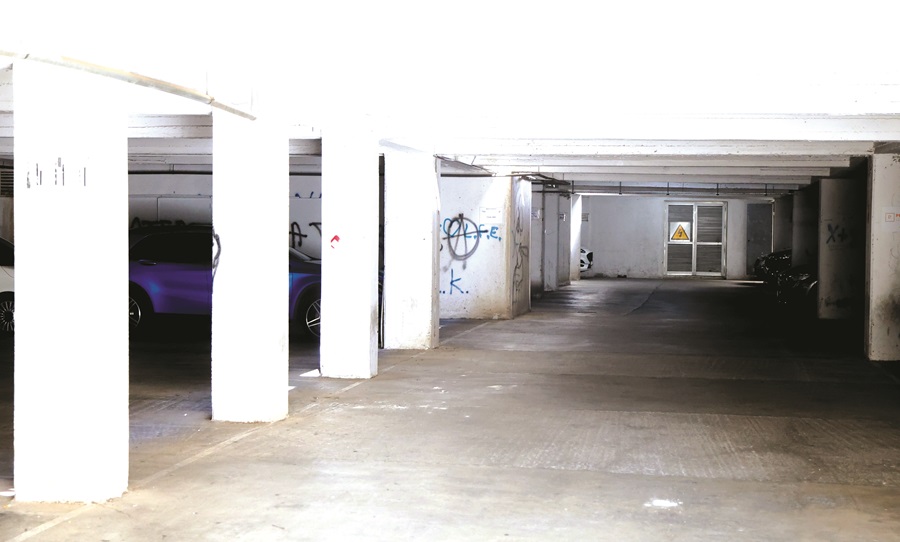
Staffing Challenges
Lazarou acknowledged ongoing staffing challenges. “Due to expanding Civil Defence responsibilities, especially in the last four years, there are personnel shortages,” she said, adding that efforts are underway with the Ministry of Interior to strengthen staffing. The core Civil Defence team includes 35 permanent officers across all levels, supplemented by 50 administrative and temporary staff. The agency also relies heavily on volunteers: 4,152 are “on call,” and 635 are actively participating in operations.
SMS Test Highlights Gaps in Public Alerting
Although discussion about activating a “Reverse 112” alert system has been ongoing for years, Cyprus still lacks a fully integrated and reliable mechanism for notifying citizens in emergencies. In a time when technology allows instant communication to millions, it is notable that in 2026, citizens may hear sirens and scramble to find information on TV or social media. Public alerts are not only for extreme national threats, they also cover everyday risks like fires, floods, or severe weather.
Under public pressure, Civil Defence attempted a pilot mass SMS alert last Wednesday. The Ministry of Interior initially declared the test “fully successful” shortly after 7 p.m., but citizen reports painted a different picture: messages were delayed, received at different times, or sent only in English, while many never received any notice at all. Further provincial SMS tests conducted on Friday succeeded.
Lazarou clarified that the SMS pilot was not part of the long-planned early-warning system but a temporary measure initiated by the Deputy Ministry of Innovation to fill gaps. She confirmed the ideal solution is still the upcoming “112 reverse” system, to be named in Cyprus the “Early Warning System,” expected to go live in June. Implementation has faced obstacles: the first tender was canceled due to legal challenges, and direct awarding was blocked by legislation. Improvements to the interim SMS system are being explored with telecommunications providers.
Citizen Calm vs. Reliable Information
Officials have repeatedly urged calm in recent days, but experts stress that reassurance alone is insufficient. Reliable, immediate institutional information is key. Residents near Akrotiri reported that sirens have become part of daily life, often leaving them to ask local leaders, neighbors, or even strangers what is happening.
An experienced Civil Defence volunteer shared insight into the operational and shelter situation. He highlighted two major issues: chronic understaffing, Civil Defence relies heavily on volunteers, and the need for thorough shelter inspections. “The shelters need comprehensive checks… all recorded shelters must be restored to operational status,” he said. Shelters are designed for temporary protection during bombardments, just for a few hours until the danger passes, but many face serious infrastructure issues.
Some shelters are inaccessible, and drains are blocked; others lack basic facilities like water, hygiene, or first-aid kits. Citizens are often uninformed about where to go. The volunteer suggested a simple, direct system: notifications sent like utility bills, specifying the nearest shelter for each address. Despite the shortcomings, he praised the Civil Defence personnel: “The volunteer teams are disciplined, skilled, and dedicated… they put their heart into it.”


