

By Panagiotis Diogenous
In Cyprus, when something is truly good, it is often hidden. Doors are locked. Voices are lowered. Not out of secrecy for secrecy’s sake, but out of instinct. There is a fear that once something is discovered, it will be taken. The same instinct applies to a small plot of land in Evrychou, a place that has seen more military boots than tractor tires. You do not arrive there because you were searching for olives. You arrive because someone who trusts you decides it is time for you to see it.
This land, located inside the Dead Zone, has remained untouched by pesticides, fertilizers, or modern agricultural intervention. Over time, that absence of human interference has produced an olive oil with an unusually precise chemical profile, one that approaches perfection and would likely provoke disbelief from producers in more established olive oil regions. That this quality is the byproduct of a geopolitical stalemate reflects a familiar Cypriot reality. Even its complications can become assets.
Atsas signals its ambitions immediately. With a design that resembles a niche fragrance more than a kitchen staple, it is packaged in a matte black, opaque bottle, sealed like a pharmaceutical ampoule. It is an object meant to be handled and examined before it is tasted. This is deliberate. Atsas is positioned for kitchens already stocked with Le Creuset cookware and bottles of Clase Azul, spaces where excess has been edited out and only intentional choices remain.
There are products acquired for their utility, and others acquired for the story they carry. Atsas, an organic extra virgin olive oil, belongs to both categories. It is not another village oil, nor does it rely on nostalgia. The team behind it avoids the familiar language of heritage marketing. There are no grandfathers narrating commercials and no grandmothers harvesting olives on the label. The emphasis is on design, data, and a recurring term. Polyphenols.
In the local market, the word is rarely spoken aloud. Internationally, it carries weight. Polyphenols are antioxidants, and olive oils containing more than 250 milligrams per liter qualify as nutraceuticals, foods with recognized medicinal properties. Atsas exceeds 2,000 milligrams per liter, a concentration verified by the University of Athens and nearly eight times the qualifying threshold.
To achieve this, olives of the Koroneiki variety are harvested early, when polyphenol levels peak. Processing is immediate. Temperatures are tightly controlled. The entire procedure resembles a Grand Cru winemaking ritual more than conventional olive oil production.
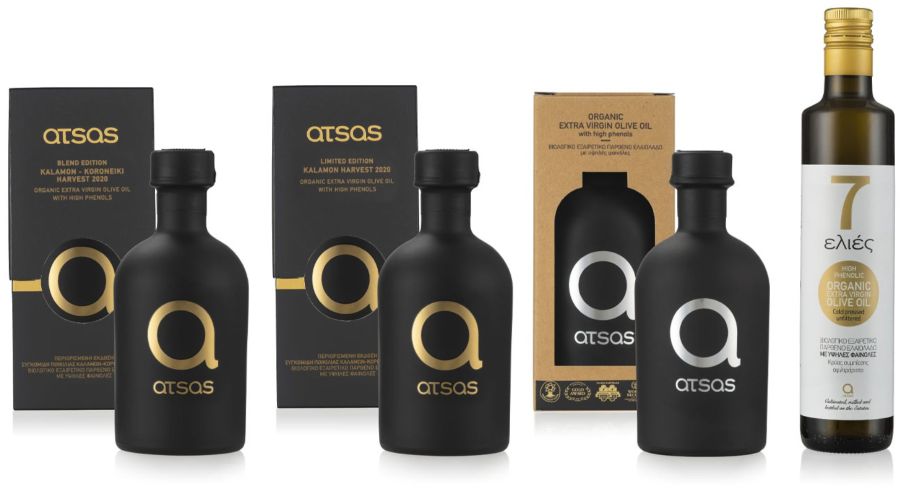
This is not an oil intended for frying eggs. It is intensely aromatic, with notes of unripe almond and wild herbs. On the nose, it is fruity and distinctly green. On the palate, it arrives politely, then asserts itself with bitterness and a peppery burn. The sensation rewards those seeking craftsmanship rather than spectacle. That lingering, almost medicinal finish is characteristic of high polyphenol olive oil and explains why it is used raw, drizzled over burrata, brushed onto thinly sliced carpaccio, or poured sparingly over sourdough bread. Not the mass produced kind that has spent days on a supermarket shelf.
Atsas is priced accordingly, but it does not compete with supermarket olive oils. Its reference points are closer to Dom Pérignon or Louis XIII, luxury goods consumed slowly and deliberately. It speaks to the same audience that invests in Left Bank Premier Cru Bordeaux, buyers who value provenance, rarity, and knowledge.
It bears repeating. This is not an oil for frying.
The Cypriot market still tends to measure olive oil in liters. The global market measures it in milligrams, like gold dust. That difference marks both a gap and an opportunity. Atsas exists as a quiet declaration that Cyprus can compete at the highest level, not through imitation, but by leaning into what is uniquely its own. The land, the light, and a history shaped by complexity.
What remains, in the end, is not the price or the awards, but the image of a single black bottle in a kitchen free of excess. A bottle opened not for cooking, but for meaning. A reminder that luxury, in its purest form, is always a matter of taste and place, distilled into a single drop.
Read the original Greek article here.


