


Apostolos Tomaras
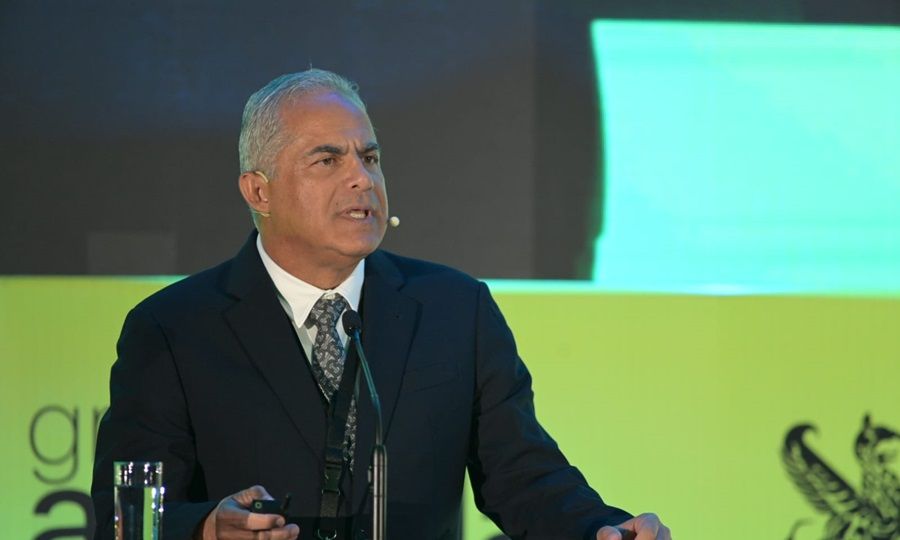
Speaking from the Green Agenda conference stage, former Cyprus Energy Regulatory Authority chairman Andreas Poullikkas outlined the potential for Cyprus to join a growing group of countries exploring small modular reactors (SMRs) as part of their future energy mix.
Referencing recent comments by Energy Minister Michalis Damianos, who said Cyprus’ energy security could be strengthened through a combination of renewables and SMRs, Poullikkas presented the possible benefits of advanced nuclear technology for electricity production.
He said SMRs are a flexible technology that could be used not only to generate electricity but also to produce water and hydrogen. According to his presentation, only two such units are currently in operation globally, one in Russia and one in China.
Economic benefits
Poullikkas said these small-scale reactors, with a capacity ranging from 50 to 600 megawatts, could help set electricity generation costs at around $45 to $90 per megawatt-hour.
He also pointed to potential benefits in water production through desalination, estimating the cost of desalinated water at between $0.45 and $0.65 per cubic metre.
Additional advantages, he said, could come from hydrogen production, with applications in transport as well as in powering data centres in cities such as Paphos, Limassol and Larnaca.
Poullikkas added that, if adopted, SMR technology could position Cyprus as an emerging energy hub linking Europe and Africa.
Qatar’s water strategy
Also presenting at the conference was Abdulrahman Al Baker, Director of Production Planning and Water Resources at Qatar’s General Electricity and Water Corporation (Kahramaa).
He said both Cyprus and Qatar face similar challenges in meeting water demand naturally, noting that Qatar’s water security is based not on natural availability but on policy decisions.
Al Baker highlighted the need to reduce the energy cost of desalination, even in countries like Qatar that are rich in natural gas.
“We are working to increase renewables for water production. It is not only energy infrastructure that solves the water issue,” he said, adding that Qatar has also been focusing in recent years on the reuse of treated wastewater as part of its broader water strategy.


