


Apostolos Kouroupakis
“Likewise arriving from Milan, Italy, was the promising architecture student Mr. Neoptolemos Michaelides,” the newspaper Anexartitos reported on June 4, 1940, in the formal style of the era.
Michaelides had gone to Milan in 1938 to study architecture. But as a second-year student, the outbreak of World War II forced him to return to Cyprus, putting his studies on hold. Around the same time, Giorgos Paraskevaides also returned to Cyprus, having completed his studies. The connection between the Michaelides and Paraskevaides families had been decisive in Neoptolemos’ move to Milan in the first place, where Paraskevaides was already studying.
Michaelides would return to Milan in 1947, but not before submitting, in Cyprus, the plans for his very first project: the Loutraki Hotel in Kalopanayiotis.
From an early stage, the “promising student” had clearly charted the path he wanted to follow: to serve architecture. And he did so in the best possible way.
Neoptolemos Michaelides would go on to leave an indelible mark on Cyprus’ architectural heritage. A champion of progress but also a staunch defender of architectural tradition, he founded the Cyprus Architectural Heritage Organization in 1979. Michaelides knew how to turn the “old” into something radically new, how to guide architecture toward a new form of modernism.
The remarkable journey of this pioneering architect is captured with restraint yet rich architectural nuance in a recently published luxury bilingual volume by international publisher Park Books, issued for the Maria and Neoptolemos Michaelides Foundation. The book, titled “The House of Maria and Neoptolemos Michaelides: Hints Toward a New Modernism,” features critical essays by renowned architectural historian Kenneth Frampton and is edited by Haris Hatzivassiliou.
Through the lens of Spanish architect and architectural photographer Javier Callejas, the volume documents the couple’s residence, a house that Frampton critically examines in an accompanying essay. Frampton also authored a second essay presenting a selection of Michaelides’ most emblematic works. As editor Haris Hatzivassiliou explains, this was done “to offer a broader understanding of the evolution of his compositional methodology.”
A significant part of the collection housed within the residence comes from the couple’s travels to the Far East. Seamlessly integrated into the home are also works by Maria Toufexi, Michaelides’ wife.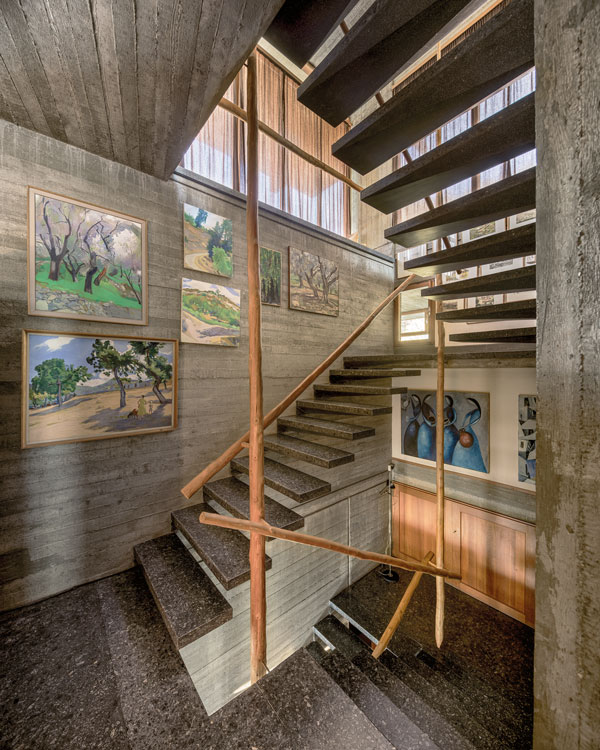 A large part of the collection that exists inside the house comes from the trips that the Michailidis couple made to the Far East. The works of Maria Toufexi, wife of Neoptolemus, are also organically integrated into the premises of the house.
Critical regionalism
The volume opens with fourteen major works by Neoptolemos Michaelides from the period 1952–1978, including the couple’s home. Frampton’s insightful texts are accompanied by rich archival material documenting the various stages of construction of buildings that would come to shape Cyprus’ architectural landscape.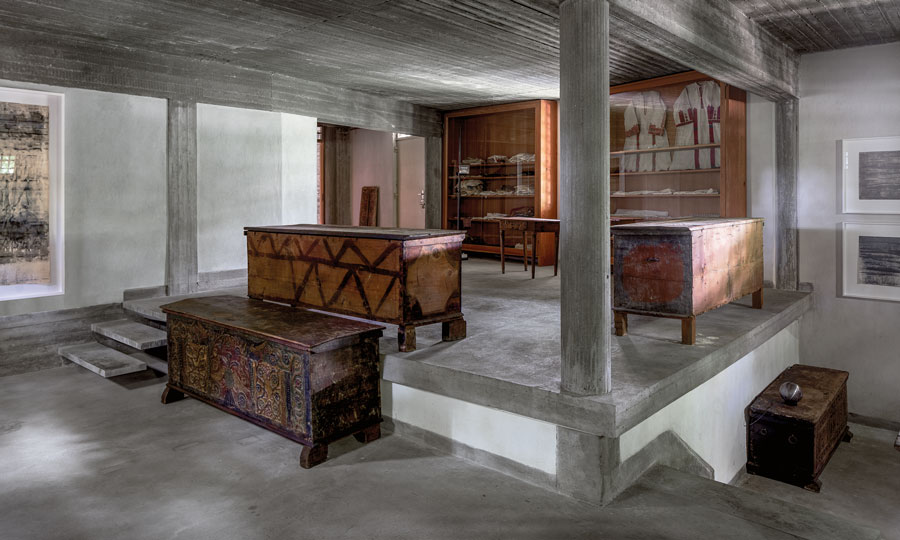
They also reveal how Michaelides’ pioneering architectural and social ideas were not always easy to accept. A striking example is the Church of Saint Luke (later renamed Apostles Barnabas and Makarios), designed and built in the mid-1970s. Without the architect’s consent, the church later lost the character Michaelides had originally given it.
Among the landmark projects presented are the Alona Primary School (1958), the Athienou Municipal Market (1952), recently renovated, and the Grecian Hotel on the Famagusta seafront, built in 1963.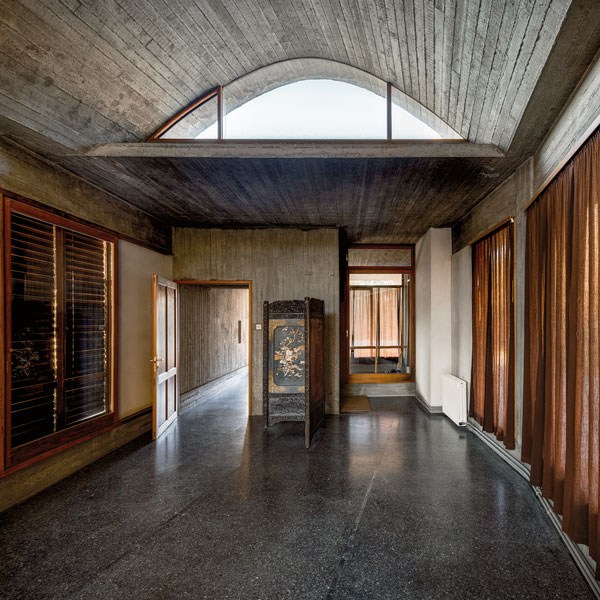
The next chapter focuses on the House of Maria and Neoptolemos Michaelides, built in Nicosia between 1960 and 1964. Frampton’s concise yet substantial text is enriched by 61 full-page, evocative color photographs by Callejas, as well as architectural drawings of the house.
Situated near the Pedieos River, this iconic residence, a milestone of modern architecture in Cyprus, stands as a living manual of Michaelides’ architectural philosophy. At the same time, it encapsulates the artistic spirit of his wife, Maria (née Toufexi).
As the editor notes, “the building is the epitome of critical regionalism, a design approach that places clear emphasis on the geographical and cultural context of a project, combining the vocabulary of local traditional construction with global design theories.”
The volume concludes with “Biographical Notes” on Neoptolemos Michaelides, written by Irene Modestou and enriched with personal and family photographs. The text draws on material from Rina Katselli’s two-volume work “Neoptolemos Ant. Michaelides – The Architect,” published by the Kyrenia Folklore Association in 2011.
Maria and Neoptolemos Michaelides had envisioned their home as a museum open to the public. The luxury volume released by the Foundation is a powerful signal of its intention to highlight not only the value of the house itself, but also the artworks and objects that inhabit its spaces.
A small, private museum of art and architecture, coexisting in harmony, undoubtedly has a place in Nicosia and an important role to play in the study of the donors’ work and the modern architectural history of Cyprus.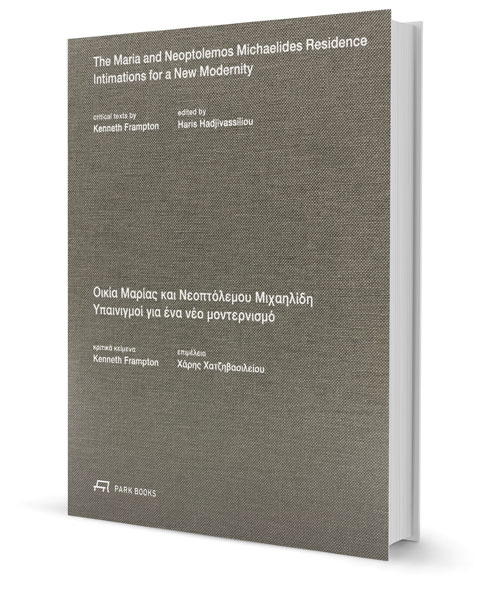
*Read the original Greek version here.


