


Apostolos Kouroupakis
After nearly seven years of restoration, Nicosia’s iconic Famagusta Gate is finally open to the public, offering a glimpse into the city’s rich history while stepping firmly into its modern cultural life.
The story of the gate stretches back to December 1935, when newspapers noted that “the unveiling of the Famagusta Gate facade has been completed” and that the city hall, in collaboration with the Department of Antiquities, would continue “the exceptional work of demolishing the aqueduct on both sides of this magnificent monument” and restore its original doors. At the time, the gate’s interior had been repurposed for storage, including a fuel depot, but nearly a century later, the restoration work has returned it to its former glory.
The extensive renovation began in February 2019 after the gate was closed in 2018 due to flood damage. Nearly a million euros were invested in the project, which involved careful stone and wood restoration, as well as upgrades to lighting, sound, air conditioning, and public amenities such as restrooms. According to George Georgiou, director of the Department of Antiquities, the work also offered invaluable insight into the gate’s history, revealing that its foundations followed the natural contours of the land and that remnants of medieval structures still lingered in various spots.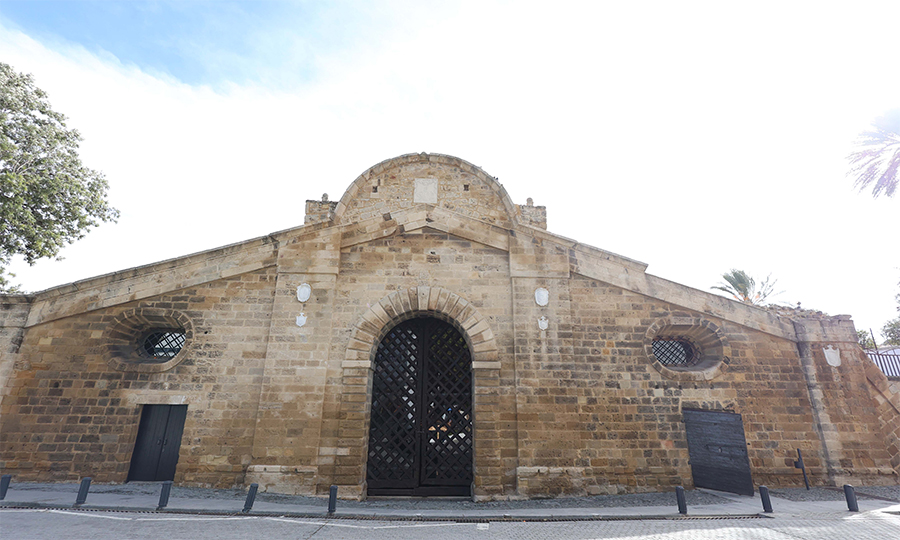
For now, the restored spaces will support events tied to Cyprus’ EU Presidency before eventually becoming part of Nicosia’s broader network of cultural venues. Deputy Minister of Culture Lina Kassianidou highlighted that the gate’s reopening connects the monument to the city’s contemporary cultural and social life, creating a “living public space in the historic center” at a time when Cyprus is hosting thousands of visitors during its EU Presidency.
Famagusta Gate itself is the most important of Nicosia’s Venetian walls, originally named Porta Giuliana in honor of the Venetian engineer Giulio Savorgnan, who designed the city’s fortifications in 1567. Though construction was interrupted by the Ottoman invasion of 1570, the gate has seen centuries of change. In 1981, under Mayor Lellos Demetriades, it was transformed into a cultural center, establishing a legacy as a vibrant hub of artistic and community life for nearly four decades.
Now, after years of careful restoration and almost a century since the first major interventions by the Department of Antiquities, the Famagusta Gate stands ready once more, a historic doorway not only to the past but also to Nicosia’s evolving cultural future.
*Read the Greek version here.


