


Andreas Georgallas
The President of the Republic engaged today in a marathon of meetings, just hours before the Opening Ceremony of the Cypriot Presidency. These meetings were rich in symbolism and carried a clear diplomatic imprint, setting the tone for the priorities of the Cypriot Presidency.
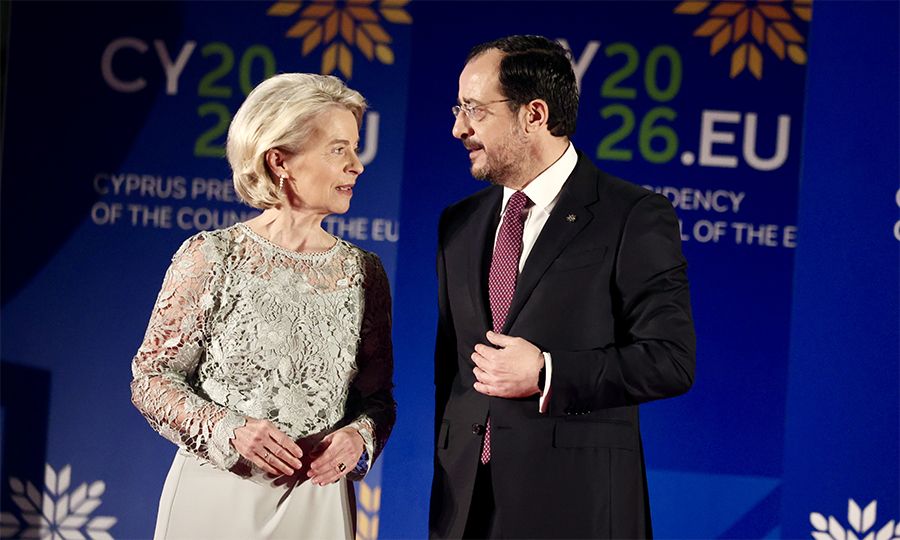
The President’s statement that Ukraine is a central priority of the Cypriot Presidency, along with the fact that a joint visit by António Costa and Ursula von der Leyen to Jordan, Lebanon, and Syria will follow, highlights Cyprus’s geostrategic role. In his address at the opening ceremony, the President made special reference to the presence of the President of Moldova, Maia Sandu, and the President of Ukraine, Volodymyr Zelenskyy, emphasizing the strengthening of Cyprus’s diplomatic influence following its accession to Europe.
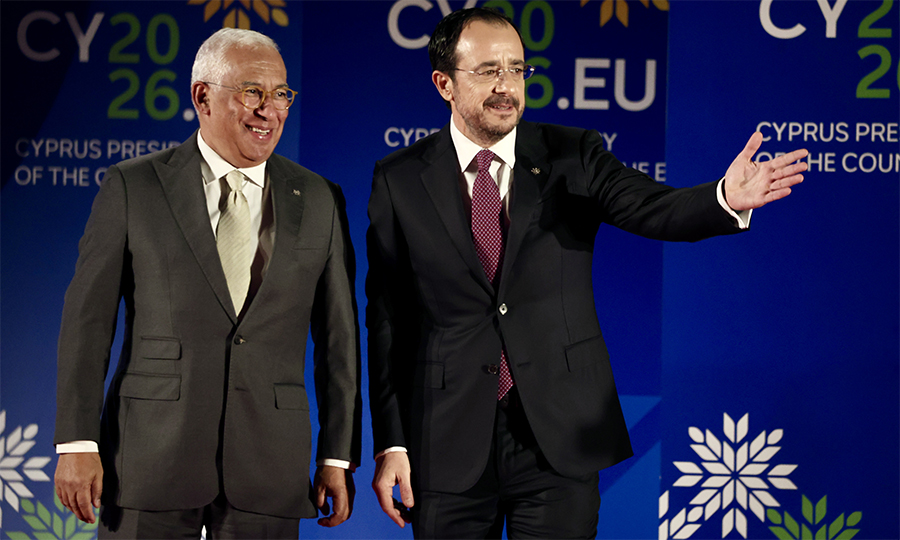
Messages regarding the role of Cyprus, and of the EU, in a region full of challenges, as well as commitment to international law, were conveyed during Mr. Christodoulides’ speech from the stage of the THOC Theatre. The advantages offered by Cyprus’s proximity to countries of the Middle East and the Gulf were emphasized several times by António Costa and Ursula von der Leyen. The importance of Moldova’s and Ukraine’s accession to the EU was also repeatedly highlighted.
Marathon of Meetings
Focus on Ukraine
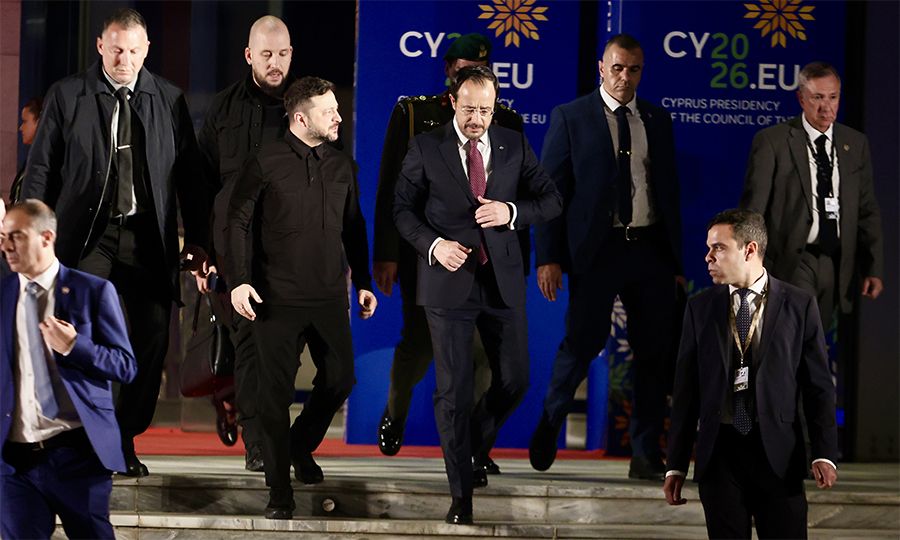
During the quadrilateral meeting on Ukraine at the Presidential Palace, between the President of the Republic, the President of the European Commission, the President of the European Council, and the President of Ukraine, Mr. Christodoulides stressed that “our discussions focused on the latest developments, as well as on joint efforts to achieve a just, comprehensive, and lasting peace in Ukraine, based on international law.”
From the podium of the THOC Theatre, the Ukrainian President expressed hope that the war would end during the Cypriot Presidency, noting, however, that pressure must be exerted on Russia for this to happen. He made special reference to the sanctions that need to be imposed, as well as to the EU’s SAFE program. In his statements, Mr. Zelenskyy also drew parallels between the Cyprus issue and the Ukrainian one: “For Ukraine, this moment is very important, just as it is for Cyprus, a member state that, unfortunately, remains divided, yet committed to lasting peace and is fully equal within Europe,” he noted.
Cyprus as a bridge to the Middle East
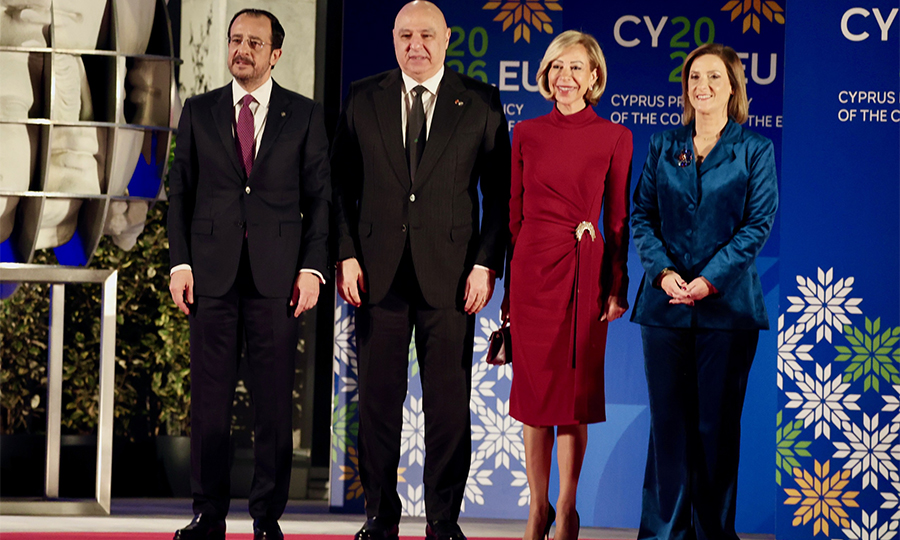
Particularly significant was the visit to Cyprus by the President of Lebanon, Joseph Aoun, at a time when the two countries maintain excellent diplomatic relations. Indicative of this is the recent agreement between Cyprus and Lebanon on the delimitation of maritime zones.
Mr. Christodoulides said that one of the priorities of the Cypriot Presidency is strengthening EU relations with Lebanon. “I am pleased with the statement of the Association Council, which also includes references, and this is our goal, to the start of discussions between the EU and Lebanon. You can be sure that Cyprus will play a leading role in this direction, and we will do whatever is necessary to begin discussions on a comprehensive and strategic agreement.”
“I am also pleased that this coming Friday, the President of the European Commission will visit Lebanon for the second time, the first was when we visited together, as well as that the President of the European Council will visit the country for the first time. We are pleased that their visits are taking place in Lebanon during our Presidency of the Council of the EU.”
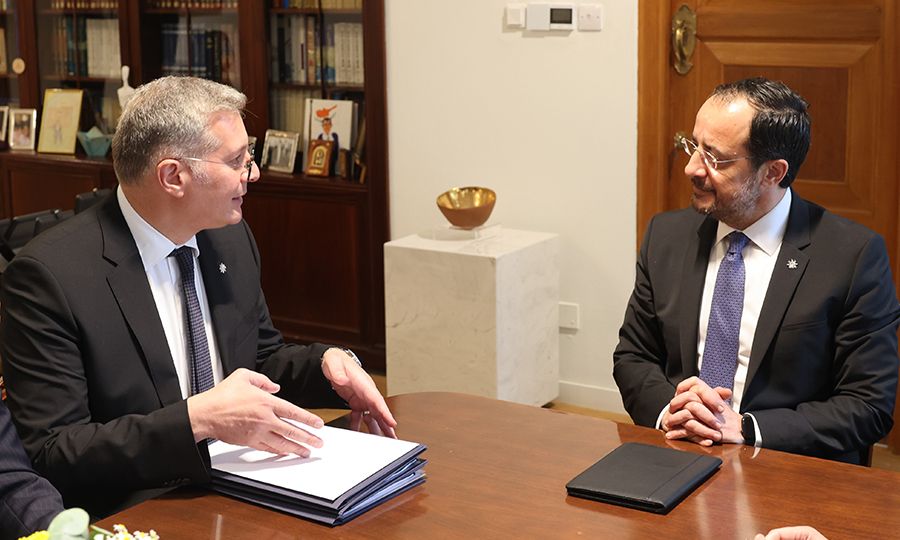
Also present at the Presidential Palace today was Egypt’s Minister of Petroleum, Karim Badawi. In recent years, Egypt has been one of Cyprus’s most important partners in the region, and the presence of an Egyptian official responsible for energy matters at the ceremony carries its own significance. Coordination between the two countries on energy issues, which rank high on the agenda, is considered particularly important in order to achieve progress.
During the meeting, it was once again made clear that the goal is for Europe to move closer to the region.
Draconian security measures
 By Elisavet Georgiou
The presence of top international figures, combined with the international situation, has led the Police to implement an extensive and multi-layered operational plan, which has been underway for months.
The Police have activated a central Operations Office, from which real-time coordination of all forces takes place, including monitoring movements and assessing any information or developments. In the streets of the city center, around the Presidential Palace, the THOC Theatre, and the old GSP stadium, a three-digit number of heavily armed police officers have been deployed in shifts, with a strong and visible presence, as well as discreet deployments of personnel along critical infrastructure and points of increased interest.
Particular emphasis is also placed on the protection of critical infrastructure, such as airports and accommodation facilities for delegations, due to the increased arrivals and mobility accompanying the assumption of the Presidency. At the same time, beyond the visible measures on the streets, the competent services are on heightened alert in cyberspace as well, as the planning includes scenarios involving digital threats and interference with systems.
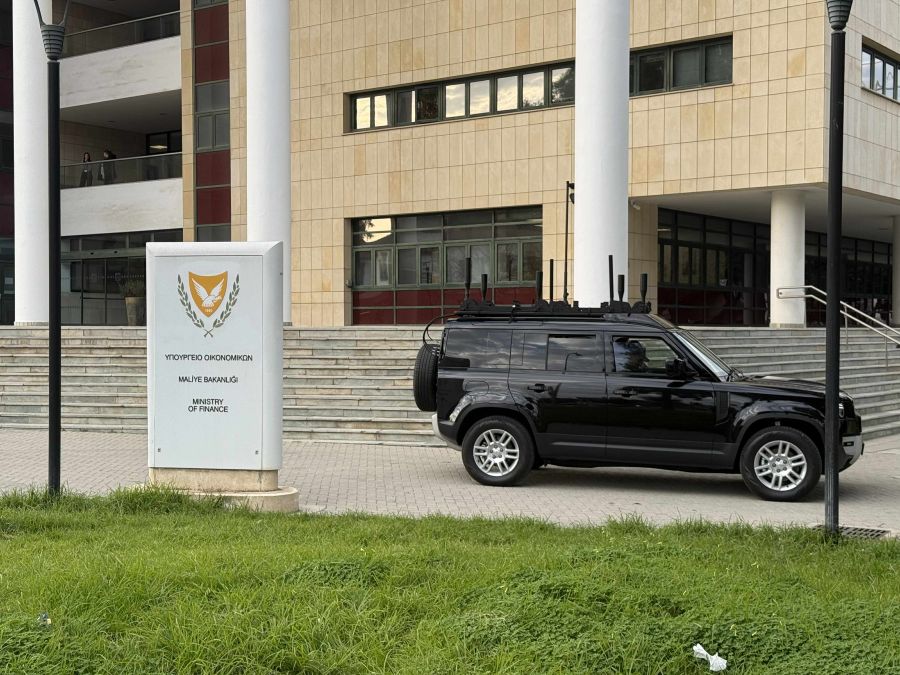
At the site, a special jammer vehicle is stationed, used to disrupt wireless signals. It is a vehicle equipped with electronic jamming systems capable of blocking mobile phone signals.
Read the original Greek article here.


