

Rafaela Dimitriadi
Late Thursday night, just minutes before midnight, the first day of the informal EU summit at the Ayia Napa Marina wrapped up at 11:45 p.m.
According to informed sources, President Nikos Christodoulides’ proposal regarding Article 42(7) was accepted, with work now expected to begin on drafting a preliminary text. Article 42(7), introduced in 2009, is the EU’s mutual defense clause. It obliges member states to support any fellow EU country that comes under armed attack on its territory. The provision has been used only once so far, when France invoked it after the 2015 terrorist attacks.
While Cyprus hosts the informal European Council for the first time as part of its EU Council Presidency, the day was also marked by mounting unrest on the ground.
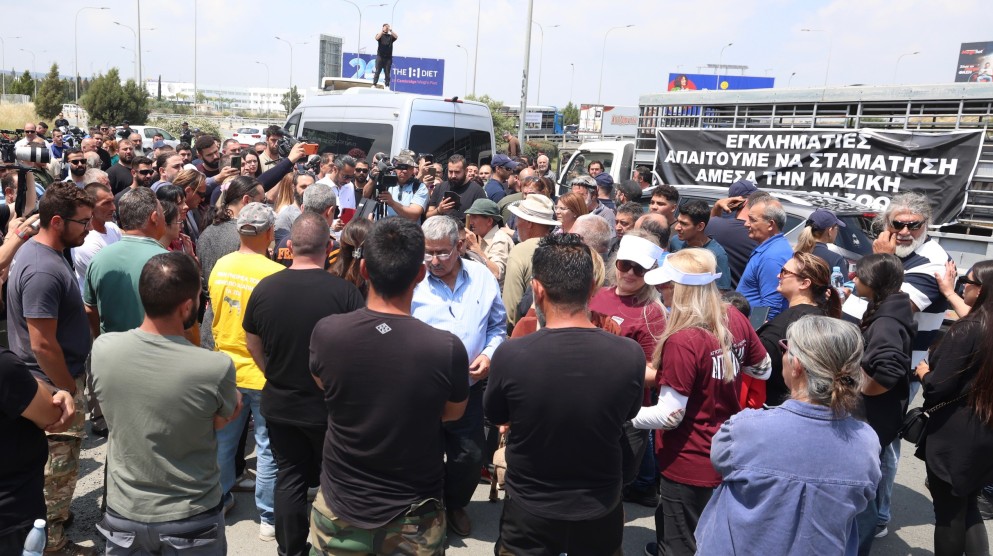
From early morning, livestock farmers took to the streets, warning they would not back down unless authorities stopped the culling of healthy animals in response to foot-and-mouth disease. Their message was clear: no resolution, no end to the protest.
Sources confirmed that Nicosia’s proposal on Article 42(7) gained support, with preparations for a draft now set to begin, something the president is also expected to formally raise again at the EU level.
It was a day of constant developments. Police remained on high alert, enforcing strict security measures both for the summit and the farmers’ protests.
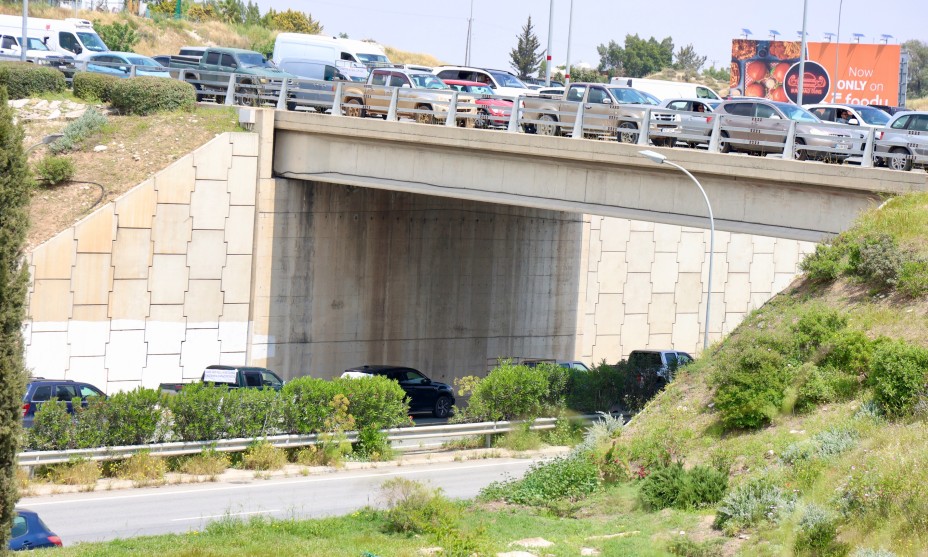
By Thursday evening, despite repeated appeals from police and the ministers of justice and agriculture to reopen roads, the farmers stood their ground, keeping the Rizoelia roundabout blocked.
Justice Minister Kostas Fitiris visited the scene, saying his presence aimed to ensure both the smooth conduct of the protest and the safety of farmers, drivers, and bystanders. His arrival, however, was met with pushback from demonstrators.
After issuing an ultimatum to the president to respond to their demands by 2:00 p.m. or face an escalation, the farmers followed through, expanding their protest by shutting down Larnaca port.
The disruption caused major headaches for drivers, with heavy traffic building up in the area. Police urged those heading toward Larnaca to use alternative routes.
Earlier, in an effort to defuse tensions, Agriculture Minister Maria Panayiotou held a lengthy meeting with a three-member committee representing the farmers, alongside relevant officials.
The talks went nowhere.
“We informed the farmers that our requests were not accepted, and unfortunately there will be an escalation of measures. People are fed up,” said farmers’ representative Stella Petrou after the meeting.
Meanwhile, amid the protests, EU leaders began arriving one by one at the Ayia Napa Marina for what is being described as a historic informal European Council.
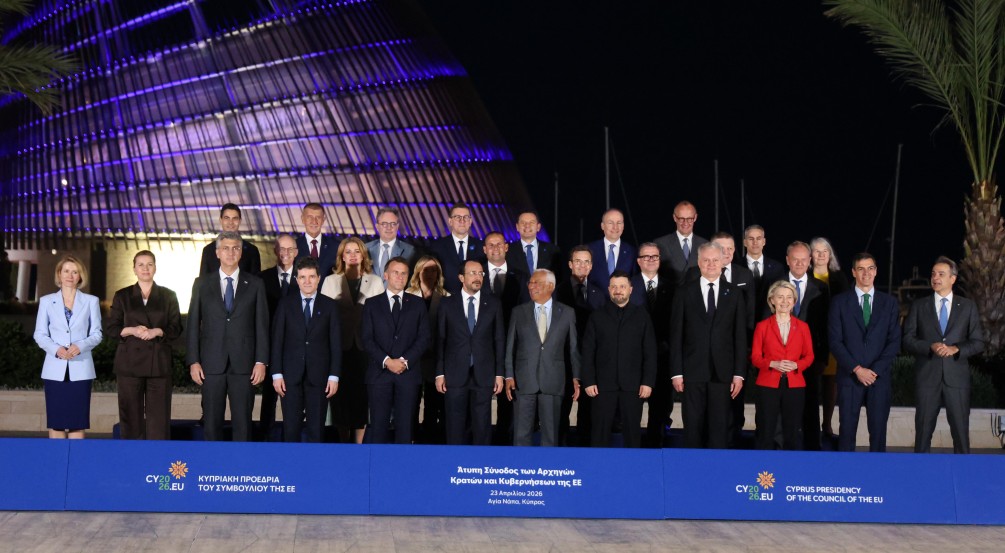
President Christodoulides welcomed the leaders after earlier holding one-on-one meetings at the Presidential Palace with Emmanuel Macron and Gitanas Nausėda.
Speaking upon arrival, the president described the moment as historic for Cyprus, noting that it remains the last EU member state under occupation.
He said the summit’s agenda reflects the core priorities of Cyprus’ presidency, starting with strengthening ties with neighboring countries.
“A very important meeting will take place tomorrow with leaders from the region, not only to exchange views on the situation but more importantly to look at how, following the Mediterranean package announcement, we can upgrade our relations with neighboring states to a strategic level,” he said.
According to sources, EU leaders praised Cyprus’ initiative to invite regional leaders as “excellent.”
Asked what implementing Article 42(7) would mean in practice, President Christodoulides said Cyprus has put forward concrete proposals, adding that the European Commission and other member states are also expected to contribute ideas on how the clause should function when activated.
Geopolitical developments dominated discussions throughout the day, particularly how the EU should respond and contribute to de-escalation efforts. Energy impacts were also high on the agenda, with talks focusing on how the bloc can use available tools to manage the fallout.
The first day of the summit officially concluded late Thursday night.
Talks continue Friday in Nicosia, at the Filoxenia Conference Centre, where EU partners will turn their attention to the next Multiannual Financial Framework (MFF). The aim is to provide political direction and push negotiations forward toward a final agreement by the end of the year.
In a statement, the MFF was described as one of the most complex and demanding files inherited by the Cypriot presidency. Officials say a key interim goal, completing technical work and moving discussions to the political level, has already been achieved.
After the summit concludes, EU leaders are expected to meet with regional partners over a working lunch, where discussions will focus on the situation in the Middle East and the Gulf.
Amid mounting geopolitical pressure, the meeting is seen as carrying significant political weight, with the goal of strengthening dialogue and cooperation between the EU, the Middle East, and Gulf countries, while addressing shared challenges.


